
古代线粒体DNA遗传变异调节线粒体DNA转录和复制。
Ancient mtDNA genetic variants modulate mtDNA transcription and replication.
作者信息
Suissa Sarit, Wang Zhibo, Poole Jason, Wittkopp Sharine, Feder Jeanette, Shutt Timothy E, Wallace Douglas C, Shadel Gerald S, Mishmar Dan
机构信息
Department of Life Sciences and National Institute of Biotechnology (NIBN), Ben-Gurion University of the Negev, Beer-Sheva, Israel.
出版信息
PLoS Genet. 2009 May;5(5):e1000474. doi: 10.1371/journal.pgen.1000474. Epub 2009 May 8.
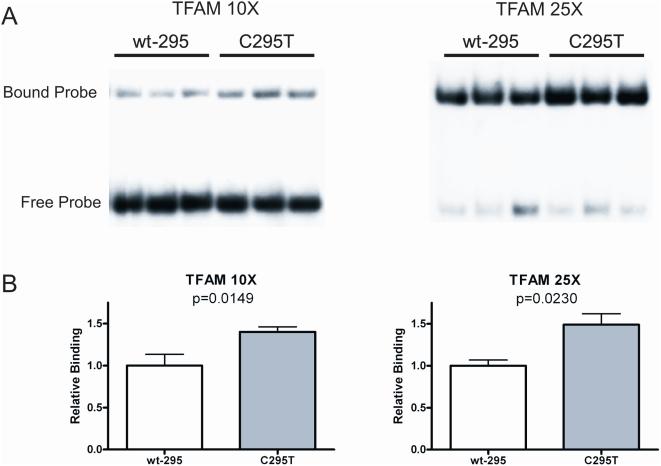
Although the functional consequences of mitochondrial DNA (mtDNA) genetic backgrounds (haplotypes, haplogroups) have been demonstrated by both disease association studies and cell culture experiments, it is not clear which of the mutations within the haplogroup carry functional implications and which are "evolutionary silent hitchhikers". We set forth to study the functionality of haplogroup-defining mutations within the mtDNA transcription/replication regulatory region by in vitro transcription, hypothesizing that haplogroup-defining mutations occurring within regulatory motifs of mtDNA could affect these processes. We thus screened >2500 complete human mtDNAs representing all major populations worldwide for natural variation in experimentally established protein binding sites and regulatory regions comprising a total of 241 bp in each mtDNA. Our screen revealed 77/241 sites showing point mutations that could be divided into non-fixed (57/77, 74%) and haplogroup/sub-haplogroup-defining changes (i.e., population fixed changes, 20/77, 26%). The variant defining Caucasian haplogroup J (C295T) increased the binding of TFAM (Electro Mobility Shift Assay) and the capacity of in vitro L-strand transcription, especially of a shorter transcript that maps immediately upstream of conserved sequence block 1 (CSB1), a region associated with RNA priming of mtDNA replication. Consistent with this finding, cybrids (i.e., cells sharing the same nuclear genetic background but differing in their mtDNA backgrounds) harboring haplogroup J mtDNA had a >2 fold increase in mtDNA copy number, as compared to cybrids containing haplogroup H, with no apparent differences in steady state levels of mtDNA-encoded transcripts. Hence, a haplogroup J regulatory region mutation affects mtDNA replication or stability, which may partially account for the phenotypic impact of this haplogroup. Our analysis thus demonstrates, for the first time, the functional impact of particular mtDNA haplogroup-defining control region mutations, paving the path towards assessing the functionality of both fixed and un-fixed genetic variants in the mitochondrial genome.
尽管疾病关联研究和细胞培养实验均已证实线粒体DNA(mtDNA)遗传背景(单倍型、单倍群)具有功能影响,但尚不清楚单倍群内的哪些突变具有功能意义,哪些是“进化上沉默的搭便车者”。我们着手通过体外转录研究mtDNA转录/复制调控区域内单倍群定义突变的功能,假设发生在mtDNA调控基序内的单倍群定义突变可能会影响这些过程。因此,我们筛选了代表全球所有主要人群的2500多个完整人类mtDNA,以寻找实验确定的蛋白质结合位点和调控区域中的自然变异,每个mtDNA中的这些区域总共241 bp。我们的筛选揭示了241个位点中的77个存在点突变,这些突变可分为非固定突变(57/77,74%)和单倍群/亚单倍群定义性变化(即群体固定变化,20/77,26%)。定义白种人单倍群J的变体(C295T)增加了TFAM的结合(电泳迁移率变动分析)以及体外L链转录的能力,特别是映射到保守序列块1(CSB1)上游紧邻位置的较短转录本的转录能力,CSB-1区域与mtDNA复制的RNA引发相关。与这一发现一致,与含有单倍群H的胞质杂种相比,携带单倍群J mtDNA的胞质杂种(即具有相同核遗传背景但mtDNA背景不同的细胞)的mtDNA拷贝数增加了两倍以上,而mtDNA编码转录本的稳态水平没有明显差异。因此,单倍群J调控区域突变会影响mtDNA复制或稳定性,这可能部分解释了该单倍群的表型影响。我们的分析首次证明了特定mtDNA单倍群定义性控制区域突变的功能影响,为评估线粒体基因组中固定和非固定遗传变异的功能铺平了道路。




 Zotero 插件