
通过免疫聚焦诱导针对HIV-1的跨亚型中和抗体。
Inducing cross-clade neutralizing antibodies against HIV-1 by immunofocusing.
作者信息
Humbert Michael, Rasmussen Robert A, Ong Helena, Kaiser Fabian M P, Hu Shiu-Lok, Ruprecht Ruth M
机构信息
Dana-Farber Cancer Institute, Boston, Massachusetts, United States of America.
出版信息
PLoS One. 2008;3(12):e3937. doi: 10.1371/journal.pone.0003937. Epub 2008 Dec 15.
BACKGROUND
Although vaccines are important in preventing viral infections by inducing neutralizing antibodies (nAbs), HIV-1 has proven to be a difficult target and escapes humoral immunity through various mechanisms. We sought to test whether HIV-1 Env mimics may serve as immunogens.
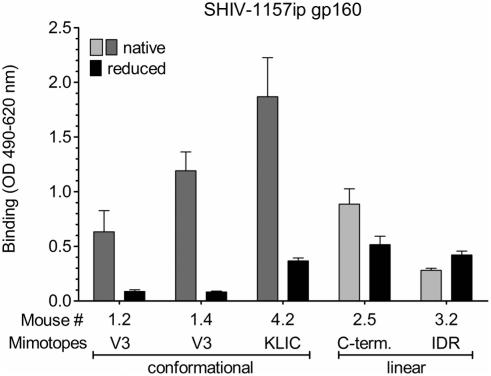
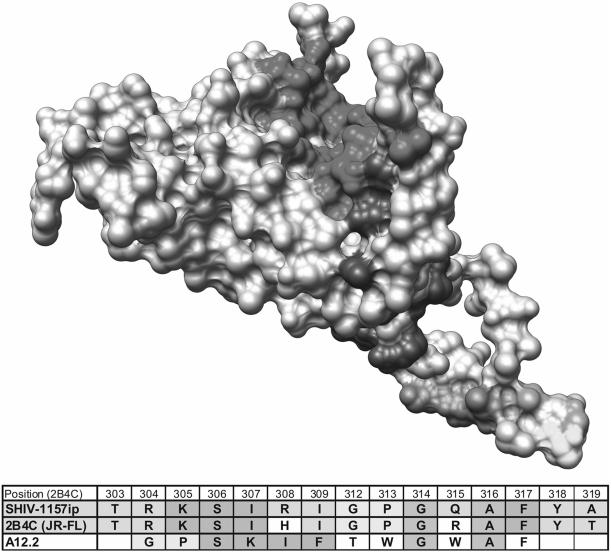
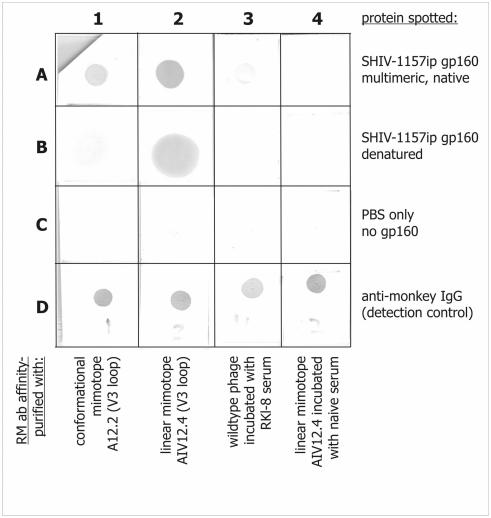
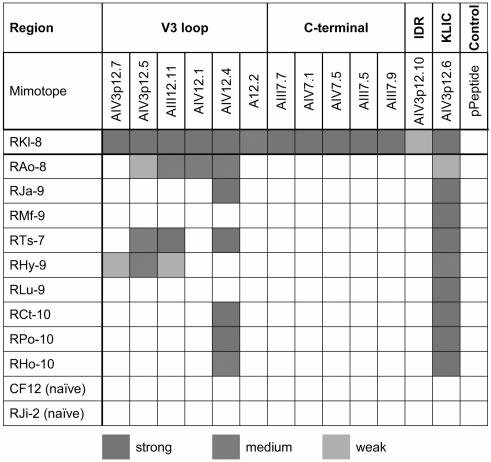
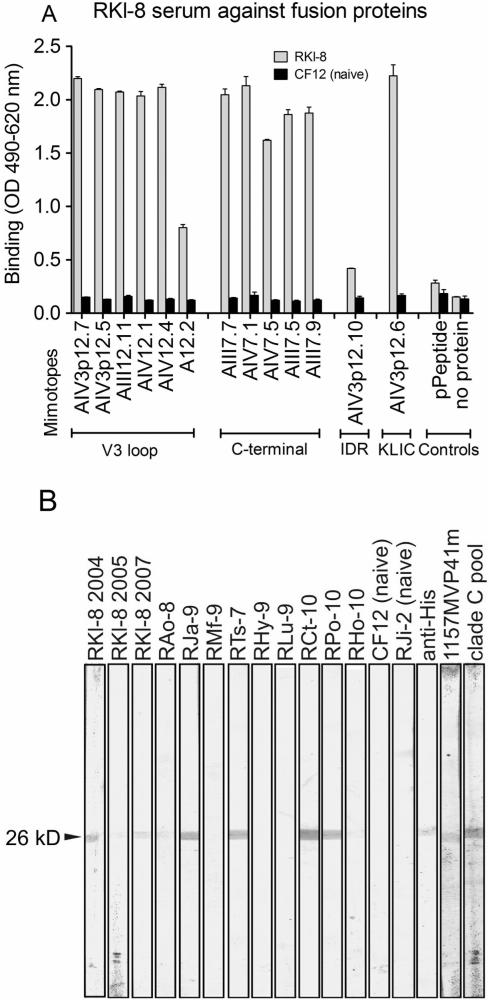
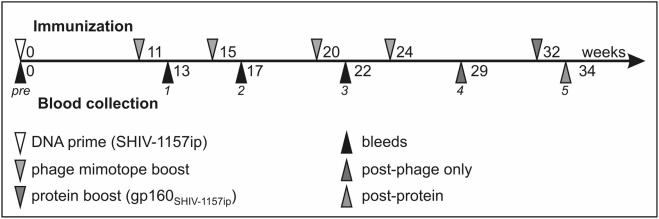
METHODOLOGY/PRINCIPAL FINDINGS: Using random peptide phage display libraries, we identified the epitopes recognized by polyclonal antibodies of a rhesus monkey that had developed high-titer, broadly reactive nAbs after infection with a simian-human immunodeficiency virus (SHIV) encoding env of a recently transmitted HIV-1 clade C (HIV-C). Phage peptide inserts were analyzed for conformational and linear homology using computational analysis; some peptides mimicked various domains of the original HIV-C Env, such as conformational V3 loop epitopes and the conserved linear region of the gp120 C-terminus. Next, we devised a novel prime/boost strategy to test the immunogenicity of such phage-displayed peptides and primed mice only once with HIV-C gp160 DNA followed by boosting with mixtures of recombinant phages.
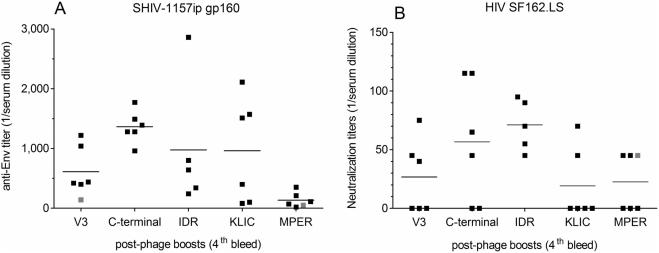
CONCLUSIONS/SIGNIFICANCE: This strategy, which was designed to focus the immune system on a few Env epitopes (immunofocusing), not only induced HIV-C gp160 binding antibodies and cross-clade nAbs, but also linked a conserved HIV Env region for the first time to the induction of nAbs: the C-terminus of gp120. The identification of conserved antigen mimics may lead to novel immunogens capable of inducing broadly reactive nAbs.
背景
尽管疫苗通过诱导中和抗体(nAbs)在预防病毒感染方面很重要,但事实证明,HIV-1是一个难以攻克的靶点,它通过各种机制逃避免疫体液免疫。我们试图测试HIV-1包膜蛋白(Env)模拟物是否可作为免疫原。
方法/主要发现:利用随机肽噬菌体展示文库,我们鉴定了一只恒河猴的多克隆抗体所识别的表位,该恒河猴在感染了编码一种近期传播的HIV-1 C亚型(HIV-C)包膜蛋白的猿猴-人类免疫缺陷病毒(SHIV)后,产生了高滴度、广泛反应性的中和抗体。使用计算分析对噬菌体肽插入片段进行构象和线性同源性分析;一些肽模拟了原始HIV-C Env的各个结构域,如构象性V3环表位和gp120 C末端的保守线性区域。接下来,我们设计了一种新型的初免/加强策略来测试此类噬菌体展示肽的免疫原性,仅用HIV-C gp160 DNA对小鼠进行一次初免,然后用重组噬菌体混合物进行加强免疫。
结论/意义:该策略旨在使免疫系统聚焦于少数Env表位(免疫聚焦),不仅诱导了HIV-C gp160结合抗体和跨亚型中和抗体,还首次将HIV Env的一个保守区域与中和抗体的诱导联系起来:gp120的C末端。保守抗原模拟物的鉴定可能会产生能够诱导广泛反应性中和抗体的新型免疫原。

 Zotero 插件