
节拍化疗:改变越多越好的范式。
Metronomic chemotherapy: changing the paradigm that more is better.
机构信息
Instituto de Genética Experimental, Facultad de Ciencias Médicas, Universidad Nacional de Rosario, Rosario, Argentina.
出版信息
Curr Oncol. 2009 Mar;16(2):7-15. doi: 10.3747/co.v16i2.420.
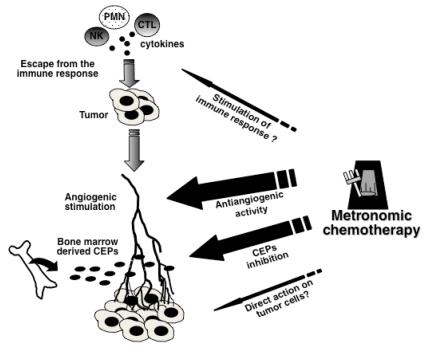
The introduction of the "maximum tolerated dose" in usual treatment protocols (and its concomitant overt toxicity) made necessary the imposition of rest periods between cycles of therapy-a practice that not only involves re-growth of tumour cells, but also growth of selected clones resistant to the therapy. To avoid the problems caused by traditional chemotherapeutic regimens, a new modality of drug administration called "metronomic chemotherapy" has been proposed. This name makes reference to the chronic, equally spaced administration of (generally) low doses of various chemotherapeutic drugs without extended rest periods. The novelty of this treatment modality lies not only in its antitumour efficacy with very low toxicity, but also in a cell target switch, now aiming at tumour endothelial cells. The knowledge acquired in the experimental field of metronomic chemotherapy, plus the increasing experience that is being obtained in the clinical setting, will help to lead a change in the design of therapeutic protocols against cancer.
在常规治疗方案中引入“最大耐受剂量”(及其伴随的明显毒性),使得在治疗周期之间必须强制休息一段时间——这种做法不仅涉及肿瘤细胞的再生长,还涉及对治疗有抗性的选定克隆的生长。为了避免传统化疗方案引起的问题,提出了一种新的给药方式,称为“节拍化疗”。这个名称是指慢性、等间隔地给予(通常)低剂量的各种化疗药物,而不延长休息时间。这种治疗方式的新颖之处不仅在于其具有非常低毒性的抗肿瘤疗效,还在于细胞靶点的转变,现在的目标是肿瘤内皮细胞。在节拍化疗的实验领域中获得的知识,加上在临床环境中不断获得的经验,将有助于改变抗癌治疗方案的设计。
 Zotero 插件