
组织转谷氨酰胺酶抗体阴性的1型糖尿病患者中,针对小麦多肽的糖尿病特异性HLA - DR限制性促炎T细胞反应。
Diabetes-specific HLA-DR-restricted proinflammatory T-cell response to wheat polypeptides in tissue transglutaminase antibody-negative patients with type 1 diabetes.
作者信息
Mojibian Majid, Chakir Habiba, Lefebvre David E, Crookshank Jennifer A, Sonier Brigitte, Keely Erin, Scott Fraser W
机构信息
Chronic Disease Program, Ottawa Hospital Research Institute, Ottawa, Canada.
出版信息
Diabetes. 2009 Aug;58(8):1789-96. doi: 10.2337/db08-1579. Epub 2009 Apr 28.
OBJECTIVE
There is evidence of gut barrier and immune system dysfunction in some patients with type 1 diabetes, possibly linked with exposure to dietary wheat polypeptides (WP). However, questions arise regarding the frequency of abnormal immune responses to wheat and their nature, and it remains unclear whether such responses are diabetes specific.
RESEARCH DESIGN AND METHODS
In type 1 diabetic patients and healthy control subjects, the immune response of peripheral CD3(+) T-cells to WPs, ovalbumin, gliadin, alpha-gliadin 33-mer peptide, tetanus toxoid, and phytohemagglutinin was measured using a carboxyfluorescein diacetate succinimidyl ester (CFSE) proliferation assay. T-helper cell type 1 (Th1), Th2, and Th17 cytokines were analyzed in WP-stimulated peripheral blood mononuclear cell (PBMNC) supernatants, and HLA was analyzed by PCR.
RESULTS
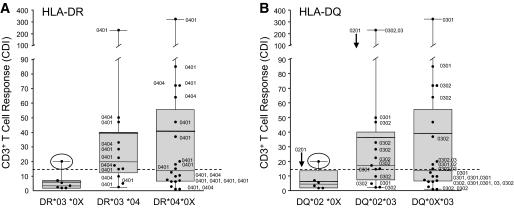
Of 42 patients, 20 displayed increased CD3(+) T-cell proliferation to WPs and were classified as responders; proliferative responses to other dietary antigens were less pronounced. WP-stimulated PBMNCs from patients showed a mixed proinflammatory cytokine response with large amounts of IFN-gamma, IL-17A, and increased TNF. HLA-DQ2, the major celiac disease risk gene, was not significantly different. Nearly all responders carried the diabetes risk gene HLA-DR4. Anti-DR antibodies blocked the WP response and inhibited secretion of Th1 and Th17 cytokines. High amounts of WP-stimulated IL-6 were not blocked.
CONCLUSIONS
T-cell reactivity to WPs was frequently present in type 1 diabetic patients and associated with HLA-DR4 but not HLA-DQ2. The presence of an HLA-DR-restricted Th1 and Th17 response to WPs in a subset of patients indicates a diabetes-related inflammatory state in the gut immune tissues associated with defective oral tolerance and possibly gut barrier dysfunction.
目的
有证据表明,部分1型糖尿病患者存在肠道屏障和免疫系统功能障碍,这可能与接触膳食小麦多肽(WP)有关。然而,针对小麦的异常免疫反应的频率及其性质仍存在疑问,此类反应是否具有糖尿病特异性也尚不清楚。
研究设计与方法
采用羧基荧光素二乙酸琥珀酰亚胺酯(CFSE)增殖试验,检测1型糖尿病患者和健康对照受试者外周血CD3(+) T细胞对WP、卵清蛋白、麦醇溶蛋白、α-麦醇溶蛋白33聚体肽、破伤风类毒素和植物血凝素的免疫反应。分析WP刺激的外周血单核细胞(PBMNC)上清液中的1型辅助性T细胞(Th1)、Th2和Th17细胞因子,并通过聚合酶链反应(PCR)分析人类白细胞抗原(HLA)。
结果
42例患者中,20例对WP的CD3(+) T细胞增殖增加,被归类为反应者;对其他膳食抗原的增殖反应则不那么明显。患者的WP刺激的PBMNC显示出混合的促炎细胞因子反应,伴有大量γ干扰素、白细胞介素-17A和肿瘤坏死因子增加。主要的乳糜泻风险基因HLA-DQ2无显著差异。几乎所有反应者都携带糖尿病风险基因HLA-DR4。抗DR抗体阻断了WP反应,并抑制了Th1和Th17细胞因子的分泌。大量WP刺激的白细胞介素-6未被阻断。
结论
1型糖尿病患者中经常存在对WP的T细胞反应性,且与HLA-DR4相关,但与HLA-DQ2无关。一部分患者中存在对WP的HLA-DR限制性Th1和Th17反应,这表明肠道免疫组织中存在与口服耐受缺陷及可能的肠道屏障功能障碍相关的糖尿病相关炎症状态。


 Zotero 插件