
在糖尿病小鼠模型的内脏脂肪组织中,过氧化物酶体增殖物激活受体γ基因的表达受到DNA甲基化的抑制。
Expression of the peroxisome proliferator activated receptor gamma gene is repressed by DNA methylation in visceral adipose tissue of mouse models of diabetes.
作者信息
Fujiki Katsunori, Kano Fumi, Shiota Kunio, Murata Masayuki
机构信息
Department of Life Sciences, Graduate School of Arts and Sciences, The University of Tokyo, Tokyo, Japan.
出版信息
BMC Biol. 2009 Jul 10;7:38. doi: 10.1186/1741-7007-7-38.
BACKGROUND
Adipose tissues serve not only as a store for energy in the form of lipid, but also as endocrine tissues that regulates metabolic activities of the organism by secreting various kinds of hormones. Peroxisome proliferator activated receptor gamma (PPARgamma) is a key regulator of adipocyte differentiation that induces the expression of adipocyte-specific genes in preadipocytes and mediates their differentiation into adipocytes. Furthermore, PPARgamma has an important role to maintain the physiological function of mature adipocyte by controlling expressions of various genes properly. Therefore, any reduction in amount and activity of PPARgamma is linked to the pathogenesis of metabolic syndrome.
RESULTS
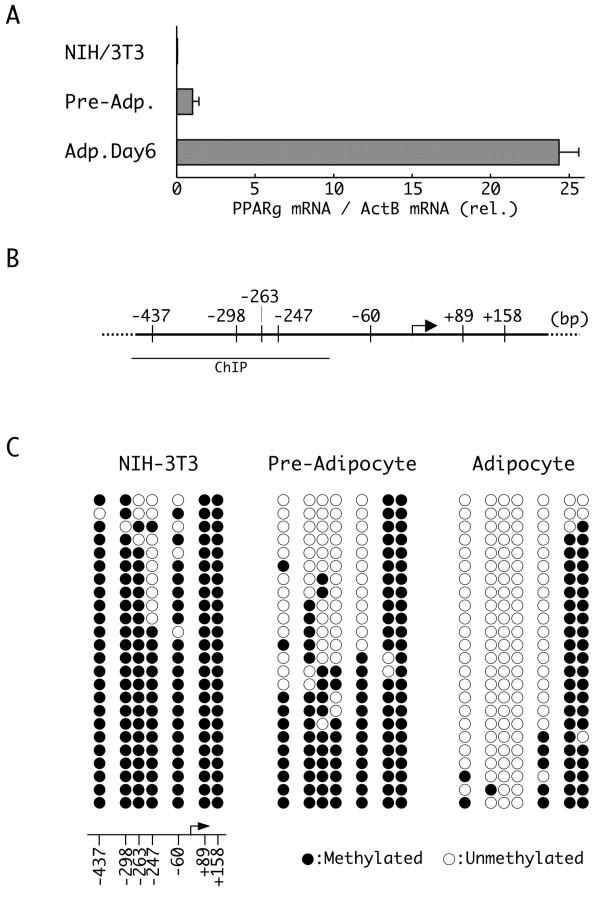
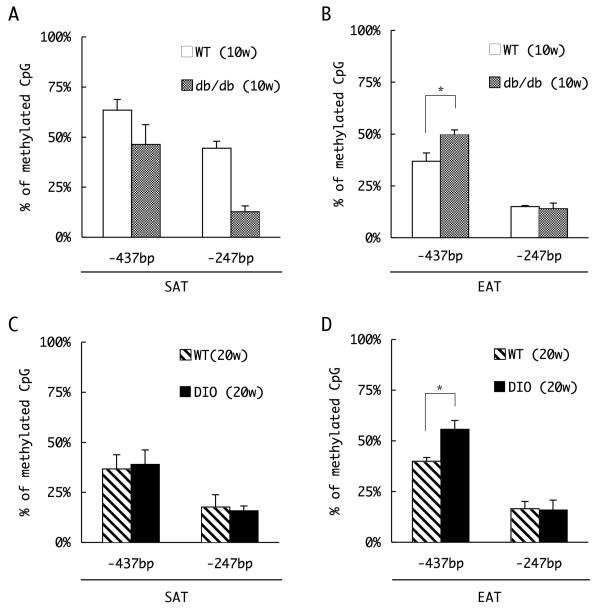
In this study, we investigated the contribution of epigenetic transcriptional regulatory mechanisms, such as DNA methylation, to the expression of the PPARgamma gene, and further evaluated the contribution of such epigenetic regulatory mechanisms to the pathogenesis of metabolic syndrome. In 3T3-L1 preadipocytes, the promoter of the PPARgamma2 gene was hypermethylated, but was progressively demethylated upon induction of differentiation, which was accompanied by an increase of mRNA expression. Moreover, treatment of cells with 5'-aza-cytideine, an inhibitor of DNA methylation, increased expression of the PPARgamma gene in a dose-dependent manner. Methylation in vitro of a PPARgamma promoter-driven reporter construct also repressed the transcription of a downstream reporter gene. These results suggest that the expression of the PPARgamma gene is inhibited by methylation of its promoter. We next compared the methylation status of the PPARgamma promoters in adipocytes from wild-type (WT) mice with those from two diabetic mouse models: +Leprdb/+Leprdb and diet-induced obesity mice. Interestingly, we found increased methylation of the PPARgamma promoter in visceral adipose tissues (VAT) of the mouse models of diabetes, compared to that observed in wild-type mice. We observed a concomitant decrease in the level of PPARgamma mRNA in the diabetic mice compared to the WT mice.
CONCLUSION
We conclude that the expression of PPARgamma gene is regulated by DNA methylation of its promoter region and propose that reduced expression of PPARgamma owing to DNA methylation in adipocytes of the VAT may contribute to the pathogenesis of metabolic syndrome.
背景
脂肪组织不仅作为脂质形式的能量储存库,还作为内分泌组织,通过分泌各种激素来调节机体的代谢活动。过氧化物酶体增殖物激活受体γ(PPARγ)是脂肪细胞分化的关键调节因子,可诱导前脂肪细胞中脂肪细胞特异性基因的表达,并介导其分化为脂肪细胞。此外,PPARγ通过适当控制各种基因的表达,在维持成熟脂肪细胞的生理功能方面发挥重要作用。因此,PPARγ数量和活性的任何降低都与代谢综合征的发病机制有关。
结果
在本研究中,我们研究了表观遗传转录调控机制,如DNA甲基化,对PPARγ基因表达的贡献,并进一步评估了这种表观遗传调控机制对代谢综合征发病机制的贡献。在3T3-L1前脂肪细胞中,PPARγ2基因的启动子高度甲基化,但在诱导分化时逐渐去甲基化,同时mRNA表达增加。此外,用DNA甲基化抑制剂5'-氮杂胞苷处理细胞,PPARγ基因的表达呈剂量依赖性增加。PPARγ启动子驱动的报告基因构建体的体外甲基化也抑制了下游报告基因的转录。这些结果表明,PPARγ基因的表达受到其启动子甲基化的抑制。接下来,我们比较了野生型(WT)小鼠脂肪细胞与两种糖尿病小鼠模型(+Leprdb/+Leprdb和饮食诱导肥胖小鼠)脂肪细胞中PPARγ启动子的甲基化状态。有趣的是,我们发现与野生型小鼠相比,糖尿病小鼠模型的内脏脂肪组织(VAT)中PPARγ启动子的甲基化增加。与WT小鼠相比,我们观察到糖尿病小鼠中PPARγ mRNA水平随之降低。
结论
我们得出结论,PPARγ基因的表达受其启动子区域的DNA甲基化调控,并提出VAT脂肪细胞中由于DNA甲基化导致的PPARγ表达降低可能与代谢综合征的发病机制有关。



 Zotero 插件