
神经胶质细胞和肌肉通过吞噬不稳定的突触小体和清除突触前碎片来塑造神经肌肉树突。
Glia and muscle sculpt neuromuscular arbors by engulfing destabilized synaptic boutons and shed presynaptic debris.
作者信息
Fuentes-Medel Yuly, Logan Mary A, Ashley James, Ataman Bulent, Budnik Vivian, Freeman Marc R
机构信息
Department of Neurobiology, University of Massachusetts Medical School, Worcester, Massachusetts, USA.
出版信息
PLoS Biol. 2009 Aug;7(8):e1000184. doi: 10.1371/journal.pbio.1000184. Epub 2009 Aug 25.
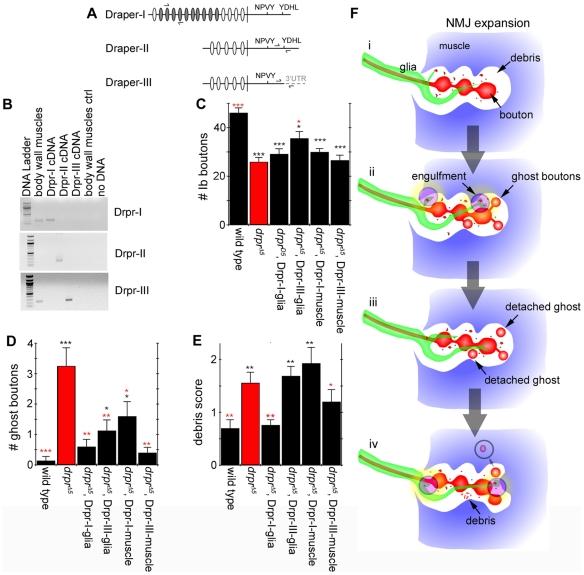
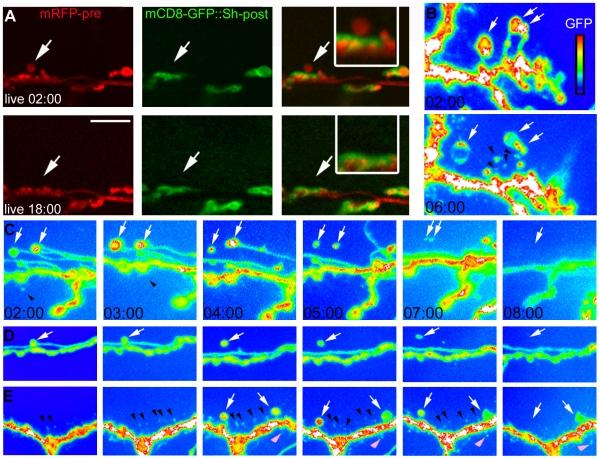
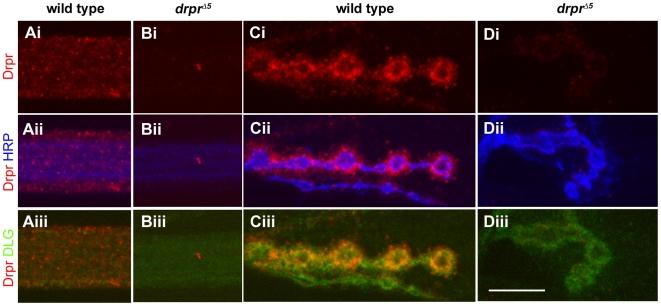
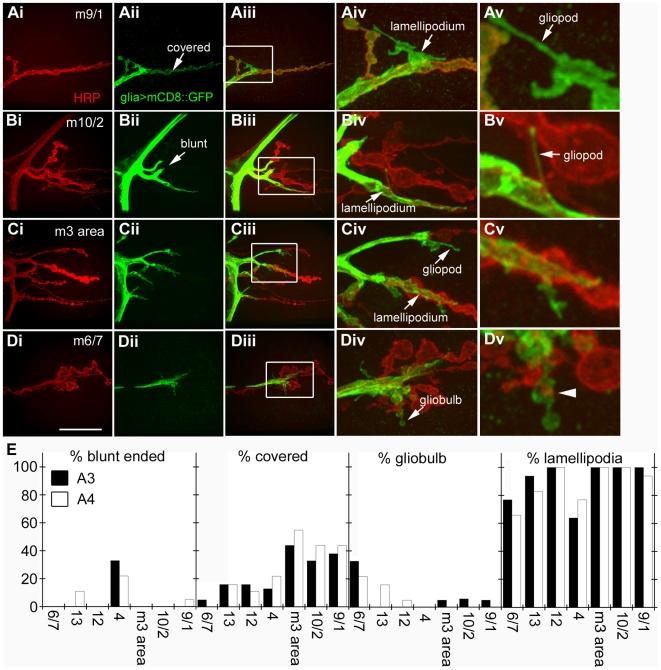
Synapse remodeling is an extremely dynamic process, often regulated by neural activity. Here we show during activity-dependent synaptic growth at the Drosophila NMJ many immature synaptic boutons fail to form stable postsynaptic contacts, are selectively shed from the parent arbor, and degenerate or disappear from the neuromuscular junction (NMJ). Surprisingly, we also observe the widespread appearance of presynaptically derived "debris" during normal synaptic growth. The shedding of both immature boutons and presynaptic debris is enhanced by high-frequency stimulation of motorneurons, indicating that their formation is modulated by neural activity. Interestingly, we find that glia dynamically invade the NMJ and, working together with muscle cells, phagocytose shed presynaptic material. Suppressing engulfment activity in glia or muscle by disrupting the Draper/Ced-6 pathway results in a dramatic accumulation of presynaptic debris, and synaptic growth in turn is severely compromised. Thus actively growing NMJ arbors appear to constitutively generate an excessive number of immature boutons, eliminate those that are not stabilized through a shedding process, and normal synaptic expansion requires the continuous clearance of this material by both glia and muscle cells.
突触重塑是一个极其动态的过程,通常受神经活动调节。在这里我们表明,在果蝇神经肌肉接头处依赖活动的突触生长过程中,许多未成熟的突触小体未能形成稳定的突触后接触,被选择性地从母分支上脱落,并在神经肌肉接头(NMJ)处退化或消失。令人惊讶的是,我们还在正常突触生长过程中观察到广泛出现的源自突触前的“碎片”。运动神经元的高频刺激增强了未成熟小体和突触前碎片的脱落,表明它们的形成受神经活动调节。有趣的是,我们发现神经胶质细胞动态侵入神经肌肉接头,并与肌肉细胞一起吞噬脱落的突触前物质。通过破坏Draper/Ced-6途径来抑制神经胶质细胞或肌肉中的吞噬活性会导致突触前碎片的大量积累,进而严重损害突触生长。因此,活跃生长的神经肌肉接头分支似乎会持续产生过量的未成熟小体,通过脱落过程消除那些未稳定的小体,而正常的突触扩展需要神经胶质细胞和肌肉细胞持续清除这些物质。




 Zotero 插件