
多形性胶质母细胞瘤与间变性星形细胞瘤的荟萃分析确定了可靠的基因标志物。
Meta-analysis of glioblastoma multiforme versus anaplastic astrocytoma identifies robust gene markers.
机构信息
Partners HealthCare Center for Personalized Genetic Medicine, Brigham and Women's Hospital, Boston, MA 02115, USA.
出版信息
Mol Cancer. 2009 Sep 4;8:71. doi: 10.1186/1476-4598-8-71.
BACKGROUND
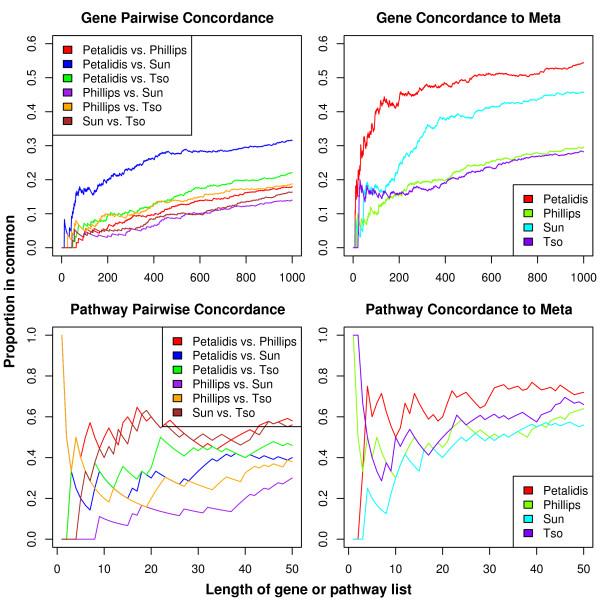
Anaplastic astrocytoma (AA) and its more aggressive counterpart, glioblastoma multiforme (GBM), are the most common intrinsic brain tumors in adults and are almost universally fatal. A deeper understanding of the molecular relationship of these tumor types is necessary to derive insights into the diagnosis, prognosis, and treatment of gliomas. Although genomewide profiling of expression levels with microarrays can be used to identify differentially expressed genes between these tumor types, comparative studies so far have resulted in gene lists that show little overlap.
RESULTS
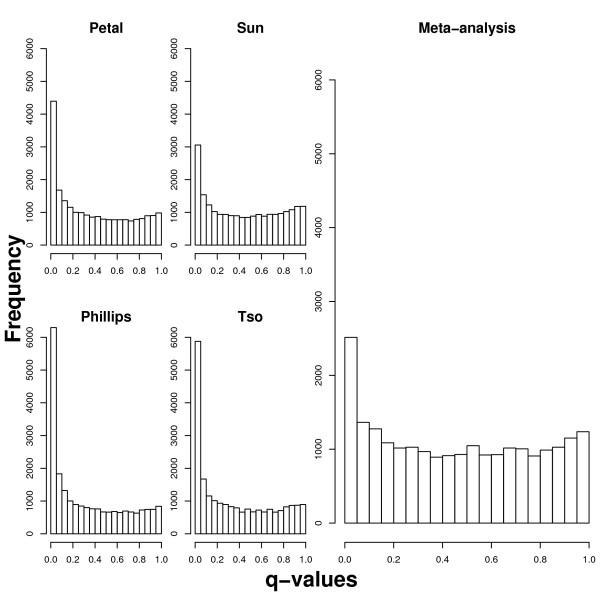
To achieve a more accurate and stable list of the differentially expressed genes and pathways between primary GBM and AA, we performed a meta-analysis using publicly available genome-scale mRNA data sets. There were four data sets with sufficiently large sample sizes of both GBMs and AAs, all of which coincidentally used human U133 platforms from Affymetrix, allowing for easier and more precise integration of data. After scoring genes and pathways within each data set, we combined the statistics across studies using the nonparametric rank sum method to identify the features that differentiate GBMs and AAs. We found >900 statistically significant probe sets after correction for multiple testing from the >22,000 tested. We also used the rank sum approach to select >20 significant Biocarta pathways after correction for multiple testing out of >175 pathways examined. The most significant pathway was the hypoxia-inducible factor (HIF) pathway. Our analysis suggests that many of the most statistically significant genes work together in a HIF1A/VEGF-regulated network to increase angiogenesis and invasion in GBM when compared to AA.
CONCLUSION
We have performed a meta-analysis of genome-scale mRNA expression data for 289 human malignant gliomas and have identified a list of >900 probe sets and >20 pathways that are significantly different between GBM and AA. These feature lists could be utilized to aid in diagnosis, prognosis, and grade reduction of high-grade gliomas and to identify genes that were not previously suspected of playing an important role in glioma biology. More generally, this approach suggests that combined analysis of existing data sets can reveal new insights and that the large amount of publicly available cancer data sets should be further utilized in a similar manner.
背景
间变性星形细胞瘤(AA)及其侵袭性更强的胶质母细胞瘤(GBM)是成人中最常见的内在脑肿瘤,几乎普遍致命。为了深入了解这些肿瘤类型的分子关系,有必要深入了解这些肿瘤类型的分子关系,以深入了解胶质瘤的诊断、预后和治疗。尽管使用微阵列进行全基因组表达水平谱分析可用于鉴定这些肿瘤类型之间差异表达的基因,但迄今为止的比较研究产生的基因列表显示出很少的重叠。
结果
为了更准确、更稳定地鉴定原发性 GBM 和 AA 之间差异表达的基因和途径,我们使用公开可用的基因组规模 mRNA 数据集进行了荟萃分析。有四个数据集具有足够大的 GBM 和 AA 样本量,巧合的是,它们都使用了 Affymetrix 的人类 U133 平台,从而更容易、更精确地整合数据。在对每个数据集内的基因和途径进行评分后,我们使用非参数秩和方法跨研究合并统计数据,以鉴定区分 GBM 和 AA 的特征。在对 >22,000 个测试进行多次测试校正后,我们发现了 >900 个具有统计学意义的探针集。我们还使用秩和方法从 >175 个检查的途径中选择了 >20 个具有统计学意义的 Biocarta 途径。最显著的途径是缺氧诱导因子(HIF)途径。我们的分析表明,与 AA 相比,许多最显著的基因在 HIF1A/VEGF 调节网络中协同作用,增加 GBM 的血管生成和侵袭。
结论
我们对 289 例人类恶性神经胶质瘤的全基因组 mRNA 表达数据进行了荟萃分析,鉴定了 >900 个探针集和 >20 个在 GBM 和 AA 之间差异显著的途径。这些特征列表可用于辅助诊断、预后和高级别胶质瘤的分级降低,并鉴定以前被认为在神经胶质瘤生物学中不起重要作用的基因。更一般地说,这种方法表明,对现有数据集的联合分析可以揭示新的见解,并且应该以类似的方式进一步利用大量公开的癌症数据集。

 Zotero 插件