
生长素转运蛋白 PIN 形成蛋白家族。
The PIN-FORMED (PIN) protein family of auxin transporters.
机构信息
Institute of Experimental Botany AS CR, Rozvojová 263, CZ-16502 Prague 6, Czech Republic.
出版信息
Genome Biol. 2009;10(12):249. doi: 10.1186/gb-2009-10-12-249. Epub 2009 Dec 29.
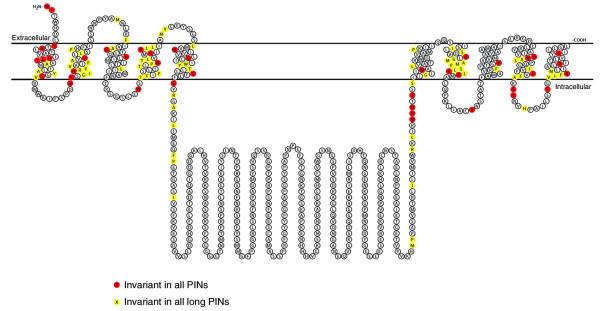
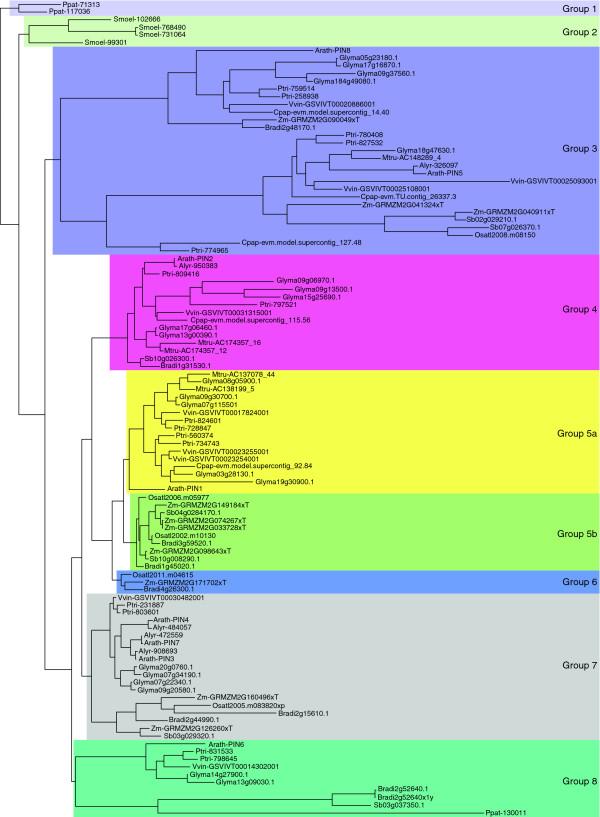
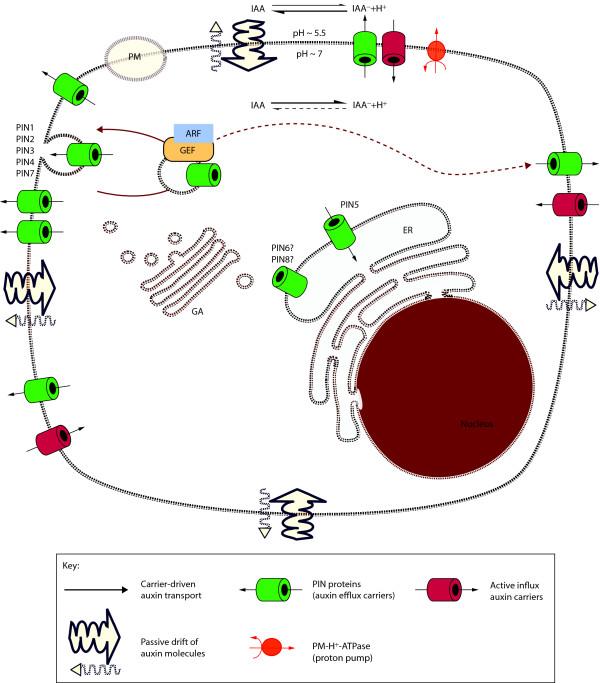
The PIN-FORMED (PIN) proteins are secondary transporters acting in the efflux of the plant signal molecule auxin from cells. They are asymmetrically localized within cells and their polarity determines the directionality of intercellular auxin flow. PIN genes are found exclusively in the genomes of multicellular plants and play an important role in regulating asymmetric auxin distribution in multiple developmental processes, including embryogenesis, organogenesis, tissue differentiation and tropic responses. All PIN proteins have a similar structure with amino- and carboxy-terminal hydrophobic, membrane-spanning domains separated by a central hydrophilic domain. The structure of the hydrophobic domains is well conserved. The hydrophilic domain is more divergent and it determines eight groups within the protein family. The activity of PIN proteins is regulated at multiple levels, including transcription, protein stability, subcellular localization and transport activity. Different endogenous and environmental signals can modulate PIN activity and thus modulate auxin-distribution-dependent development. A large group of PIN proteins, including the most ancient members known from mosses, localize to the endoplasmic reticulum and they regulate the subcellular compartmentalization of auxin and thus auxin metabolism. Further work is needed to establish the physiological importance of this unexpected mode of auxin homeostasis regulation. Furthermore, the evolution of PIN-based transport, PIN protein structure and more detailed biochemical characterization of the transport function are important topics for further studies.
PIN 蛋白是次级转运蛋白,作用是将植物信号分子生长素从细胞中排出。它们在细胞内呈不对称定位,其极性决定了细胞间生长素流动的方向。PIN 基因仅存在于多细胞植物的基因组中,在调节多个发育过程中的不对称生长素分布方面发挥着重要作用,包括胚胎发生、器官发生、组织分化和向性反应。所有 PIN 蛋白都具有相似的结构,具有氨基和羧基末端疏水性、跨膜结构域,由中央亲水区隔开。疏水性结构域的结构高度保守。亲水区更具变异性,它决定了蛋白家族中的 8 个组。PIN 蛋白的活性受到多个层次的调节,包括转录、蛋白稳定性、亚细胞定位和运输活性。不同的内源性和环境信号可以调节 PIN 活性,从而调节依赖生长素分布的发育。一大组 PIN 蛋白,包括从苔藓中已知的最古老的成员,定位于内质网,它们调节生长素的亚细胞区室化,从而调节生长素代谢。需要进一步的工作来确定这种出乎意料的生长素稳态调节方式的生理重要性。此外,基于 PIN 的运输的进化、PIN 蛋白结构以及对运输功能的更详细的生化特征分析,都是进一步研究的重要课题。




 Zotero 插件