
多平台全基因组微阵列分析通过基因表达和拷贝数改善乳腺癌转移的表观遗传特征。
Multi-platform whole-genome microarray analyses refine the epigenetic signature of breast cancer metastasis with gene expression and copy number.
机构信息
London Regional Cancer Program, London Health Sciences Centre, London, Ontario, Canada.
出版信息
PLoS One. 2010 Jan 13;5(1):e8665. doi: 10.1371/journal.pone.0008665.
BACKGROUND
We have previously identified genome-wide DNA methylation changes in a cell line model of breast cancer metastasis. These complex epigenetic changes that we observed, along with concurrent karyotype analyses, have led us to hypothesize that complex genomic alterations in cancer cells (deletions, translocations and ploidy) are superimposed over promoter-specific methylation events that are responsible for gene-specific expression changes observed in breast cancer metastasis.
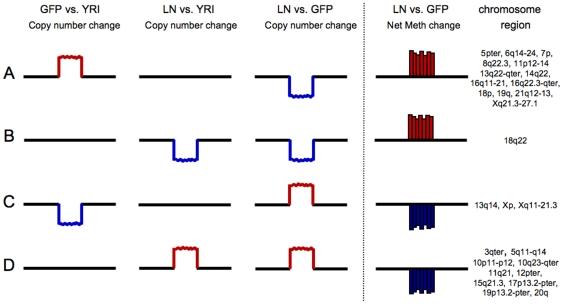
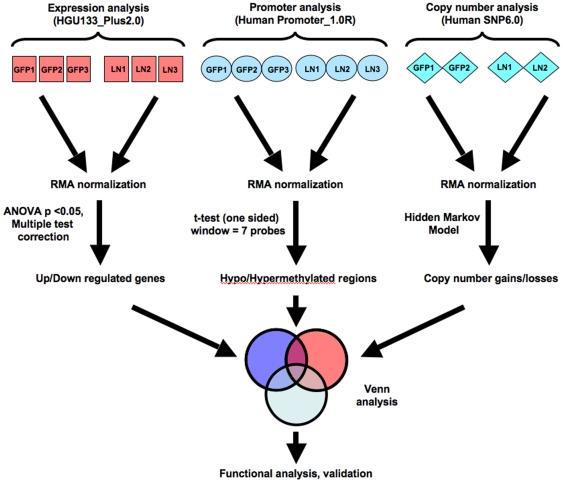
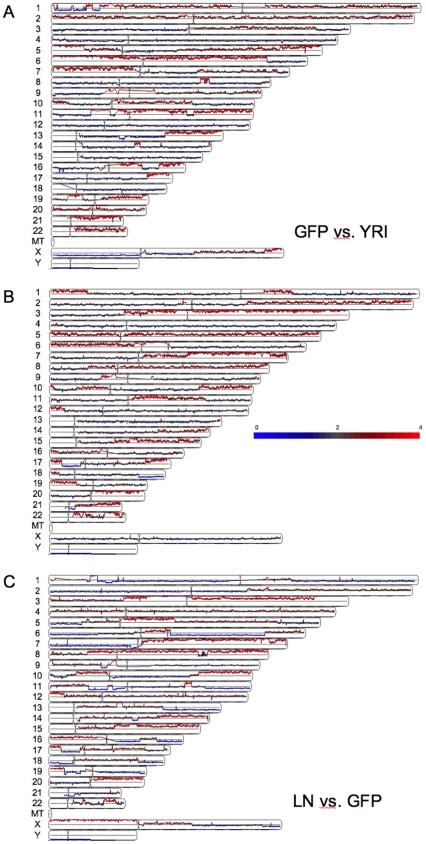
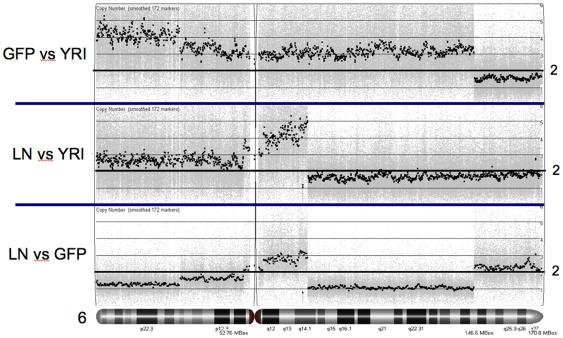
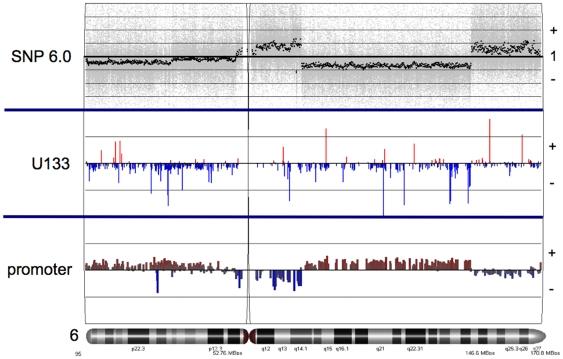
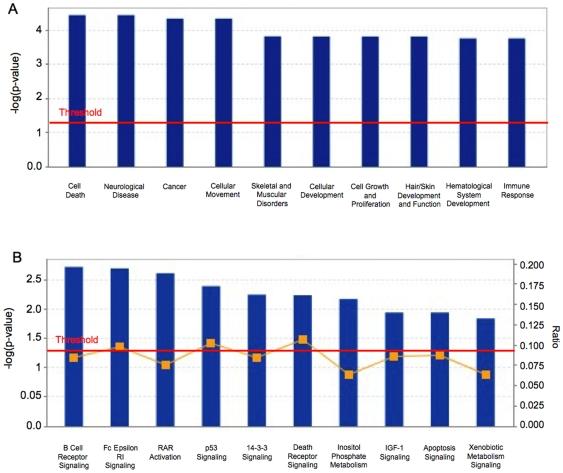
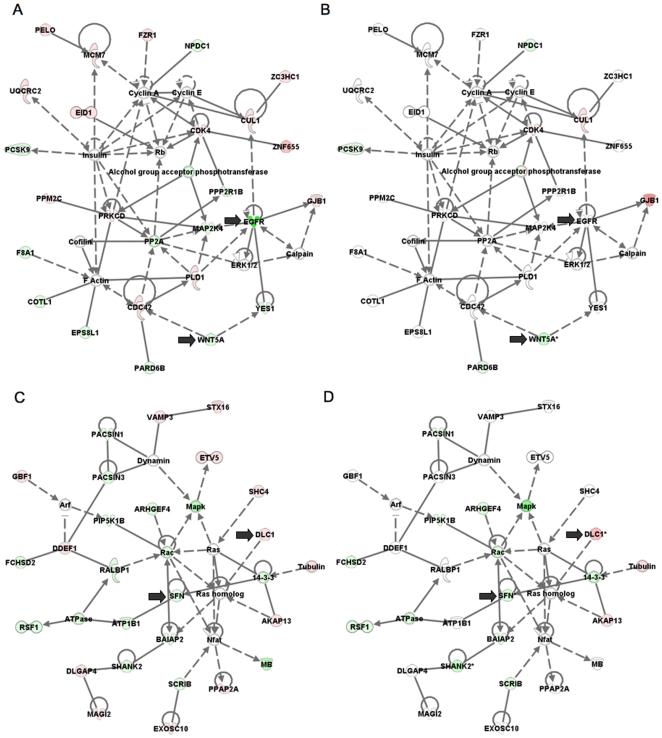
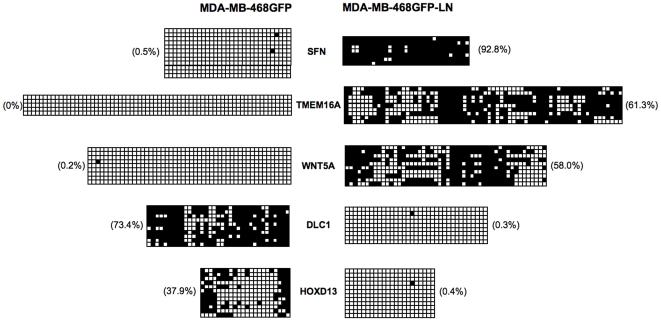
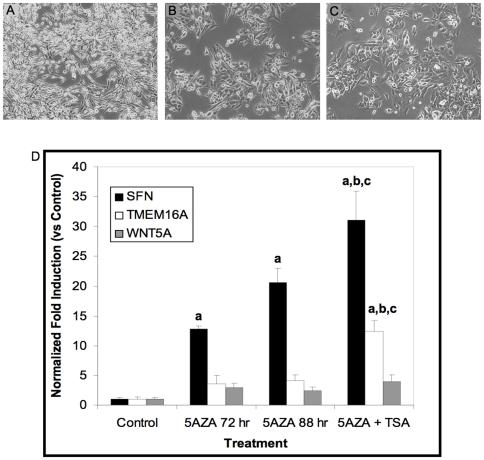
METHODOLOGY/PRINCIPAL FINDINGS: We undertook simultaneous high-resolution, whole-genome analyses of MDA-MB-468GFP and MDA-MB-468GFP-LN human breast cancer cell lines (an isogenic, paired lymphatic metastasis cell line model) using Affymetrix gene expression (U133), promoter (1.0R), and SNP/CNV (SNP 6.0) microarray platforms to correlate data from gene expression, epigenetic (DNA methylation), and combination copy number variant/single nucleotide polymorphism microarrays. Using Partek Software and Ingenuity Pathway Analysis we integrated datasets from these three platforms and detected multiple hypomethylation and hypermethylation events. Many of these epigenetic alterations correlated with gene expression changes. In addition, gene dosage events correlated with the karyotypic differences observed between the cell lines and were reflected in specific promoter methylation patterns. Gene subsets were identified that correlated hyper (and hypo) methylation with the loss (or gain) of gene expression and in parallel, with gene dosage losses and gains, respectively. Individual gene targets from these subsets were also validated for their methylation, expression and copy number status, and susceptible gene pathways were identified that may indicate how selective advantage drives the processes of tumourigenesis and metastasis.
CONCLUSIONS/SIGNIFICANCE: Our approach allows more precisely profiling of functionally relevant epigenetic signatures that are associated with cancer progression and metastasis.
背景
我们之前在乳腺癌转移的细胞系模型中发现了全基因组 DNA 甲基化变化。这些我们观察到的复杂表观遗传变化,以及伴随的核型分析,使我们假设癌细胞中的复杂基因组改变(缺失、易位和倍性)叠加在负责乳腺癌转移中观察到的基因特异性表达变化的启动子特异性甲基化事件之上。
方法/主要发现:我们使用 Affymetrix 基因表达 (U133)、启动子 (1.0R) 和 SNP/CNV (SNP 6.0) 微阵列平台,对 MDA-MB-468GFP 和 MDA-MB-468GFP-LN 人乳腺癌细胞系(同源配对的淋巴转移细胞系模型)进行了高通量、全基因组分析,以关联来自基因表达、表观遗传(DNA 甲基化)和组合拷贝数变异/SNP 微阵列的数据。使用 Partek 软件和 Ingenuity 通路分析,我们整合了这三个平台的数据集,并检测到多个低甲基化和高甲基化事件。这些表观遗传改变中的许多与基因表达变化相关。此外,基因剂量事件与细胞系之间观察到的核型差异相关,并反映在特定的启动子甲基化模式中。确定了与基因表达丢失(或获得)相关的基因亚组,以及与基因剂量丢失和获得相关的基因亚组,分别。从这些亚组中选择了个别基因靶标,以验证其甲基化、表达和拷贝数状态,并确定了易感性基因途径,这些途径可能表明选择性优势如何驱动肿瘤发生和转移的过程。
结论/意义:我们的方法允许更精确地分析与癌症进展和转移相关的功能相关的表观遗传特征。


 Zotero 插件