
抗坏血酸通过细胞周期抑制发挥抗增殖作用,并使肿瘤细胞对细胞抑制剂药物敏感。
Ascorbate exerts anti-proliferative effects through cell cycle inhibition and sensitizes tumor cells towards cytostatic drugs.
机构信息
Institute of Pharmacology, Faculty of Medicine, Philipps-University Marburg, Karl-von-Frisch-Strasse 1, 35032 Marburg, Germany.
出版信息
Cancer Chemother Pharmacol. 2011 May;67(5):1157-66. doi: 10.1007/s00280-010-1418-6. Epub 2010 Aug 8.
PURPOSE
While the benefits of ascorbic acid (vitamin C, ascorbate) as an essential nutrient are well established, its effects on tumor cells and in tumor treatment are controversial. In particular, conflicting data exist whether ascorbate may increase the cytotoxic effects of antineoplastic drugs or may rather exert adverse effects on drug sensitivity during cancer treatment. Findings are further obscured regarding the distinction between ascorbate and dehydroascorbate (DHA). Thus, the purpose of this study was to evaluate and directly compare the cytotoxic efficacy of ascorbate compared to DHA, and to analyse if ascorbate at pharmacological concentrations affects the efficacy of antineoplastic agents in prostate carcinoma cells.
METHODS
We directly compare the effects of ascorbate (supplied as 'Pascorbin solution for injection') and DHA on tumor cell viability, and determine IC(50) values for various cell lines. At concentrations well below the IC(50), ascorbate effects on cell proliferation and cell cycle are analysed. We furthermore determine changes in cellular sensitivity towards various cytostatic drugs upon pre-treatment of cells with ascorbate.
RESULTS
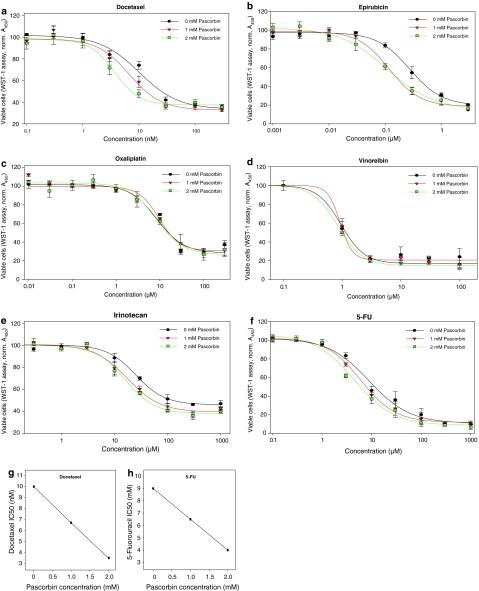
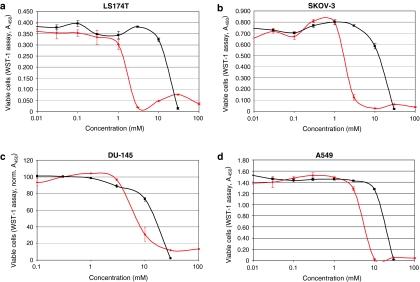
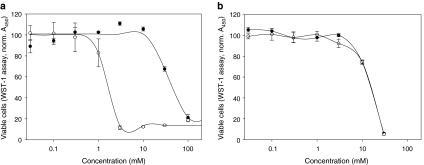
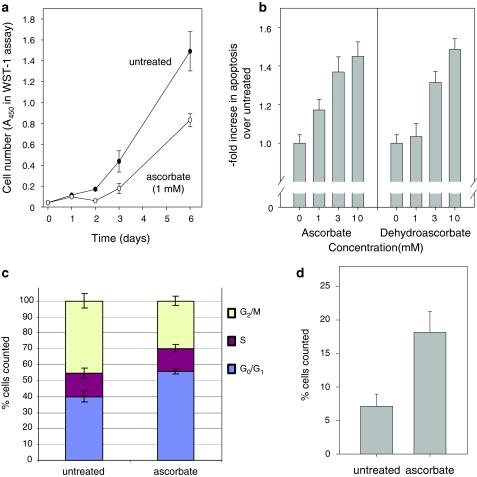
We demonstrate higher therapeutic efficacy of ascorbate over DHA in various cell lines, independent of cell line-specific differences in ascorbate sensitivity, and identify the extracellular generation of H(2)O(2) as critical mechanism of ascorbate action. We furthermore show that, in addition to pro-apoptotic effects described previously, ascorbate treatment already at concentrations well below the IC(50) exerts anti-proliferative effects on tumor cells. Those are based on interference with the cell cycle, namely by inducing a G(0)/G(1) arrest. Pre-treatment of tumor cells with ascorbate leads to increased cellular sensitivity towards Docetaxel, Epirubicin, Irinotecan and 5-FU, but not towards Oxaliplatin and Vinorelbin. For Docetaxel and 5-FU, a linear correlation between this sensitizing effect and the ascorbate dosage is observed.
CONCLUSIONS
The redox-active form of vitamin C, ascorbate, shows therapeutic efficacy in tumor cells. These antitumor effects of ascorbate are mainly based on its extracellular action and, in addition to the induction of apoptosis, also include an anti-proliferative effect by inducing cell cycle arrest. Furthermore, ascorbate treatment specifically enhances the cytostatic potency of certain chemotherapeutics, which implicates therapeutic benefit during tumor treatment.
目的
虽然抗坏血酸(维生素 C,抗坏血酸盐)作为一种必需营养素的益处已得到充分证实,但它对肿瘤细胞和肿瘤治疗的影响仍存在争议。特别是,关于抗坏血酸是否可能增加抗肿瘤药物的细胞毒性作用,或者在癌症治疗过程中是否可能对药物敏感性产生不利影响,存在相互矛盾的数据。此外,抗坏血酸和脱氢抗坏血酸(DHA)之间的区别也使得研究结果更加模糊。因此,本研究的目的是评估并直接比较抗坏血酸与 DHA 的细胞毒性作用,并分析在药理浓度下抗坏血酸是否会影响前列腺癌细胞中抗肿瘤药物的疗效。
方法
我们直接比较抗坏血酸(以“Pascorbin 注射液”形式提供)和 DHA 对肿瘤细胞活力的影响,并确定各种细胞系的 IC50 值。在远低于 IC50 的浓度下,分析抗坏血酸对细胞增殖和细胞周期的影响。此外,我们还在细胞用抗坏血酸预处理后,确定细胞对各种细胞毒药物的敏感性变化。
结果
我们证明了在各种细胞系中,抗坏血酸比 DHA 具有更高的治疗效果,这与细胞系特异性抗坏血酸敏感性差异无关,并确定细胞外生成的 H2O2 是抗坏血酸作用的关键机制。此外,我们还表明,除了先前描述的促凋亡作用外,抗坏血酸治疗在远低于 IC50 的浓度下即可对肿瘤细胞产生抗增殖作用。这些作用基于对细胞周期的干扰,即通过诱导 G0/G1 期阻滞。用抗坏血酸预处理肿瘤细胞会导致细胞对多西紫杉醇、表柔比星、伊立替康和 5-FU 的敏感性增加,但对奥沙利铂和长春瑞滨则不然。对于多西紫杉醇和 5-FU,观察到这种增敏作用与抗坏血酸剂量之间存在线性相关性。
结论
维生素 C 的氧化还原活性形式抗坏血酸在肿瘤细胞中具有治疗效果。抗坏血酸的这些抗肿瘤作用主要基于其细胞外作用,除了诱导细胞凋亡外,还包括通过诱导细胞周期停滞来发挥抗增殖作用。此外,抗坏血酸治疗还特异性增强了某些化疗药物的细胞毒性作用,这意味着在肿瘤治疗过程中具有治疗益处。
 Zotero 插件