
跨越 2 亿年进化的细菌共生体缩小基因组中的功能趋同。
Functional convergence in reduced genomes of bacterial symbionts spanning 200 My of evolution.
机构信息
Center for Insect Science, University of Arizona, Arizona, USA.
出版信息
Genome Biol Evol. 2010;2:708-18. doi: 10.1093/gbe/evq055. Epub 2010 Sep 9.
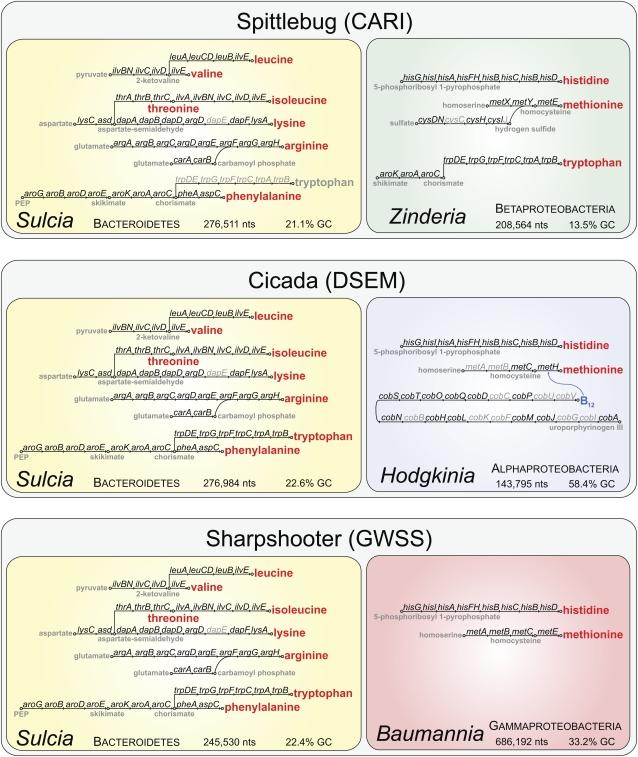
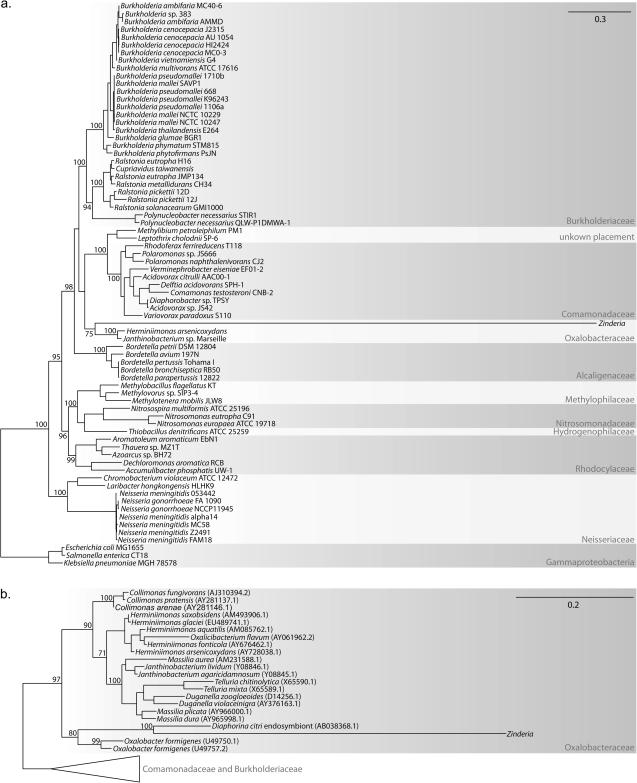
The main genomic changes in the evolution of host-restricted microbial symbionts are ongoing inactivation and loss of genes combined with rapid sequence evolution and extreme structural stability; these changes reflect high levels of genetic drift due to small population sizes and strict clonality. This genomic erosion includes irreversible loss of genes in many functional categories and can include genes that underlie the nutritional contributions to hosts that are the basis of the symbiotic association. Candidatus Sulcia muelleri is an ancient symbiont of sap-feeding insects and is typically coresident with another bacterial symbiont that varies among host subclades. Previously sequenced Sulcia genomes retain pathways for the same eight essential amino acids, whereas coresident symbionts synthesize the remaining two. Here, we describe a dual symbiotic system consisting of Sulcia and a novel species of Betaproteobacteria, Candidatus Zinderia insecticola, both living in the spittlebug Clastoptera arizonana. This Sulcia has completely lost the pathway for the biosynthesis of tryptophan and, therefore, retains the ability to make only 7 of the 10 essential amino acids. Zinderia has a tiny genome (208 kb) and the most extreme nucleotide base composition (13.5% G + C) reported to date, yet retains the ability to make the remaining three essential amino acids, perfectly complementing capabilities of the coresident Sulcia. Combined with the results from related symbiotic systems with complete genomes, these data demonstrate the critical role that bacterial symbionts play in the host insect's biology and reveal one outcome following the loss of a critical metabolic activity through genome reduction.
在宿主限制型微生物共生体的进化过程中,主要的基因组变化是基因的不断失活和丢失,同时伴随着快速的序列进化和极端的结构稳定性;这些变化反映了由于种群规模小和严格的克隆性而导致的高水平遗传漂变。这种基因组侵蚀包括许多功能类别的基因不可逆丢失,并且可能包括作为共生关联基础的宿主营养贡献的基础基因。Candidatus Sulcia muelleri 是一种古老的吸食汁液昆虫共生体,通常与另一种在宿主亚群中变化的细菌共生体共存。以前测序的 Sulcia 基因组保留了相同的八种必需氨基酸的途径,而共存的共生体则合成其余两种。在这里,我们描述了一个由 Sulcia 和一种新的 Betaproteobacteria 物种 Candidatus Zinderia insecticola 组成的双重共生系统,它们都生活在沫蝉 Clastoptera arizonana 中。这种 Sulcia 完全失去了色氨酸生物合成途径,因此只能制造 10 种必需氨基酸中的 7 种。Zinderia 的基因组非常小(208 kb),是迄今为止报道的核苷酸碱基组成最极端的(13.5% G+C),但仍保留了制造其余三种必需氨基酸的能力,与共存的 Sulcia 完美互补。结合具有完整基因组的相关共生系统的结果,这些数据表明细菌共生体在宿主昆虫生物学中起着至关重要的作用,并揭示了在基因组减少导致关键代谢活性丧失后产生的一种结果。



 Zotero 插件