
比较杨树干旱响应的转录组学研究:两个基因型成熟叶片和根顶端的全基因组表达谱的荟萃分析。
Comparative transcriptomics of drought responses in Populus: a meta-analysis of genome-wide expression profiling in mature leaves and root apices across two genotypes.
机构信息
INRA, Nancy Université, UMR1137 Ecologie et Ecophysiologie Forestières, IFR 110 EFABA, F-54280 Champenoux, France.
出版信息
BMC Genomics. 2010 Nov 12;11:630. doi: 10.1186/1471-2164-11-630.
BACKGROUND
Comparative genomics has emerged as a promising means of unravelling the molecular networks underlying complex traits such as drought tolerance. Here we assess the genotype-dependent component of the drought-induced transcriptome response in two poplar genotypes differing in drought tolerance. Drought-induced responses were analysed in leaves and root apices and were compared with available transcriptome data from other Populus species.
RESULTS
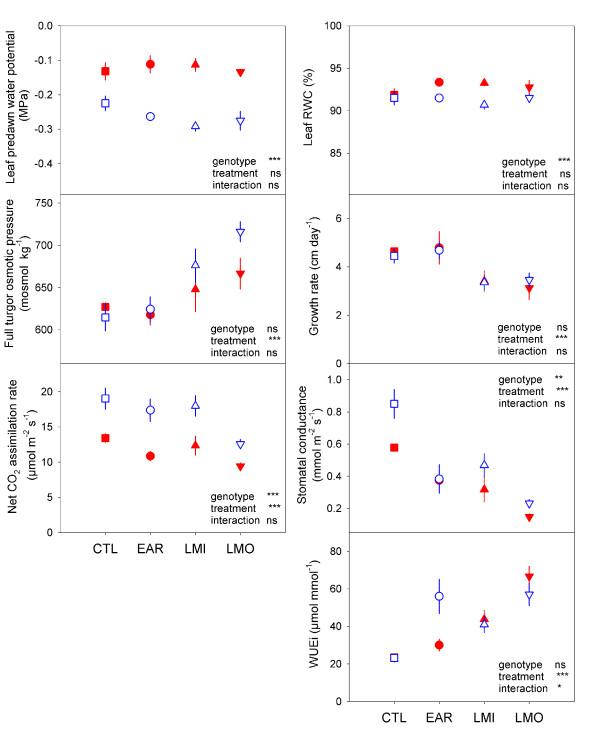
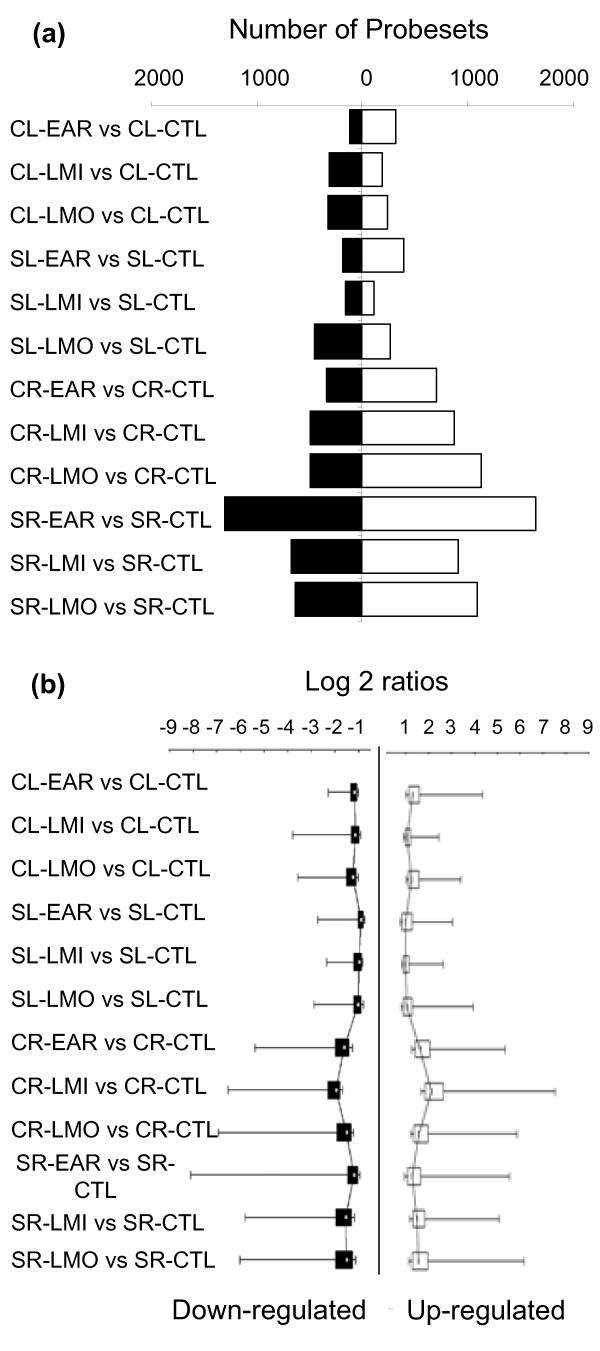
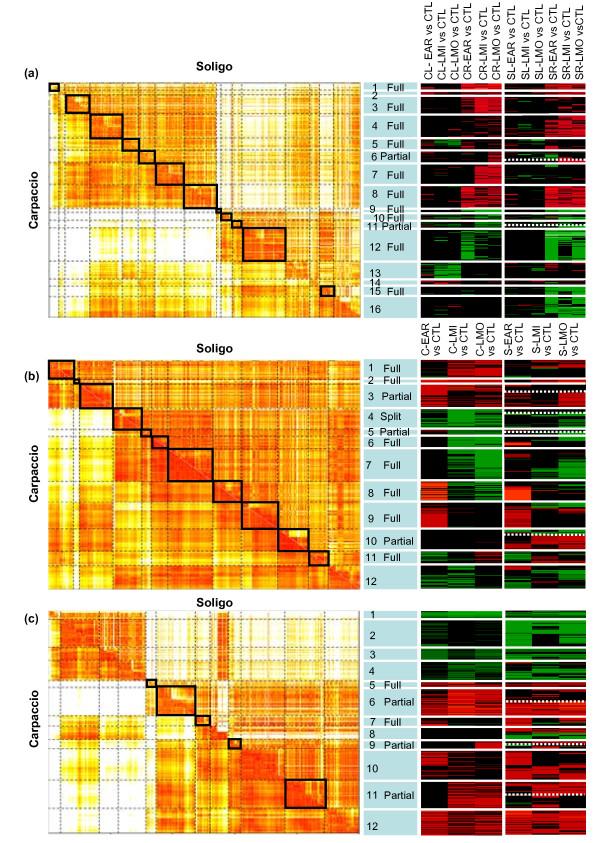
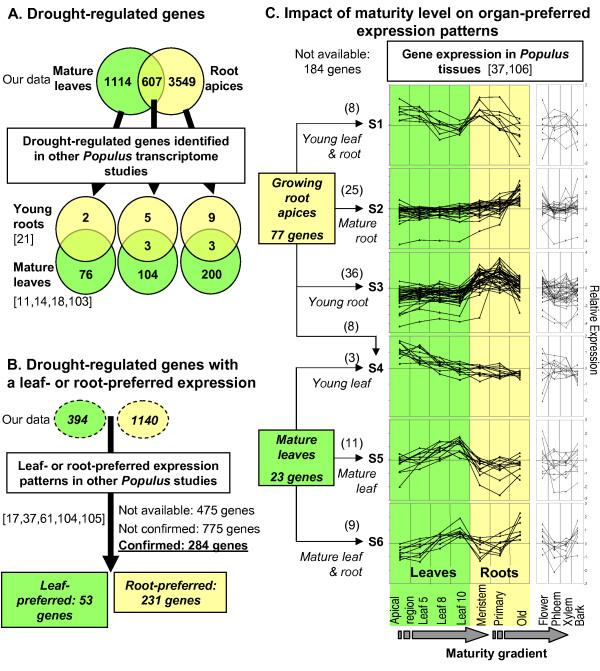
Using a multi-species designed microarray, a genomic DNA-based selection of probesets provided an unambiguous between-genotype comparison. Analyses of functional group enrichment enabled the extraction of processes physiologically relevant to drought response. The drought-driven changes in gene expression occurring in root apices were consistent across treatments and genotypes. For mature leaves, the transcriptome response varied weakly but in accordance with the duration of water deficit. A differential clustering algorithm revealed similar and divergent gene co-expression patterns among the two genotypes. Since moderate stress levels induced similar physiological responses in both genotypes, the genotype-dependent transcriptional responses could be considered as intrinsic divergences in genome functioning. Our meta-analysis detected several candidate genes and processes that are differentially regulated in root and leaf, potentially under developmental control, and preferentially involved in early and long-term responses to drought.
CONCLUSIONS
In poplar, the well-known drought-induced activation of sensing and signalling cascades was specific to the early response in leaves but was found to be general in root apices. Comparing our results to what is known in arabidopsis, we found that transcriptional remodelling included signalling and a response to energy deficit in roots in parallel with transcriptional indices of hampered assimilation in leaves, particularly in the drought-sensitive poplar genotype.
背景
比较基因组学已成为揭示复杂性状(如耐旱性)分子网络的一种很有前途的方法。在这里,我们评估了在耐旱性不同的两个杨树基因型中,干旱诱导的转录组反应的基因型依赖性成分。在叶片和根尖中分析了干旱诱导的反应,并与其他杨树物种的可用转录组数据进行了比较。
结果
使用多物种设计的微阵列,基于基因组 DNA 的探针选择提供了一种明确的基因型间比较。功能组富集分析使我们能够提取与干旱反应相关的生理过程。在根根尖中,干旱驱动的基因表达变化在不同处理和基因型之间是一致的。对于成熟叶片,转录组反应虽然微弱,但与水分亏缺的持续时间一致。差异聚类算法揭示了两种基因型之间相似和不同的基因共表达模式。由于中等胁迫水平在两种基因型中诱导相似的生理反应,因此,基因型依赖性转录反应可以被认为是基因组功能的内在差异。我们的荟萃分析检测到了几个候选基因和过程,它们在根和叶中差异调控,可能受发育控制,并优先参与对干旱的早期和长期反应。
结论
在杨树中,众所周知的干旱诱导的感应和信号级联的激活是叶片早期反应的特异性,但在根尖中却是一般性的。将我们的结果与拟南芥中的已知结果进行比较,我们发现,在根部,转录重编程包括信号转导和对能量亏缺的反应,与叶片中同化受阻的转录指标平行,特别是在耐旱性较弱的杨树基因型中。

 Zotero 插件