
GLP-1 受体激动剂的心血管作用。
The cardiovascular effects of GLP-1 receptor agonists.
机构信息
Diabetes Research, Amylin Pharmaceuticals, San Diego, CA, USA.
出版信息
Cardiovasc Ther. 2012 Jun;30(3):e146-55. doi: 10.1111/j.1755-5922.2010.00256.x. Epub 2010 Dec 19.
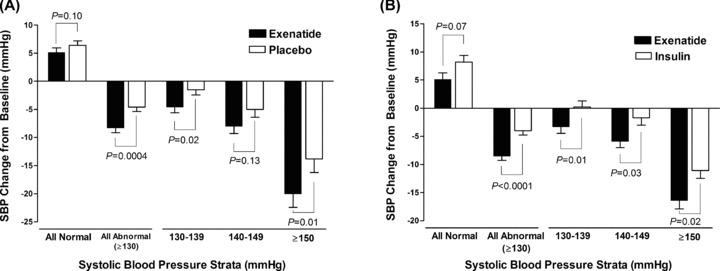
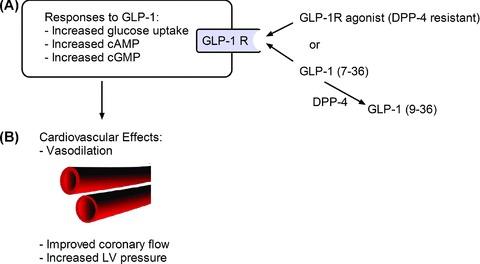
Glucagon-like peptide-1 receptor (GLP-1R) agonists have been shown to regulate blood glucose concentrations by mechanisms including enhanced insulin synthesis/secretion, suppressed glucagon secretion, slowed gastric emptying, and enhanced satiety. GLP-1 receptors have also been identified in the heart, kidneys, and blood vessels, leading to the hypothesis that GLP-1R agonists may affect cardiovascular function or cardiovascular disease (CVD). The aim of this literature review was to assemble and assess preclinical and clinical data of potential medical importance regarding the cardiovascular effects of GLP-1R agonists. Preclinical studies with the GLP-1R agonists GLP-1, exenatide, or liraglutide provided evidence that GLP-1R stimulation favorably affects endothelial function, sodium excretion, recovery from ischemic injury, and myocardial function in animals. Similar observations have been made in exploratory studies on GLP-1 infusion in normal subjects and patients with type 2 diabetes. Post hoc analyses of phase III studies of patients with type 2 diabetes treated with exenatide(bid or qw) or liraglutide(qd) showed that these GLP-1R agonists reduced blood pressure, an effect largely independent of weight loss, and that liraglutide slightly increased heart rate. Preliminary data also indicated that GLP-1R agonists reduced markers of CVD risk such as C-reactive protein and plasminogen activator inhibitor-1. Ongoing studies are examining the effects of administering GLP-1R agonists to patients at risk of CVD, postangioplasty patients, post-CABG patients, and patients with heart failure. Additional studies should provide meaningful data to determine whether GLP-1R agonists provide unique treatment benefits to patients at risk for or with established CVD.
胰高血糖素样肽-1 受体 (GLP-1R) 激动剂已被证明通过多种机制调节血糖浓度,包括增强胰岛素的合成/分泌、抑制胰高血糖素的分泌、减缓胃排空和增强饱腹感。GLP-1 受体也已在心脏、肾脏和血管中被鉴定出来,这导致了 GLP-1R 激动剂可能影响心血管功能或心血管疾病 (CVD) 的假说。本文献综述的目的是收集和评估 GLP-1R 激动剂对心血管影响的潜在重要医学意义的临床前和临床数据。GLP-1、艾塞那肽或利拉鲁肽等 GLP-1R 激动剂的临床前研究提供了证据,表明 GLP-1R 刺激有利于改善内皮功能、钠排泄、缺血损伤恢复和动物的心肌功能。在正常受试者和 2 型糖尿病患者的 GLP-1 输注探索性研究中也观察到了类似的结果。接受艾塞那肽(bid 或 qw)或利拉鲁肽(qd)治疗的 2 型糖尿病患者的 III 期研究的事后分析表明,这些 GLP-1R 激动剂降低了血压,这种作用在很大程度上与体重减轻无关,而利拉鲁肽略微增加了心率。初步数据还表明,GLP-1R 激动剂降低了 CVD 风险标志物,如 C 反应蛋白和纤溶酶原激活物抑制剂-1。正在进行的研究正在检查向 CVD 风险患者、血管成形术后患者、冠状动脉旁路移植术 (CABG) 后患者和心力衰竭患者施用 GLP-1R 激动剂的效果。额外的研究应该提供有意义的数据,以确定 GLP-1R 激动剂是否为有或无 CVD 风险的患者提供独特的治疗益处。

 Zotero 插件