
雌激素受体β与乳腺癌细胞基因组的全局分析揭示了其与雌激素受体α在靶基因调控方面的广泛相互作用。
Global analysis of estrogen receptor beta binding to breast cancer cell genome reveals an extensive interplay with estrogen receptor alpha for target gene regulation.
机构信息
Department of General Pathology, Second University of Naples, vico L, De Crecchio 7, 80138 Napoli, Italy.
出版信息
BMC Genomics. 2011 Jan 14;12:36. doi: 10.1186/1471-2164-12-36.
BACKGROUND
Estrogen receptors alpha (ERα) and beta (ERβ) are transcription factors (TFs) that mediate estrogen signaling and define the hormone-responsive phenotype of breast cancer (BC). The two receptors can be found co-expressed and play specific, often opposite, roles, with ERβ being able to modulate the effects of ERα on gene transcription and cell proliferation. ERβ is frequently lost in BC, where its presence generally correlates with a better prognosis of the disease. The identification of the genomic targets of ERβ in hormone-responsive BC cells is thus a critical step to elucidate the roles of this receptor in estrogen signaling and tumor cell biology.
RESULTS
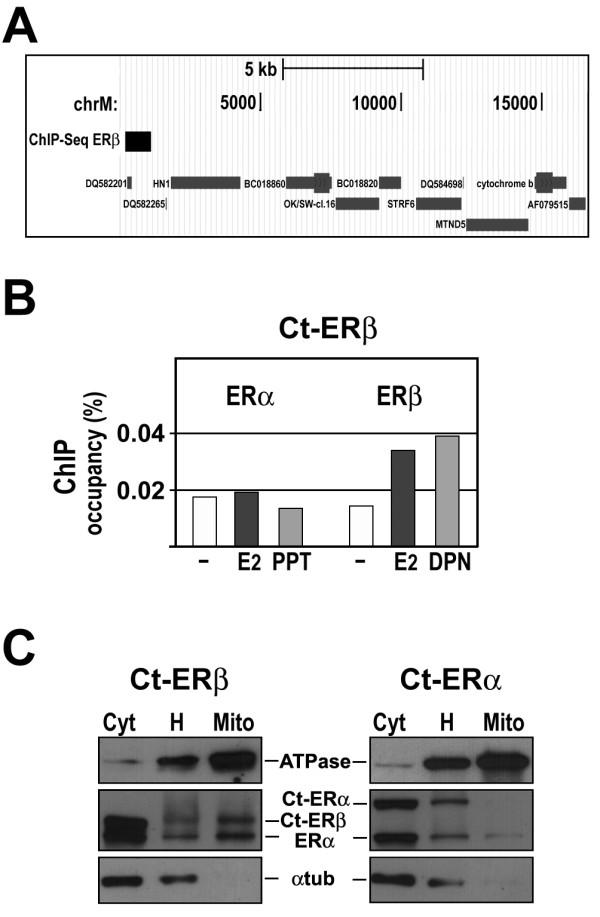
Expression of full-length ERβ in hormone-responsive, ERα-positive MCF-7 cells resulted in a marked reduction in cell proliferation in response to estrogen and marked effects on the cell transcriptome. By ChIP-Seq we identified 9702 ERβ and 6024 ERα binding sites in estrogen-stimulated cells, comprising sites occupied by either ERβ, ERα or both ER subtypes. A search for TF binding matrices revealed that the majority of the binding sites identified comprise one or more Estrogen Response Element and the remaining show binding matrixes for other TFs known to mediate ER interaction with chromatin by tethering, including AP2, E2F and SP1. Of 921 genes differentially regulated by estrogen in ERβ+ vs ERβ- cells, 424 showed one or more ERβ site within 10 kb. These putative primary ERβ target genes control cell proliferation, death, differentiation, motility and adhesion, signal transduction and transcription, key cellular processes that might explain the biological and clinical phenotype of tumors expressing this ER subtype. ERβ binding in close proximity of several miRNA genes and in the mitochondrial genome, suggests the possible involvement of this receptor in small non-coding RNA biogenesis and mitochondrial genome functions.
CONCLUSIONS
Results indicate that the vast majority of the genomic targets of ERβ can bind also ERα, suggesting that the overall action of ERβ on the genome of hormone-responsive BC cells depends mainly on the relative concentration of both ERs in the cell.
背景
雌激素受体 alpha(ERα)和 beta(ERβ)是转录因子(TFs),介导雌激素信号并定义乳腺癌(BC)的激素反应表型。这两种受体可以共同表达并发挥特定的、通常相反的作用,其中 ERβ 能够调节 ERα 对基因转录和细胞增殖的影响。在 BC 中,ERβ 经常丢失,其存在通常与疾病预后较好相关。因此,鉴定激素反应性 BC 细胞中 ERβ 的基因组靶标是阐明该受体在雌激素信号和肿瘤细胞生物学中的作用的关键步骤。
结果
在激素反应性、ERα 阳性 MCF-7 细胞中表达全长 ERβ 导致细胞对雌激素的增殖反应明显减少,并对细胞转录组产生明显影响。通过 ChIP-Seq,我们在雌激素刺激的细胞中鉴定出 9702 个 ERβ 和 6024 个 ERα 结合位点,这些结合位点由 ERβ、ERα 或两种 ER 亚型之一占据。搜索 TF 结合矩阵显示,鉴定出的大多数结合位点包含一个或多个雌激素反应元件,其余的结合矩阵显示了其他 TF 的结合矩阵,这些 TF 已知通过连接介导 ER 与染色质的相互作用,包括 AP2、E2F 和 SP1。在 ERβ+与 ERβ-细胞中受雌激素差异调节的 921 个基因中,有 424 个基因在 10kb 内有一个或多个 ERβ 位点。这些推定的主要 ERβ 靶基因控制细胞增殖、死亡、分化、迁移和粘附、信号转导和转录,这些关键的细胞过程可能解释表达这种 ER 亚型的肿瘤的生物学和临床表型。ERβ 结合在几个 miRNA 基因和线粒体基因组的附近,表明该受体可能参与小非编码 RNA 生物发生和线粒体基因组功能。
结论
结果表明,ERβ 的绝大多数基因组靶标也可以与 ERα 结合,这表明 ERβ 对激素反应性 BC 细胞基因组的总体作用主要取决于细胞中两种 ER 的相对浓度。


 Zotero 插件