
寻找治愈 HIV 的方法:这是否可能实现?
Finding a cure for HIV: will it ever be achievable?
机构信息
Department of Medicine, Monash University, Melbourne, Australia.
出版信息
J Int AIDS Soc. 2011 Jan 24;14:4. doi: 10.1186/1758-2652-14-4.
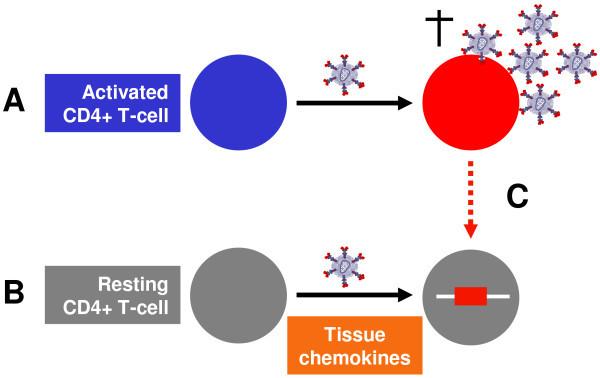
Combination antiretroviral therapy (cART) has led to a major reduction in HIV-related mortality and morbidity. However, HIV still cannot be cured. With the absence of an effective prophylactic or therapeutic vaccine, increasing numbers of infected people, emerging new toxicities secondary to cART and the need for life-long treatment, there is now a real urgency to find a cure for HIV.There are currently multiple barriers to curing HIV. The most significant barrier is the establishment of a latent or "silent" infection in resting CD4+ T cells. In latent HIV infection, the virus is able to integrate into the host cell genome, but does not proceed to active replication. As a consequence, antiviral agents, as well as the immune system, are unable to eliminate these long-lived, latently infected cells. Reactivation of latently infected resting CD4+ T cells can then re-establish infection once cART is stopped. Other significant barriers to cure include residual viral replication in patients receiving cART, even when the virus is not detectable by conventional assays. In addition, HIV can be sequestered in anatomical reservoirs, such as the brain, gastrointestinal tract and genitourinary tract.Achieving either a functional cure (long-term control of HIV in the absence of cART) or a sterilizing cure (elimination of all HIV-infected cells) remains a major challenge. Several studies have now demonstrated that treatment intensification appears to have little impact on latent reservoirs. Some potential and promising approaches that may reduce the latent reservoir include very early initiation of cART and the use of agents that could potentially reverse latent infection.Agents that reverse latent infection will promote viral production; however, simultaneous administration of cART will prevent subsequent rounds of viral replication. Such drugs as histone deacetylase inhibitors, currently used and licensed for the treatment of some cancers, or activating latently infected resting cells with cytokines, such as IL-7 or prostratin, show promising results in reversing latency in vitro when used either alone or in combination. In order to move forward toward clinical trials that target eradication, there needs to be careful consideration of the risks and benefits of these approaches, agreement on the most informative endpoints for eradication studies and greater engagement of the infected community.
联合抗逆转录病毒疗法(cART)显著降低了与 HIV 相关的死亡率和发病率。然而,HIV 仍无法治愈。由于缺乏有效的预防性或治疗性疫苗,感染人数不断增加,cART 引起的新毒性不断出现,以及需要终身治疗,因此现在迫切需要找到治愈 HIV 的方法。目前治愈 HIV 存在多种障碍。最大的障碍是在静止 CD4+T 细胞中建立潜伏或“沉默”感染。在潜伏性 HIV 感染中,病毒能够整合到宿主细胞基因组中,但不会进行主动复制。因此,抗病毒药物以及免疫系统无法消除这些具有长期潜伏感染能力的细胞。一旦停止 cART,潜伏感染的静止 CD4+T 细胞的重新激活就可以重新建立感染。治愈的其他重大障碍包括接受 cART 的患者中仍存在残留病毒复制,即使病毒无法通过常规检测方法检测到。此外,HIV 可以被隔离在解剖学储库中,例如大脑、胃肠道和泌尿生殖道。实现功能性治愈(在不接受 cART 的情况下长期控制 HIV)或杀菌性治愈(消除所有感染 HIV 的细胞)仍然是一个主要挑战。目前有几项研究表明,强化治疗似乎对潜伏储库影响不大。一些可能减少潜伏储库的潜在方法包括早期开始 cART 和使用可能逆转潜伏感染的药物。逆转潜伏感染的药物将促进病毒产生;然而,同时给予 cART 将阻止随后的病毒复制。一些药物,如组蛋白去乙酰化酶抑制剂,目前用于治疗某些癌症,或用细胞因子(如 IL-7 或 prostratin)激活潜伏感染的静止细胞,在单独使用或联合使用时,在体外逆转潜伏方面显示出有希望的结果。为了推进针对清除的临床试验,需要仔细考虑这些方法的风险和益处,就清除研究的最具信息性终点达成一致,并让感染社区更多地参与进来。
 Zotero 插件