
感染猿猴免疫缺陷病毒且接受抗逆转录病毒治疗抑制的猕猴中的脑巨噬细胞:一个功能性潜伏库
Brain Macrophages in Simian Immunodeficiency Virus-Infected, Antiretroviral-Suppressed Macaques: a Functional Latent Reservoir.
作者信息
Avalos Claudia R, Abreu Celina M, Queen Suzanne E, Li Ming, Price Sarah, Shirk Erin N, Engle Elizabeth L, Forsyth Ellen, Bullock Brandon T, Mac Gabhann Feilim, Wietgrefe Stephen W, Haase Ashley T, Zink M Christine, Mankowski Joseph L, Clements Janice E, Gama Lucio
机构信息
Department of Molecular and Comparative Pathobiology, Johns Hopkins School of Medicine, Baltimore, Maryland, USA.
Department of Biomedical Engineering and Institute for Computational Medicine, Johns Hopkins University, Baltimore, Maryland, USA.
出版信息
mBio. 2017 Aug 15;8(4):e01186-17. doi: 10.1128/mBio.01186-17.
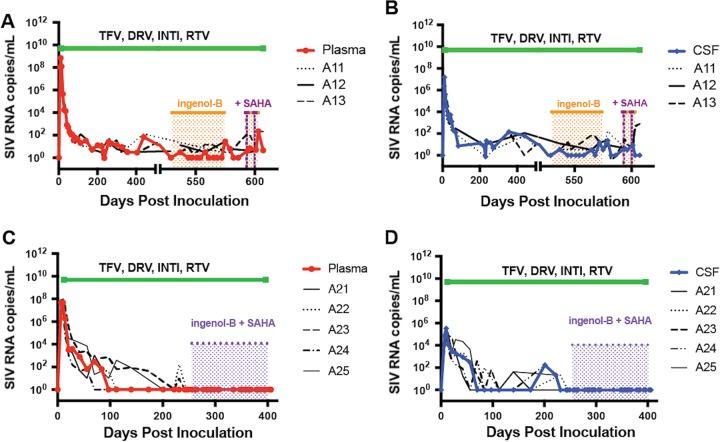
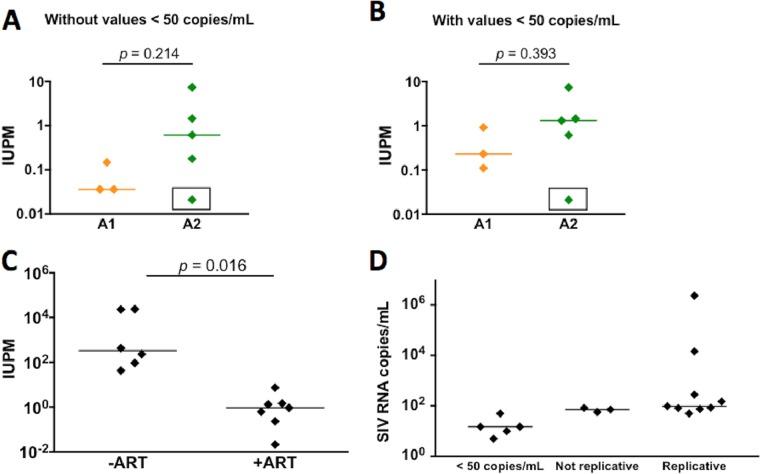
A human immunodeficiency virus (HIV) infection cure requires an understanding of the cellular and anatomical sites harboring virus that contribute to viral rebound upon treatment interruption. Despite antiretroviral therapy (ART), HIV-associated neurocognitive disorders (HAND) are reported in HIV-infected individuals on ART. Biomarkers for macrophage activation and neuronal damage in cerebrospinal fluid (CSF) of HIV-infected individuals demonstrate continued effects of HIV in brain and suggest that the central nervous system (CNS) may serve as a viral reservoir. Using a simian immunodeficiency virus (SIV)/macaque model for HIV encephalitis and AIDS, we evaluated whether infected cells persist in brain despite ART. Eight SIV-infected pig-tailed macaques were virally suppressed with ART, and plasma and CSF viremia levels were analyzed longitudinally. To assess whether virus persisted in brain macrophages (BrMΦ) in these macaques, we used a macrophage quantitative viral outgrowth assay (MΦ-QVOA), PCR, and hybridization (ISH) to measure the frequency of infected cells and the levels of viral RNA and DNA in brain. Viral RNA in brain tissue of suppressed macaques was undetectable, although viral DNA was detected in all animals. The MΦ-QVOA demonstrated that the majority of suppressed animals contained latently infected BrMΦ. We also showed that virus produced in the MΦ-QVOAs was replication competent, suggesting that latently infected BrMΦ are capable of reestablishing productive infection upon treatment interruption. This report provides the first confirmation of the presence of replication-competent SIV in BrMΦ of ART-suppressed macaques and suggests that the highly debated issue of viral latency in macrophages, at least in brain, has been addressed in SIV-infected macaques treated with ART. Resting CD4 T cells are currently the only cells that fit the definition of a latent reservoir. However, recent evidence suggests that HIV/SIV-infected macrophages persist despite ART. Markers of macrophage activation and neuronal damage are observed in the CSF of HIV-infected individuals and of SIV-infected macaques on suppressive ART regimens, suggesting that the CNS has continued virus infection and latent infection. A controversy exists as to whether brain macrophages represent a latent source of replication-competent virus capable of reestablishing infection upon treatment interruption. In this study, we demonstrated the presence of the latent macrophage reservoir in brains of SIV-infected ART-treated macaques and analyzed the reservoir using our established outgrowth assay to quantitate macrophages harboring replication-competent SIV genomes. Our results support the idea of the existence of other latent reservoirs in addition to resting CD4 T cells and underscore the importance of macrophages in developing strategies to eradicate HIV.
要实现人类免疫缺陷病毒(HIV)感染的治愈,需要了解携带病毒的细胞和解剖部位,这些部位在治疗中断后会导致病毒反弹。尽管进行了抗逆转录病毒疗法(ART),但接受ART治疗的HIV感染者仍有HIV相关神经认知障碍(HAND)的报道。HIV感染者脑脊液(CSF)中巨噬细胞活化和神经元损伤的生物标志物表明HIV在大脑中持续产生影响,并提示中枢神经系统(CNS)可能是病毒储存库。我们使用猿猴免疫缺陷病毒(SIV)/猕猴模型研究HIV脑炎和艾滋病,评估尽管进行了ART治疗,感染细胞是否仍在大脑中持续存在。八只感染SIV的猪尾猕猴通过ART实现病毒抑制,并纵向分析血浆和脑脊液病毒血症水平。为了评估这些猕猴的大脑巨噬细胞(BrMΦ)中是否存在持续的病毒,我们使用巨噬细胞定量病毒增殖测定法(MΦ-QVOA)、聚合酶链反应(PCR)和原位杂交(ISH)来测量感染细胞的频率以及大脑中病毒RNA和DNA的水平。尽管在所有动物中均检测到病毒DNA,但在接受病毒抑制治疗的猕猴脑组织中未检测到病毒RNA。MΦ-QVOA表明,大多数接受抑制治疗的动物含有潜伏感染的BrMΦ。我们还表明,在MΦ-QVOA中产生的病毒具有复制能力,这表明潜伏感染的BrMΦ在治疗中断后能够重新建立有生产性的感染。本报告首次证实了在接受ART抑制治疗的猕猴的BrMΦ中存在具有复制能力的SIV,并表明在接受ART治疗的SIV感染猕猴中,至少在大脑中,巨噬细胞中备受争议的病毒潜伏问题已得到解决。静止的CD4 T细胞是目前唯一符合潜伏储存库定义的细胞。然而,最近的证据表明,尽管进行了ART治疗,HIV/SIV感染的巨噬细胞仍持续存在。在接受抑制性ART治疗方案的HIV感染者和SIV感染猕猴的脑脊液中观察到巨噬细胞活化和神经元损伤的标志物,这表明中枢神经系统存在持续的病毒感染和潜伏感染。关于大脑巨噬细胞是否代表一种潜伏的、具有复制能力的病毒来源,能够在治疗中断后重新建立感染,目前存在争议。在本研究中,我们证实在接受ART治疗的SIV感染猕猴的大脑中存在潜伏的巨噬细胞储存库,并使用我们建立的增殖测定法分析该储存库,以定量携带具有复制能力的SIV基因组的巨噬细胞。我们的结果支持除静止CD4 T细胞外还存在其他潜伏储存库的观点,并强调巨噬细胞在制定根除HIV策略中的重要性。



 Zotero 插件