
自然杀伤细胞脱颗粒过程中两种裂解颗粒融合模式。
Two modes of lytic granule fusion during degranulation by natural killer cells.
机构信息
Laboratory of Immunogenetics, National Institute of Allergy and Infectious Diseases, National Institutes of Health, Rockville, MD 20852, USA.
出版信息
Immunol Cell Biol. 2011 Aug;89(6):728-38. doi: 10.1038/icb.2010.167. Epub 2011 Apr 12.
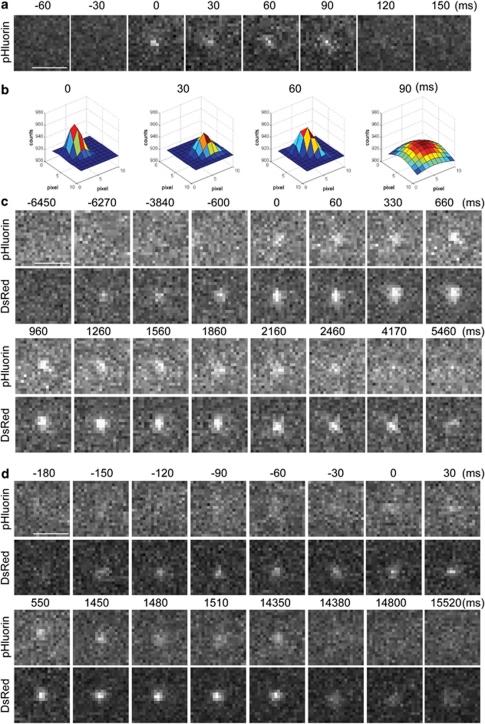
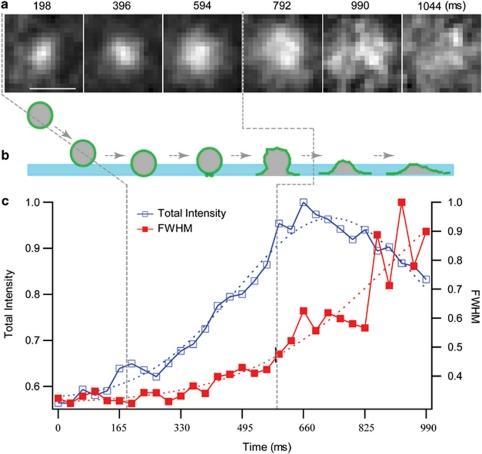
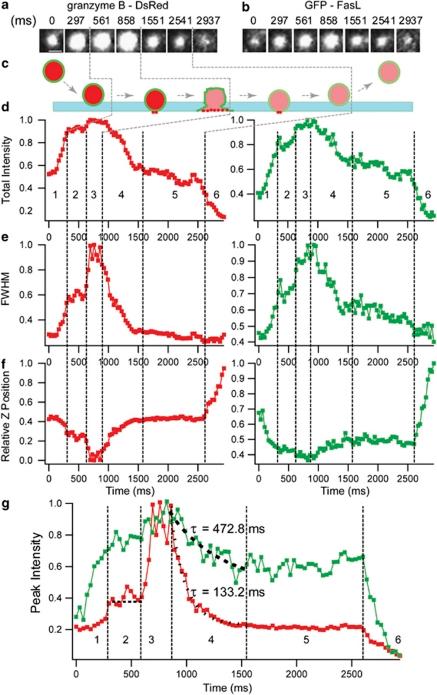
Lytic granules in cytotoxic lymphocytes, which include T cells and natural killer (NK) cells, are secretory lysosomes that release their content upon fusion with the plasma membrane (PM), a process known as degranulation. Although vesicle exocytosis has been extensively studied in endocrine and neuronal cells, much less is known about the fusion of lytic granules in cytotoxic lymphocytes. Here, we used total internal reflection fluorescence microscopy to examine lytic granules labeled with fluorescently tagged Fas ligand (FasL) in the NK cell line NKL stimulated with phorbol ester and ionomycin and in primary NK cells activated by physiological receptor-ligand interactions. Two fusion modes were observed: complete fusion, characterized by loss of granule content and rapid diffusion of FasL at the PM; and incomplete fusion, characterized by transient fusion pore opening and retention of FasL at the fusion site. The pH-sensitive green fluorescence protein (pHluorin) fused to the lumenal domain of FasL was used to visualize fusion pore opening with a time resolution of 30 ms. Upon incomplete fusion, pHluorin emission lasted several seconds in the absence of noticeable diffusion. Thus, we conclude that lytic granules in NK cells undergo both complete and incomplete fusion with the PM, and propose that incomplete fusion may promote efficient recycling of lytic granule membrane after the release of cytotoxic effector molecules.
细胞毒性淋巴细胞(包括 T 细胞和自然杀伤 (NK) 细胞)中的溶酶体颗粒是分泌性溶酶体,当与质膜(PM)融合时会释放其内容物,这一过程称为脱粒。尽管囊泡胞吐作用在内分泌和神经元细胞中得到了广泛研究,但对细胞毒性淋巴细胞中溶酶体颗粒的融合知之甚少。在这里,我们使用全内反射荧光显微镜研究了用荧光标记的 Fas 配体(FasL)标记的溶酶体颗粒在受佛波酯和离子霉素刺激的 NK 细胞系 NKL 中和在通过生理受体-配体相互作用激活的原代 NK 细胞中的融合。观察到两种融合模式:完全融合,其特征是颗粒内容物丢失和 FasL 在 PM 上的快速扩散;以及不完全融合,其特征是短暂的融合孔打开和 FasL 在融合部位的保留。与 FasL 腔域融合的 pH 敏感绿色荧光蛋白 (pHluorin) 用于以 30 ms 的时间分辨率可视化融合孔打开。在不完全融合时,在没有明显扩散的情况下,pHluorin 发射持续数秒。因此,我们得出结论,NK 细胞中的溶酶体颗粒与 PM 发生完全和不完全融合,并提出不完全融合可能促进细胞毒性效应分子释放后溶酶体颗粒膜的有效回收。

 Zotero 插件