
动脉粥样硬化中的先天免疫和单核细胞-巨噬细胞激活。
Innate immunity and monocyte-macrophage activation in atherosclerosis.
机构信息
Cytokine Biology of Atherosclerosis, Kennedy Institute of Rheumatology, Faculty of Medicine, Imperial College London, UK.
出版信息
J Inflamm (Lond). 2011 Apr 28;8:9. doi: 10.1186/1476-9255-8-9.
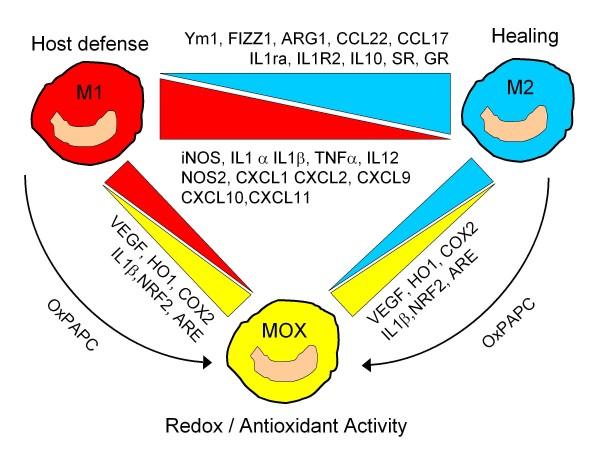
Innate inflammation is a hallmark of both experimental and human atherosclerosis. The predominant innate immune cell in the atherosclerotic plaque is the monocyte-macrophage. The behaviour of this cell type within the plaque is heterogeneous and depends on the recruitment of diverse monocyte subsets. Furthermore, the plaque microenvironment offers polarisation and activation signals which impact on phenotype. Microenvironmental signals are sensed through pattern recognition receptors, including toll-like and NOD-like receptors - the latter of which are components of the inflammasome - thus dictating macrophage behaviour and outcome in atherosclerosis. Recently cholesterol crystals and modified lipoproteins have been recognised as able to directly engage these pattern recognition receptors. The convergent role of such pathways in terms of macrophage activation is discussed in this review.
先天炎症是实验性和人类动脉粥样硬化的标志。在动脉粥样硬化斑块中占主导地位的先天免疫细胞是单核细胞-巨噬细胞。这种细胞类型在斑块中的行为是异质的,取决于不同单核细胞亚群的募集。此外,斑块微环境提供极化和激活信号,从而影响表型。微环境信号通过模式识别受体(包括 Toll 样和 NOD 样受体)来感知,后者是炎症小体的组成部分,从而决定了巨噬细胞在动脉粥样硬化中的行为和结果。最近,胆固醇晶体和修饰的脂蛋白已被认为能够直接与这些模式识别受体结合。本文综述了这些途径在巨噬细胞激活方面的趋同作用。


 Zotero 插件