
骨软骨组织工程:支架、干细胞及应用。
Osteochondral tissue engineering: scaffolds, stem cells and applications.
机构信息
Department of Materials Science and Engineering, Institute of Biomaterials, Friedrich-Alexander-University of Erlangen-Nürnberg, Erlangen, Germany.
出版信息
J Cell Mol Med. 2012 Oct;16(10):2247-70. doi: 10.1111/j.1582-4934.2012.01571.x.
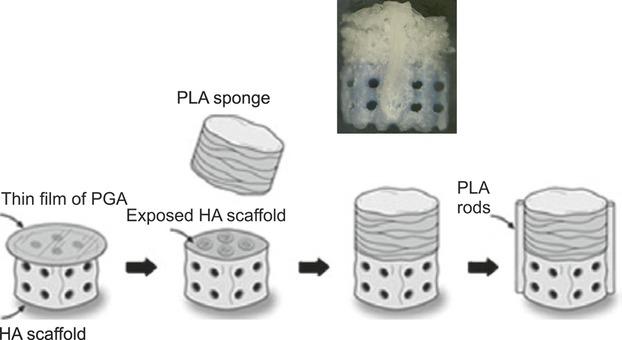
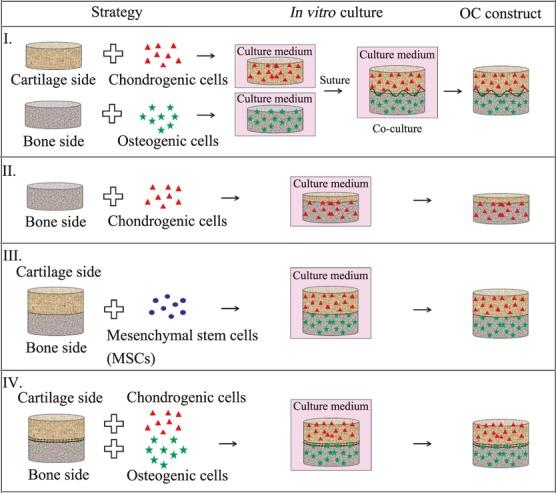
Osteochondral tissue engineering has shown an increasing development to provide suitable strategies for the regeneration of damaged cartilage and underlying subchondral bone tissue. For reasons of the limitation in the capacity of articular cartilage to self-repair, it is essential to develop approaches based on suitable scaffolds made of appropriate engineered biomaterials. The combination of biodegradable polymers and bioactive ceramics in a variety of composite structures is promising in this area, whereby the fabrication methods, associated cells and signalling factors determine the success of the strategies. The objective of this review is to present and discuss approaches being proposed in osteochondral tissue engineering, which are focused on the application of various materials forming bilayered composite scaffolds, including polymers and ceramics, discussing the variety of scaffold designs and fabrication methods being developed. Additionally, cell sources and biological protein incorporation methods are discussed, addressing their interaction with scaffolds and highlighting the potential for creating a new generation of bilayered composite scaffolds that can mimic the native interfacial tissue properties, and are able to adapt to the biological environment.
骨软骨组织工程的发展为受损软骨和软骨下骨组织的再生提供了合适的策略。由于关节软骨自我修复能力有限,因此必须开发基于合适的支架的方法,这些支架由适当的工程生物材料制成。在这一领域,生物可降解聚合物和生物活性陶瓷的各种复合结构具有很大的应用前景,其中制造方法、相关细胞和信号因子决定了策略的成功。本综述的目的是介绍和讨论骨软骨组织工程中提出的方法,这些方法侧重于应用各种形成双层复合支架的材料,包括聚合物和陶瓷,讨论正在开发的各种支架设计和制造方法。此外,还讨论了细胞来源和生物蛋白掺入方法,探讨了它们与支架的相互作用,并强调了创造新一代能够模拟天然界面组织特性并能适应生物环境的双层复合支架的潜力。



 Zotero 插件