
细胞外超氧化物歧化酶保护组织胞浆菌酵母细胞免受宿主来源的氧化应激。
Extracellular superoxide dismutase protects Histoplasma yeast cells from host-derived oxidative stress.
机构信息
Departments of Microbiology and Microbial Infection and Immunity, Ohio State University, Columbus, Ohio, United States of America.
出版信息
PLoS Pathog. 2012;8(5):e1002713. doi: 10.1371/journal.ppat.1002713. Epub 2012 May 17.
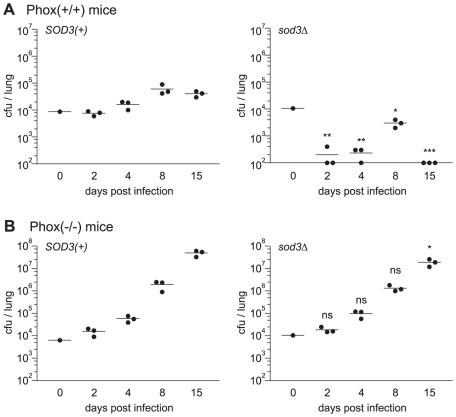
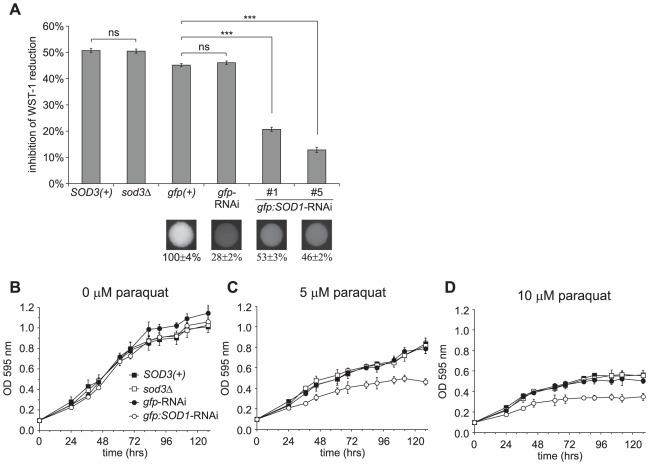
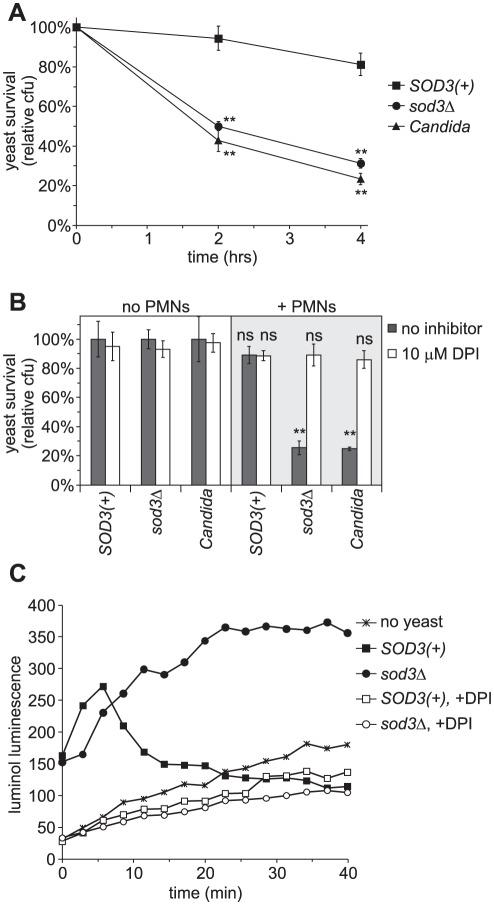
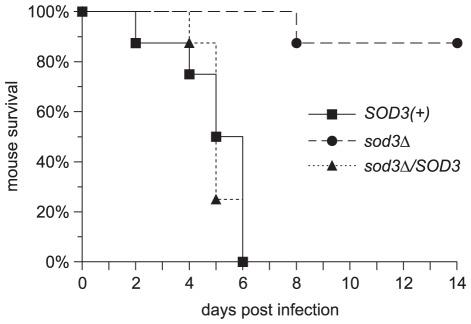
In order to establish infections within the mammalian host, pathogens must protect themselves against toxic reactive oxygen species produced by phagocytes of the immune system. The fungal pathogen Histoplasma capsulatum infects both neutrophils and macrophages but the mechanisms enabling Histoplasma yeasts to survive in these phagocytes have not been fully elucidated. We show that Histoplasma yeasts produce a superoxide dismutase (Sod3) and direct it to the extracellular environment via N-terminal and C-terminal signals which promote its secretion and association with the yeast cell surface. This localization permits Sod3 to protect yeasts specifically from exogenous superoxide whereas amelioration of endogenous reactive oxygen depends on intracellular dismutases such as Sod1. While infection of resting macrophages by Histoplasma does not stimulate the phagocyte oxidative burst, interaction with polymorphonuclear leukocytes (PMNs) and cytokine-activated macrophages triggers production of reactive oxygen species (ROS). Histoplasma yeasts producing Sod3 survive co-incubation with these phagocytes but yeasts lacking Sod3 are rapidly eliminated through oxidative killing similar to the effect of phagocytes on Candida albicans yeasts. The protection provided by Sod3 against host-derived ROS extends in vivo. Without Sod3, Histoplasma yeasts are attenuated in their ability to establish respiratory infections and are rapidly cleared with the onset of adaptive immunity. The virulence of Sod3-deficient yeasts is restored in murine hosts unable to produce superoxide due to loss of the NADPH-oxidase function. These results demonstrate that phagocyte-produced ROS contributes to the immune response to Histoplasma and that Sod3 facilitates Histoplasma pathogenesis by detoxifying host-derived reactive oxygen thereby enabling Histoplasma survival.
为了在哺乳动物宿主体内建立感染,病原体必须保护自己免受免疫系统吞噬细胞产生的有毒活性氧的伤害。真菌病原体荚膜组织胞浆菌(Histoplasma capsulatum)感染中性粒细胞和巨噬细胞,但使 Histoplasma 酵母在这些吞噬细胞中存活的机制尚未完全阐明。我们表明,Histoplasma 酵母产生超氧化物歧化酶(Sod3),并通过促进其分泌和与酵母细胞表面结合的 N 端和 C 端信号将其导向细胞外环境。这种定位使 Sod3 能够特异性地保护酵母免受外源性超氧化物的伤害,而内源性活性氧的缓解则依赖于细胞内的歧化酶,如 Sod1。虽然 Histoplasma 对静止巨噬细胞的感染不会刺激吞噬细胞的氧化爆发,但与多形核白细胞(PMNs)和细胞因子激活的巨噬细胞的相互作用会触发活性氧(ROS)的产生。产生 Sod3 的 Histoplasma 酵母与这些吞噬细胞共孵育后存活,但缺乏 Sod3 的酵母会通过氧化杀伤迅速消除,类似于吞噬细胞对白色念珠菌酵母的作用。Sod3 对宿主来源的 ROS 的保护作用在体内得到扩展。没有 Sod3,Histoplasma 酵母在建立呼吸道感染的能力上减弱,并且随着适应性免疫的开始迅速被清除。由于 NADPH 氧化酶功能丧失,无法产生超氧化物的小鼠宿主中,缺乏 Sod3 的酵母的毒力得到恢复。这些结果表明,吞噬细胞产生的 ROS 有助于对 Histoplasma 的免疫反应,而 Sod3 通过解毒宿主来源的活性氧来促进 Histoplasma 的发病机制,从而使 Histoplasma 得以存活。


 Zotero 插件