
橄榄酚类化合物:果实发育过程中的代谢和转录组分析。
Olive phenolic compounds: metabolic and transcriptional profiling during fruit development.
机构信息
CNR-Institute of Plant Genetics, Perugia, Italy.
出版信息
BMC Plant Biol. 2012 Sep 10;12:162. doi: 10.1186/1471-2229-12-162.
BACKGROUND
Olive (Olea europaea L.) fruits contain numerous secondary metabolites, primarily phenolics, terpenes and sterols, some of which are particularly interesting for their nutraceutical properties. This study will attempt to provide further insight into the profile of olive phenolic compounds during fruit development and to identify the major genetic determinants of phenolic metabolism.
RESULTS
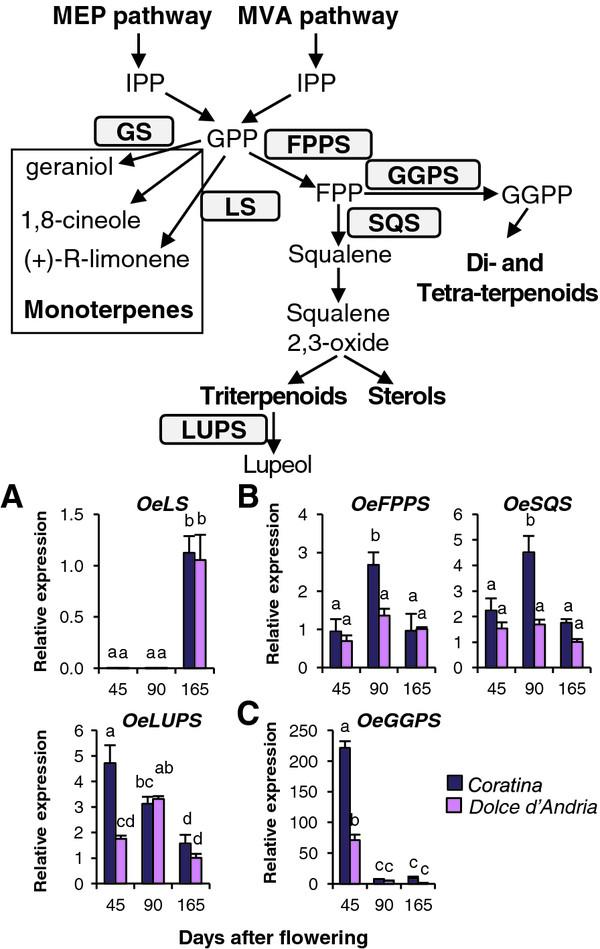
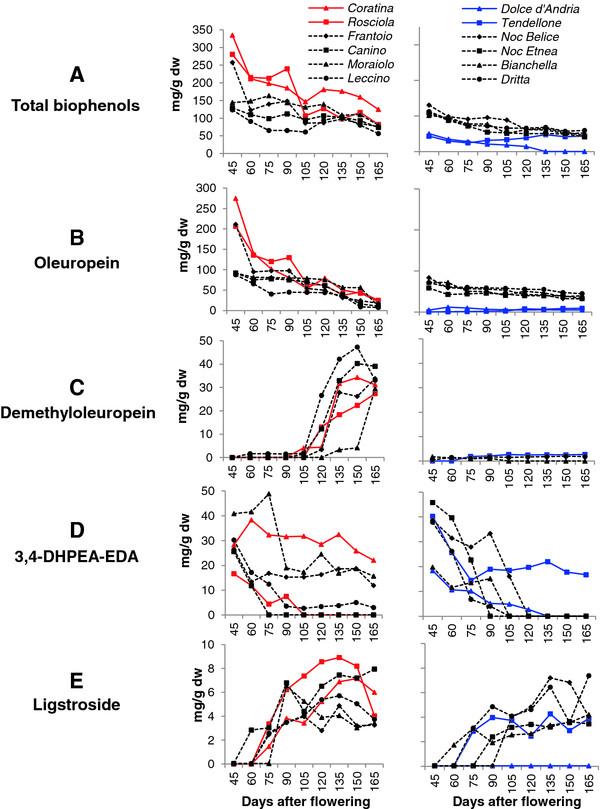
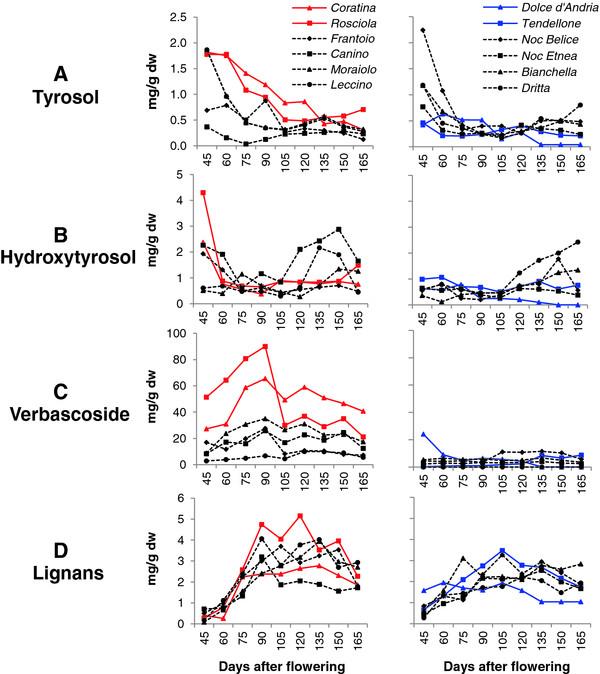
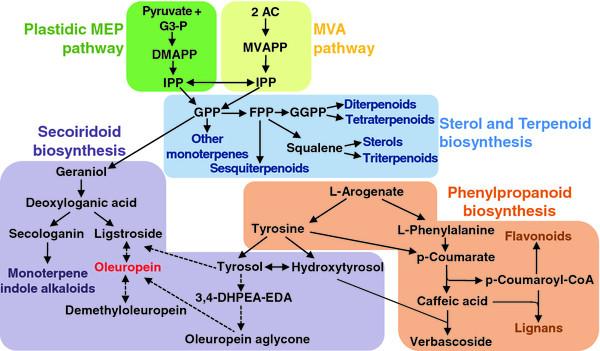
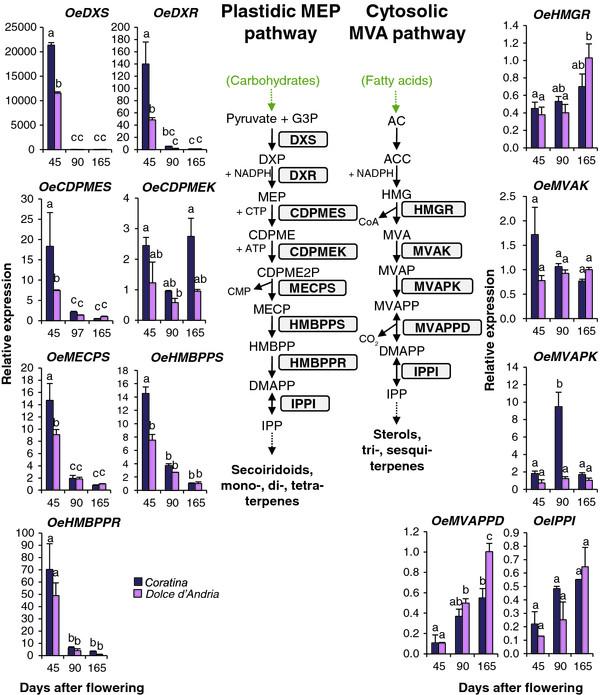
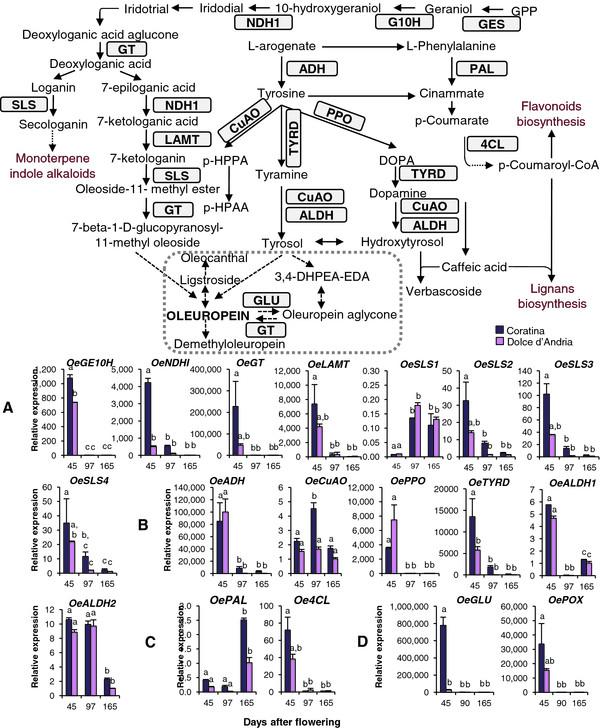
The concentration of the major phenolic compounds, such as oleuropein, demethyloleuropein, 3-4 DHPEA-EDA, ligstroside, tyrosol, hydroxytyrosol, verbascoside and lignans, were measured in the developing fruits of 12 olive cultivars. The content of these compounds varied significantly among the cultivars and decreased during fruit development and maturation, with some compounds showing specificity for certain cultivars. Thirty-five olive transcripts homologous to genes involved in the pathways of the main secondary metabolites were identified from the massive sequencing data of the olive fruit transcriptome or from cDNA-AFLP analysis. Their mRNA levels were determined using RT-qPCR analysis on fruits of high- and low-phenolic varieties (Coratina and Dolce d'Andria, respectively) during three different fruit developmental stages. A strong correlation was observed between phenolic compound concentrations and transcripts putatively involved in their biosynthesis, suggesting a transcriptional regulation of the corresponding pathways. OeDXS, OeGES, OeGE10H and OeADH, encoding putative 1-deoxy-D-xylulose-5-P synthase, geraniol synthase, geraniol 10-hydroxylase and arogenate dehydrogenase, respectively, were almost exclusively present at 45 days after flowering (DAF), suggesting that these compounds might play a key role in regulating secoiridoid accumulation during fruit development.
CONCLUSIONS
Metabolic and transcriptional profiling led to the identification of some major players putatively involved in biosynthesis of secondary compounds in the olive tree. Our data represent the first step towards the functional characterisation of important genes for the determination of olive fruit quality.
背景
橄榄(Olea europaea L.)果实含有许多次生代谢产物,主要是酚类、萜类和甾醇,其中一些因其具有营养保健品特性而特别有趣。本研究试图进一步了解橄榄果实发育过程中酚类化合物的特征,并确定酚类代谢的主要遗传决定因素。
结果
在 12 个橄榄品种的发育果实中测量了主要酚类化合物(如橄榄苦苷、去甲橄榄苦苷、3-4DHPEA-EDA、橄榄苦苷、酪醇、羟基酪醇、毛蕊花糖苷和木脂素)的浓度。这些化合物的含量在品种间差异显著,并在果实发育和成熟过程中降低,其中一些化合物对某些品种具有特异性。从橄榄果实转录组的大规模测序数据或 cDNA-AFLP 分析中,鉴定出 35 个与主要次生代谢产物途径相关的橄榄转录本同源物。使用 RT-qPCR 分析在高酚和低酚品种(Coratina 和 Dolce d'Andria)的果实上,在三个不同的果实发育阶段测定其 mRNA 水平。观察到酚类化合物浓度与推测参与其生物合成的转录本之间存在很强的相关性,表明相应途径的转录调控。编码推测的 1-脱氧-D-木酮糖-5-P 合酶、香叶醇合酶、香叶醇 10-羟化酶和芳基酸脱氢酶的 OeDXS、OeGES、OeGE10H 和 OeADH,分别在开花后 45 天(DAF)几乎完全存在,表明这些化合物可能在调节果实发育过程中类异戊二烯的积累中发挥关键作用。
结论
代谢和转录谱分析确定了一些可能参与橄榄树次生化合物生物合成的主要参与者。我们的数据代表了鉴定决定橄榄果实品质的重要基因的功能特征的第一步。
 Zotero 插件