
老年人树式(vriksasana)和单腿站立伸展式(utthita hasta padangusthasana)的身体需求:一项生物力学研究。
The physical demands of the tree (vriksasana) and one-leg balance (utthita hasta padangusthasana) poses performed by seniors: a biomechanical examination.
机构信息
Division of Biokinesiology and Physical Therapy, University of Southern California (USC), 1540 E. Alcazar Street, Los Angeles, CA 90033, USA.
出版信息
Evid Based Complement Alternat Med. 2012;2012:971896. doi: 10.1155/2012/971896. Epub 2012 Aug 29.
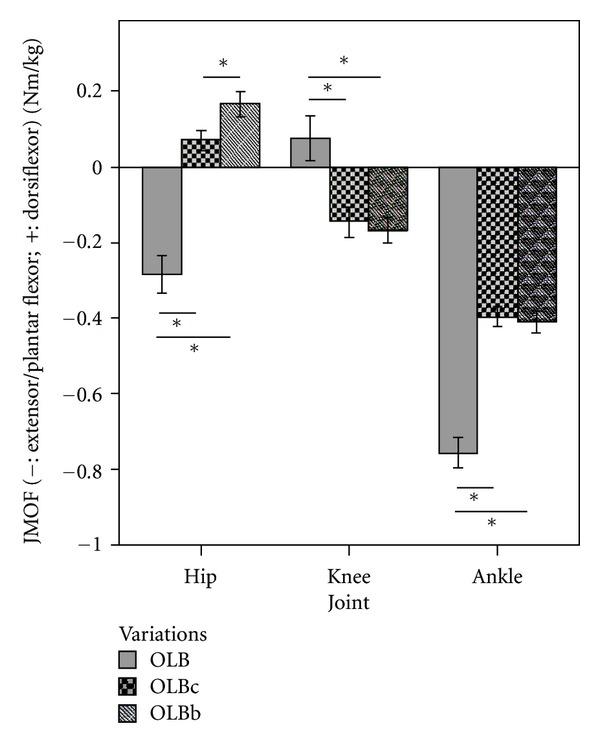
Yoga is considered especially suitable for seniors because poses can be modified to accommodate practitioners' capabilities and limitations. In this study, biomechanical assessments on healthy seniors (n = 20; 70.1 ± 3.8 yr) were used to quantify the physical demands, (net joint moments of force [JMOFs] and muscular activation in the lower extremities) associated with the performance of 3 variations (introductory, intermediate, advanced) of 2 classical Hatha yoga poses - Tree and One-Leg Balance (OLB). ANOVA and Cohen's-d were used to contrast the postural variations statistically. The advanced (single-limb, without additional support) versions were hypothesized to generate the greatest demands, followed by the intermediate (single-limb [Tree] and bilateral-limb [OLB] with support) and introductory (bilateral-limb) versions. Our findings, however, suggest that common, long-held conceptions about pose modifications can be counter-intuitive. There was no difference between the intermediate and advanced Tree variations regarding hip and knee JMOFs in both the sagittal and frontal planes (P = 0.13-0.98). Similarly, OLB introductory and intermediate variations induced sagittal JMOFs that were in the opposite direction of the classic advanced pose version at the hip and knee (P < .001; d = 0.98-2.36). These biomechanical insights provide evidence that may be used by instructors, clinicians and therapists when selecting pose modifications for their yoga participants.
瑜伽被认为特别适合老年人,因为姿势可以根据练习者的能力和局限性进行调整。在这项研究中,对健康老年人(n=20;70.1±3.8 岁)进行了生物力学评估,以量化与执行 2 个经典哈他瑜伽姿势(树式和单腿平衡式)的 3 种变体(入门、中级、高级)相关的身体需求(净关节力矩[JMOF]和下肢肌肉激活)。使用方差分析和 Cohen's-d 对姿势变化进行统计学对比。假设高级(单腿,无额外支撑)版本产生的需求最大,其次是中级(单腿[树式]和双腿[单腿平衡式]支撑)和入门(双腿)版本。然而,我们的研究结果表明,关于姿势修改的常见长期观念可能是违反直觉的。中级和高级树式变体在矢状面和额状面的髋关节和膝关节 JMOF 没有差异(P=0.13-0.98)。同样,单腿平衡式的入门和中级变体在髋关节和膝关节处产生的矢状面 JMOF 与经典高级姿势版本相反(P<0.001;d=0.98-2.36)。这些生物力学见解为指导员、临床医生和治疗师在为瑜伽参与者选择姿势修改时提供了可能有用的证据。





 Zotero 插件