
对全景X线摄影显示钙化颈动脉粥样硬化的患者进行多普勒超声检查确认,并评估相关危险因素。
Doppler sonography confirmation in patients showing calcified carotid artery atheroma in panoramic radiography and evaluation of related risk factors.
作者信息
Imanimoghaddam Mahrokh, Rah Rooh Mohammad, Mahmoudi Hashemi Elahe, Javadzade Blouri Abbas
机构信息
Dental Research Center, Mashhad University of Medical Sciences, Mashhad, Iran ; Associate Professor, Department of Oral and Maxillofacial Radiology, School of Dentistry, Mashhad University of Medical Sciences, Mashhad, Iran.
出版信息
J Dent Res Dent Clin Dent Prospects. 2012 Winter;6(1):6-11. doi: 10.5681/joddd.2012.002. Epub 2012 Mar 13.
BACKGROUND AND AIMS
The purpose of this study was to identify patients at the risk of cerebrovascular attack (CVA) by detecting calcified carotid artery atheroma (CCAA) in panoramic radiography and evaluating their risk factors.
MATERIALS AND METHODS
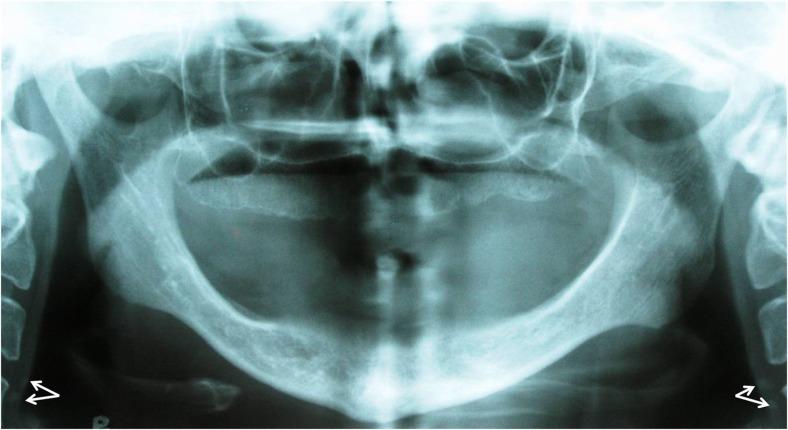
A total of 960 panoramic radiographs of patients above 40 years old were evaluated. Doppler Sonography (DS) was performed for patients who showed calcified carotid artery atheroma (CCAA) in panoramic radiogra-phy in order to determine the presence of CCAA and the degree of stenosis. Cardiovascular risk factors in both groups of patients with CCAA (12 subjects) and without CCAA (3 subjects) were compared using a questionnaire filled out by the patients. Statistical analysis including Fisher and independent t-test applied for data analysis.
RESULTS
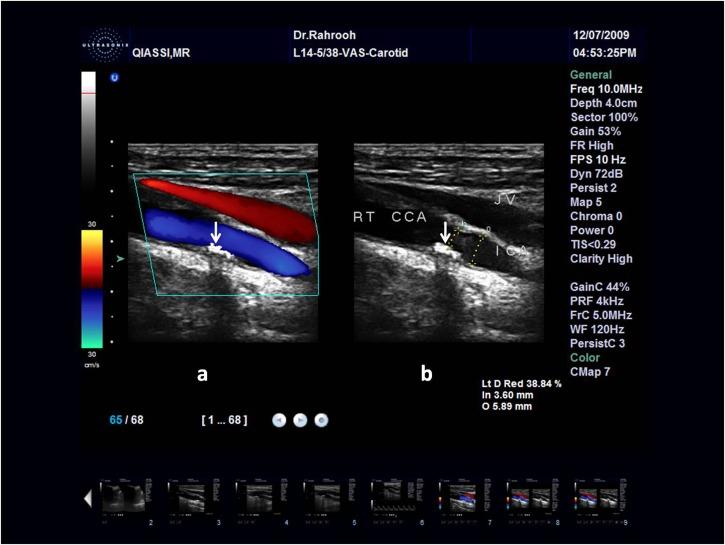
Fifteen patients (30 sides) showed calcification in their panoramic radiographs, and underwent DS which revealed CCAA in 16 sides (12 patients). Two patients (13.33%) showed stenosis greater than 70%. Among the risk factors, only age showed a significant association with the occurrence of carotid calcified atheroma (P=0.026).
CONCLUSION
Considering the results, dentists should refer especially elderly patients with radiographically identified atheromas for further examinations, as asymptomatic CCAA might be associated with high degrees of stenosis.
背景与目的
本研究旨在通过全景X线片检测钙化性颈动脉粥样硬化(CCAA)并评估其危险因素,以识别有脑血管意外(CVA)风险的患者。
材料与方法
共评估了960例40岁以上患者的全景X线片。对在全景X线片中显示有钙化性颈动脉粥样硬化(CCAA)的患者进行多普勒超声检查(DS),以确定CCAA的存在及狭窄程度。通过患者填写的问卷比较有CCAA组(12例)和无CCAA组(3例)患者的心血管危险因素。采用Fisher检验和独立t检验进行数据分析。
结果
15例患者(30侧)在全景X线片中显示钙化,并接受了DS检查,其中16侧(12例患者)显示有CCAA。2例患者(13.33%)显示狭窄大于70%。在危险因素中,只有年龄与颈动脉钙化性粥样硬化的发生有显著关联(P=0.026)。
结论
考虑到研究结果,牙医应特别将影像学检查发现有粥样硬化的老年患者转诊进行进一步检查,因为无症状的CCAA可能与高度狭窄有关。
 Zotero 插件