
结缔组织生长因子是组织重塑和纤维化的关键介质,对其抑制可逆转纤维化进程。
CTGF is a central mediator of tissue remodeling and fibrosis and its inhibition can reverse the process of fibrosis.
作者信息
Lipson Kenneth E, Wong Carol, Teng Yuchin, Spong Suzanne
机构信息
FibroGen, Inc., 409 Illinois St., San Francisco, CA 94158, USA.
出版信息
Fibrogenesis Tissue Repair. 2012 Jun 6;5(Suppl 1):S24. doi: 10.1186/1755-1536-5-S1-S24. eCollection 2012.
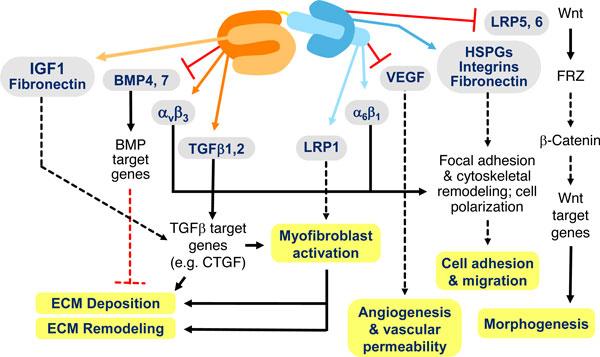
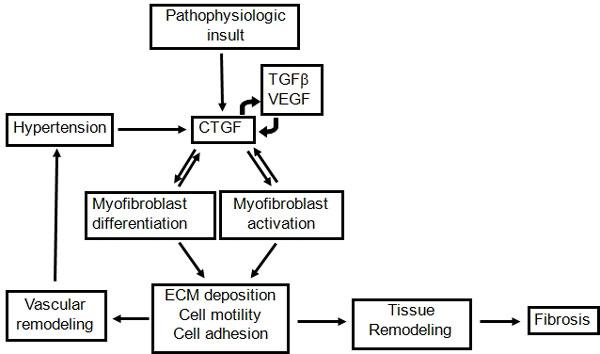
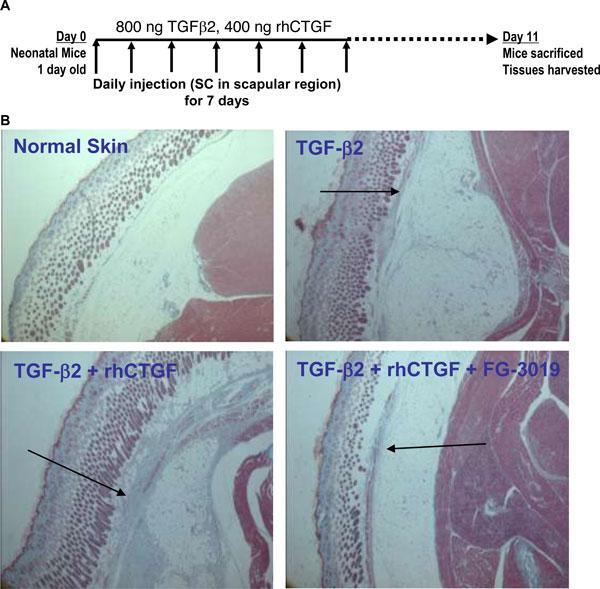
CTGF is a secreted matricellular protein with very complex biology. It has been shown to modulate many signaling pathways leading to cell adhesion and migration, angiogenesis, myofibroblast activation, and extracellular matrix deposition and remodeling, which together lead to tissue remodeling and fibrosis. It has been reported in the literature that inhibition of CTGF expression by siRNA prevents CCl4-induced liver fibrosis and can reverse fibrosis when administered after significant collagen deposition is observed. A monoclonal antibody to CTGF that is currently in clinical development (FG-3019) has demonstrated the ability to reverse vascular stiffening and improve cardiac function in a rat model of diabetic complications. FG-3019 has also exhibited activity in a murine radiation-induced pulmonary fibrosis model. When FG-3019 was administered to mice after a significant radiation-induced increase in lung density could be observed by CT imaging, the density of the lungs was observed to decrease over the period during which the antibody was administered and to remain stable after therapy had ceased. When considered together, these data indicate that inhibition of CTGF can prevent and reverse the process of fibrosis.
结缔组织生长因子(CTGF)是一种分泌型基质细胞蛋白,其生物学特性非常复杂。已表明它可调节许多信号通路,这些信号通路会导致细胞黏附与迁移、血管生成、肌成纤维细胞活化以及细胞外基质沉积和重塑,这些共同作用会导致组织重塑和纤维化。文献报道,通过小干扰RNA(siRNA)抑制CTGF表达可预防四氯化碳诱导的肝纤维化,并且在观察到明显的胶原沉积后给药,可逆转纤维化。目前正在临床开发的一种针对CTGF的单克隆抗体(FG - 3019)已在糖尿病并发症大鼠模型中显示出逆转血管硬化和改善心脏功能的能力。FG - 3019在小鼠辐射诱导的肺纤维化模型中也表现出活性。当通过CT成像观察到辐射诱导小鼠肺密度显著增加后给予FG - 3019时,在给予抗体的期间观察到肺密度降低,并且在治疗停止后保持稳定。综合考虑,这些数据表明抑制CTGF可预防和逆转纤维化过程。


 Zotero 插件