
放射诱导的肺基因表达变化可被 CTGF 抗体 Pamrevlumab 减弱。
Radiation-induced pulmonary gene expression changes are attenuated by the CTGF antibody Pamrevlumab.
机构信息
FibroGen, Inc., San Francisco, USA.
Department of Translational Radiooncology, German Cancer Research Center (DKFZ), Heidelberg, Germany.
出版信息
Respir Res. 2018 Jan 18;19(1):14. doi: 10.1186/s12931-018-0720-4.
BACKGROUND
Fibrosis is a delayed side effect of radiation therapy (RT). Connective tissue growth factor (CTGF) promotes the development of fibrosis in multiple settings, including pulmonary radiation injury.
METHODS
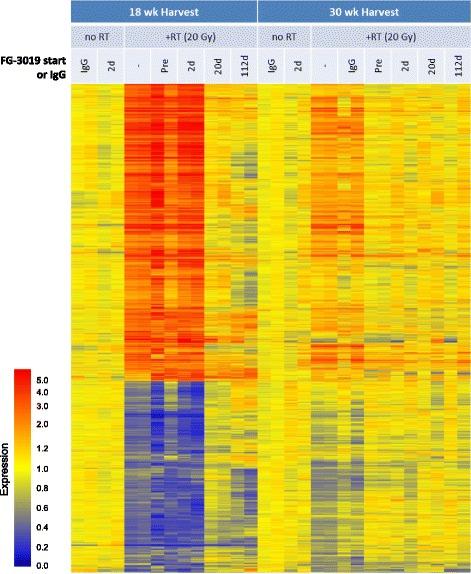
To better understand the cellular interactions involved in RT-induced lung injury and the role of CTGF in these responses, microarray expression profiling was performed on lungs of irradiated and non-irradiated mice, including mice treated with the anti-CTGF antibody pamrevlumab (FG-3019). Between group comparisons (Welch's t-tests) and principal components analyses were performed in Genespring.
RESULTS
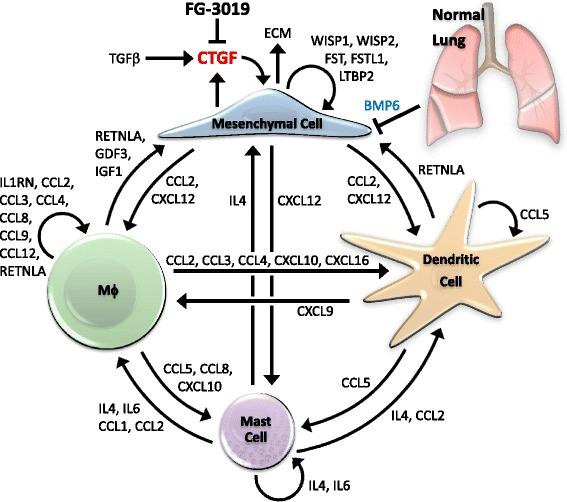
At the mRNA level, the ability of pamrevlumab to prolong survival and ameliorate RT-induced radiologic, histologic and functional lung deficits was correlated with the reversal of a clear enrichment in mast cell, macrophage, dendritic cell and mesenchymal gene signatures. Cytokine, growth factor and matrix remodeling genes that are likely to contribute to RT pneumonitis and fibrosis were elevated by RT and attenuated by pamrevlumab, and likely contribute to the cross-talk between enriched cell-types in injured lung.
CONCLUSIONS
CTGF inhibition had a normalizing effect on select cell-types, including immune cells not typically regarded as being regulated by CTGF. These results suggest that interactions between RT-recruited cell-types are critical to maintaining the injured state; that CTGF plays a key role in this process; and that pamrevlumab can ameliorate RT-induced lung injury in mice and may provide therapeutic benefit in other immune and fibrotic disorders.
背景
纤维化是放射治疗(RT)的一种延迟副作用。结缔组织生长因子(CTGF)在多种情况下促进纤维化的发展,包括放射性肺损伤。
方法
为了更好地了解 RT 诱导的肺损伤中涉及的细胞相互作用以及 CTGF 在这些反应中的作用,对接受和未接受照射的小鼠的肺部进行了微阵列表达谱分析,包括用抗 CTGF 抗体 pamrevlumab(FG-3019)治疗的小鼠。在 Genespring 中进行了组间比较(Welch's t 检验)和主成分分析。
结果
在 mRNA 水平上,pamrevlumab 延长生存并改善 RT 诱导的放射学、组织学和功能肺损伤的能力与肥大细胞、巨噬细胞、树突状细胞和间充质细胞特征明显富集的逆转相关。可能导致 RT 性肺炎和纤维化的细胞因子、生长因子和基质重塑基因被 RT 上调,并被 pamrevlumab 减弱,并且可能有助于受损肺中富集细胞类型之间的串扰。
结论
CTGF 抑制对某些细胞类型具有正常化作用,包括通常不被认为受 CTGF 调节的免疫细胞。这些结果表明,RT 招募的细胞类型之间的相互作用对于维持受损状态至关重要;CTGF 在这个过程中起着关键作用;pamrevlumab 可改善小鼠的 RT 诱导性肺损伤,并可能为其他免疫和纤维化疾病提供治疗益处。



 Zotero 插件