
非酒精性脂肪性肝病中肝甘油三酯蓄积的机制。
Mechanisms of hepatic triglyceride accumulation in non-alcoholic fatty liver disease.
机构信息
Division of Gastroenterology, Department of Medicine, Brigham and Women's Hospital, Harvard Medical School, 77 Avenue Louis Pasteur, Boston, MA 02115, USA.
出版信息
J Gastroenterol. 2013 Apr;48(4):434-41. doi: 10.1007/s00535-013-0758-5. Epub 2013 Feb 9.
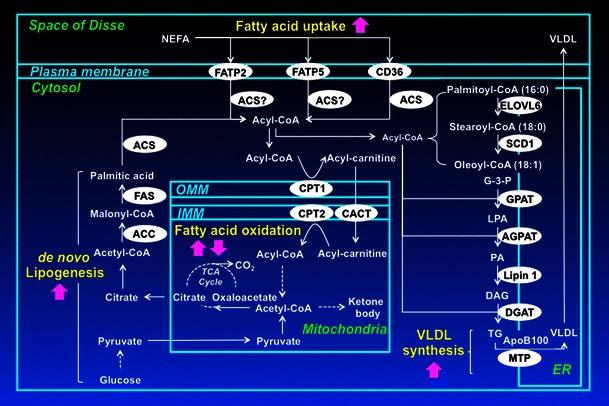
Non-alcoholic fatty liver disease (NAFLD) is characterized by hepatic lipid accumulation in the absence of excess alcohol intake. NAFLD is the most common chronic liver disease, and ongoing research efforts are focused on understanding the underlying pathobiology of hepatic steatosis with the anticipation that these efforts will identify novel therapeutic targets. Under physiological conditions, the low steady-state triglyceride concentrations in the liver are attributable to a precise balance between acquisition by uptake of non-esterified fatty acids from the plasma and by de novo lipogenesis, versus triglyceride disposal by fatty acid oxidation and by the secretion of triglyceride-rich lipoproteins. In NAFLD patients, insulin resistance leads to hepatic steatosis by multiple mechanisms. Greater uptake rates of plasma non-esterified fatty acids are attributable to increased release from an expanded mass of adipose tissue as a consequence of diminished insulin responsiveness. Hyperinsulinemia promotes the transcriptional upregulation of genes that promote de novo lipogenesis in the liver. Increased hepatic lipid accumulation is not offset by fatty acid oxidation or by increased secretion rates of triglyceride-rich lipoproteins. This review discusses the molecular mechanisms by which hepatic triglyceride homeostasis is achieved under normal conditions, as well as the metabolic alterations that occur in the setting of insulin resistance and contribute to the pathogenesis of NAFLD.
非酒精性脂肪性肝病(NAFLD)的特征是肝脏脂质在不存在过量饮酒的情况下积累。NAFLD 是最常见的慢性肝病,目前正在进行的研究工作集中在了解肝脂肪变性的潜在病理生物学,预计这些努力将确定新的治疗靶点。在生理条件下,肝脏中低稳态甘油三酯浓度归因于从血浆中摄取非酯化脂肪酸和从头合成之间的精确平衡,而甘油三酯通过脂肪酸氧化和富含甘油三酯的脂蛋白的分泌来处理。在 NAFLD 患者中,胰岛素抵抗通过多种机制导致肝脂肪变性。由于胰岛素反应性降低,从扩大的脂肪组织质量中释放出更多的血浆非酯化脂肪酸,导致摄取率增加。高胰岛素血症促进促进肝脏从头合成的基因的转录上调。肝脂质积累的增加没有被脂肪酸氧化或富含甘油三酯的脂蛋白分泌率的增加所抵消。这篇综述讨论了在正常情况下肝甘油三酯稳态是如何实现的分子机制,以及在胰岛素抵抗的情况下发生的代谢改变,这些改变导致了 NAFLD 的发病机制。
 Zotero 插件