
利用新型实时技术对原代人正常和肿瘤性乳腺细胞的自发和 TGF-β诱导的细胞迁移进行体外鉴定。
Characterization of spontaneous and TGF-β-induced cell motility of primary human normal and neoplastic mammary cells in vitro using novel real-time technology.
机构信息
Biochemistry and Tumor Biology Laboratory, Gynecology Research Unit, Department of Gynecology and Obstetrics, Medical University, Hannover, Germany.
出版信息
PLoS One. 2013;8(2):e56591. doi: 10.1371/journal.pone.0056591. Epub 2013 Feb 14.
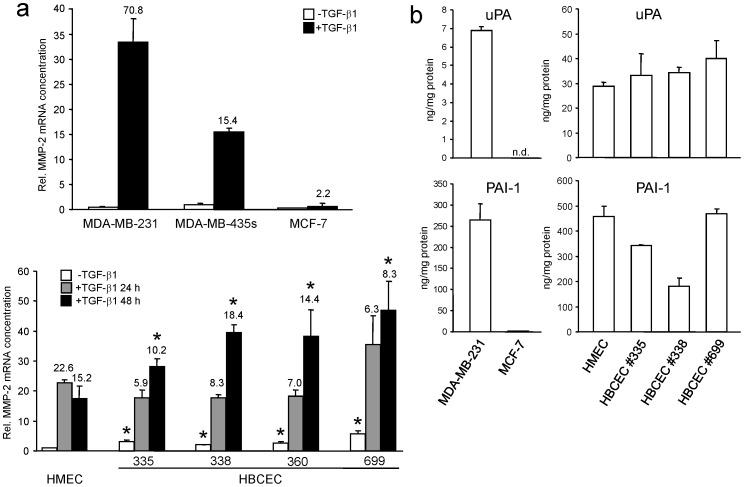
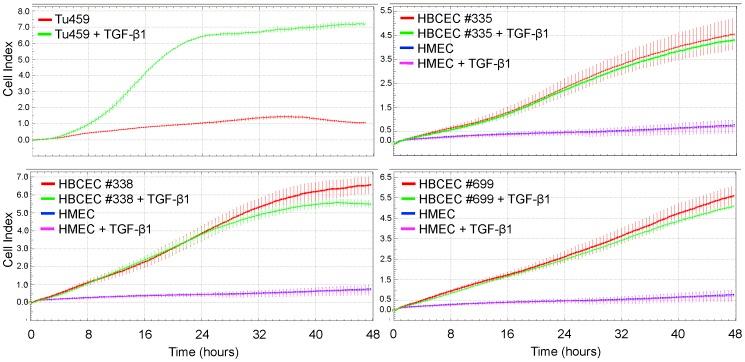
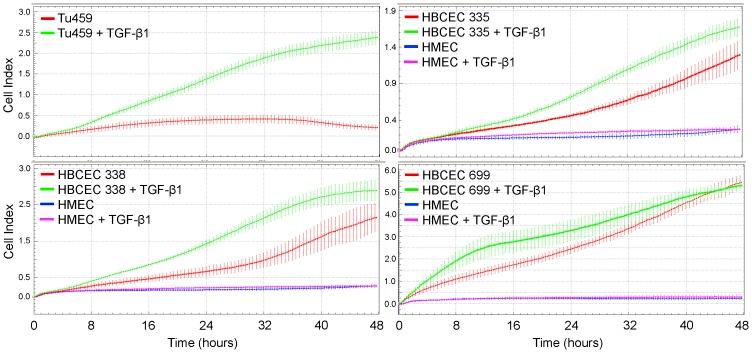
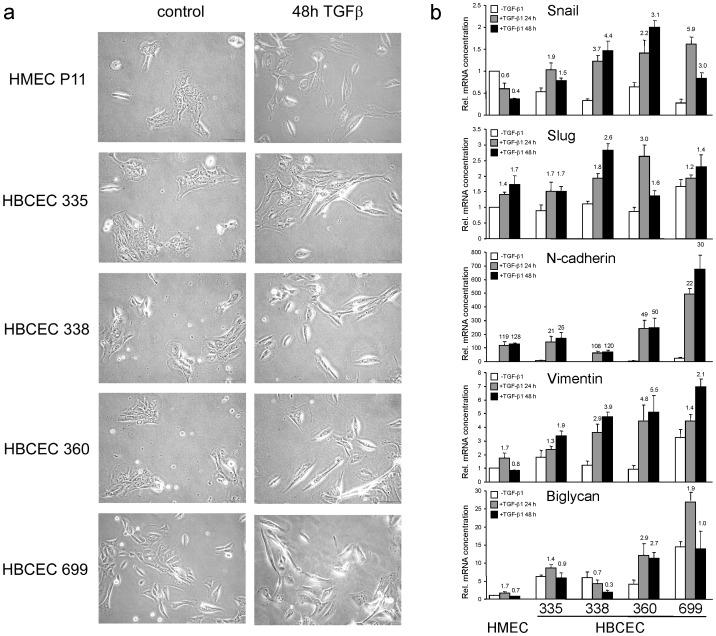
The clinical complications derived from metastatic disease are responsible for the majority of all breast cancer related deaths. Since cell migration and invasion are a prerequisite for metastasis their assessment in patient cancer cells in vitro may have prognostic value for the tumor's metastatic capacity. We employed real-time cell analysis (RTCA) on the xCELLigence DP system to determine in vitro motility of patient-derived primary human breast cancer epithelial cells (HBCEC). Initially, the RTCA assay was validated using established human breast cancer cell lines with either an invasive (MDA-MB-231, MDA-MB-435s) or a non-invasive phenotype (MCF-7, MDA-MB-468), and primary NSCLC cells (Tu459). Previous standard assays of cell migration/invasion revealed that only MDA-MB-231, -435s, and Tu459 cells exhibited spontaneous and TGF-β1-stimulated migration and invasion through a Matrigel barrier. In the present study, the TGF-β1-stimulated activities could be blocked by SB431542, a potent kinase inhibitor of the TGF-β type I receptor ALK5. Application of the RTCA assay to patient-derived tumor cells showed that 4/4 primary HBCEC and primary NSCLC cells, but not normal human mammary epithelial cells (HMEC), displayed high spontaneous migratory and invasive activity which correlated with higher MMP-2 expression and uPA protein levels in HBCEC compared to HMEC. Upon treatment with TGF-β1, HBCEC exhibited morphologic and gene regulatory alterations indicative of epithelial-to-mesenchymal transition. However, exclusively the invasive but not the migratory activity of HBCEC was further enhanced by TGF-β1. This indicates the requirement for molecular, e.g. integrin interactions with Matrigel components in HBCEC in order to become responsive to pro-invasive TGF-β effects. Together, these results show for the first time that tumorigenic HBCEC but not normal HMEC possess a strong basal migratory as well as a basal and TGF-β1-inducible invasive potential. These findings qualify the RTCA assay as an in vitro migration/invasion testing system for patient-specific primary breast cancer cells.
转移性疾病引起的临床并发症是导致大多数乳腺癌相关死亡的主要原因。由于细胞迁移和侵袭是转移的前提条件,因此在体外评估患者癌细胞中的这些特性可能对肿瘤的转移能力具有预后价值。我们在 xCELLigence DP 系统上使用实时细胞分析(RTCA)来确定患者来源的原发性人乳腺癌上皮细胞(HBCEC)的体外迁移能力。最初,使用具有侵袭性(MDA-MB-231、MDA-MB-435s)或非侵袭性表型(MCF-7、MDA-MB-468)的已建立的人乳腺癌细胞系以及原发性非小细胞肺癌细胞(Tu459)对 RTCA 测定法进行了验证。先前的细胞迁移/侵袭标准测定法表明,只有 MDA-MB-231、-435s 和 Tu459 细胞表现出自发和 TGF-β1 刺激的迁移和侵袭穿过 Matrigel 屏障。在本研究中,TGF-β1 刺激的活性可被 SB431542 阻断,SB431542 是 TGF-β Ⅰ型受体 ALK5 的有效激酶抑制剂。将 RTCA 测定法应用于患者源性肿瘤细胞表明,4/4 例原发性 HBCEC 和原发性 NSCLC 细胞,但不是正常的人乳腺上皮细胞(HMEC),显示出高自发迁移和侵袭活性,与 HBCEC 相比,HMEC 中 MMP-2 表达和 uPA 蛋白水平更高。用 TGF-β1 处理后,HBCEC 表现出形态和基因调节改变,表明上皮间质转化。然而,仅 HBCEC 的侵袭性但不是迁移性活性被 TGF-β1 进一步增强。这表明需要分子,例如整合素与 HBCEC 中 Matrigel 成分的相互作用,以使 HBCEC 对促侵袭性 TGF-β 作用产生反应。总之,这些结果首次表明,致瘤性 HBCEC 但不是正常的 HMEC 具有强大的基础迁移以及基础和 TGF-β1 诱导的侵袭潜力。这些发现使 RTCA 测定法成为用于患者特异性原发性乳腺癌细胞的体外迁移/侵袭测试系统。

 Zotero 插件