
转化生长因子-β 依赖性生长停滞以及良性和恶性乳腺上皮细胞中的细胞迁移受Rac1和Rac1b的拮抗调控。
TGF-β-Dependent Growth Arrest and Cell Migration in Benign and Malignant Breast Epithelial Cells Are Antagonistically Controlled by Rac1 and Rac1b.
作者信息
Melzer Catharina, von der Ohe Juliane, Hass Ralf, Ungefroren Hendrik
机构信息
Biochemistry and Tumor Biology Lab, Department of Obstetrics and Gynecology, Hannover Medical School, Hannover 30625, Germany.
Department of General and Thoracic Surgery, Universitatsklinikum Schleswig-Holstein, Campus Kiel, Kiel 24105, Germany.
出版信息
Int J Mol Sci. 2017 Jul 20;18(7):1574. doi: 10.3390/ijms18071574.
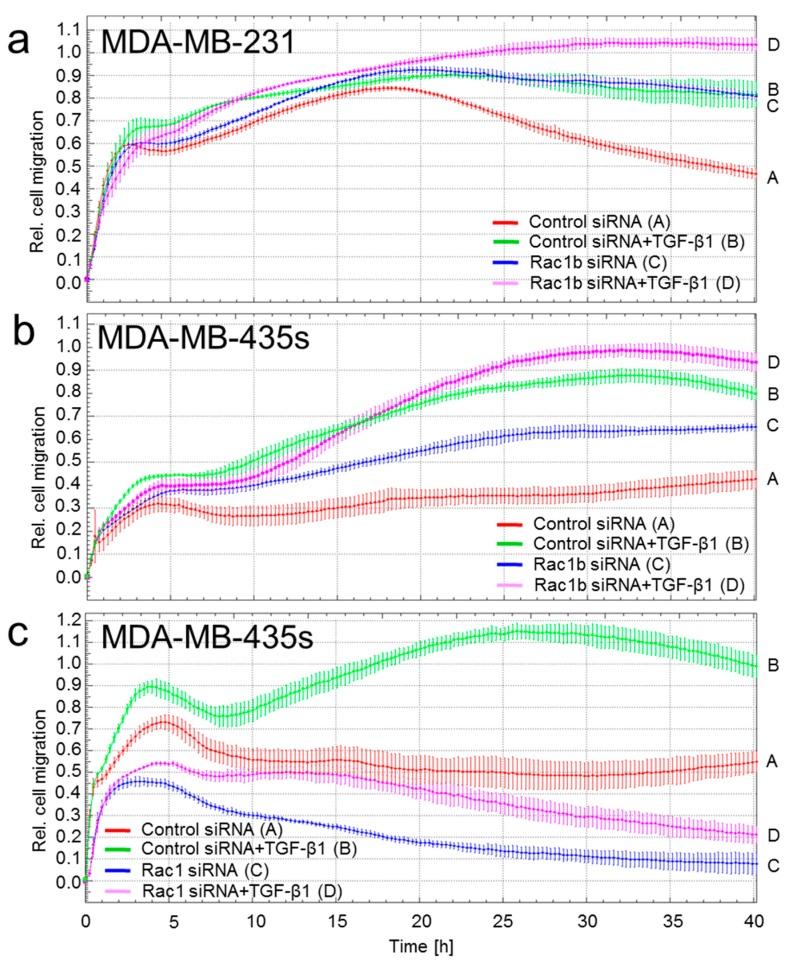
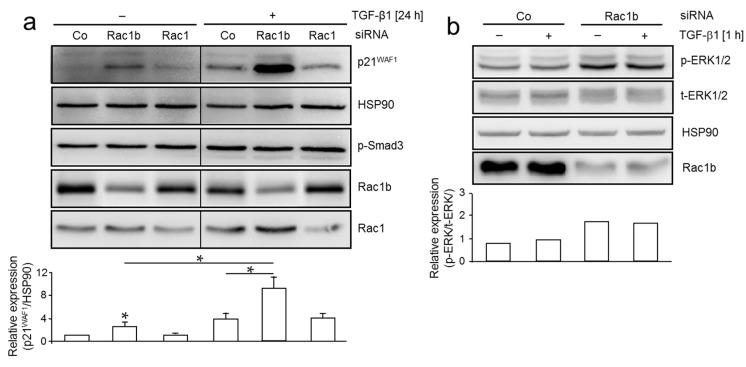
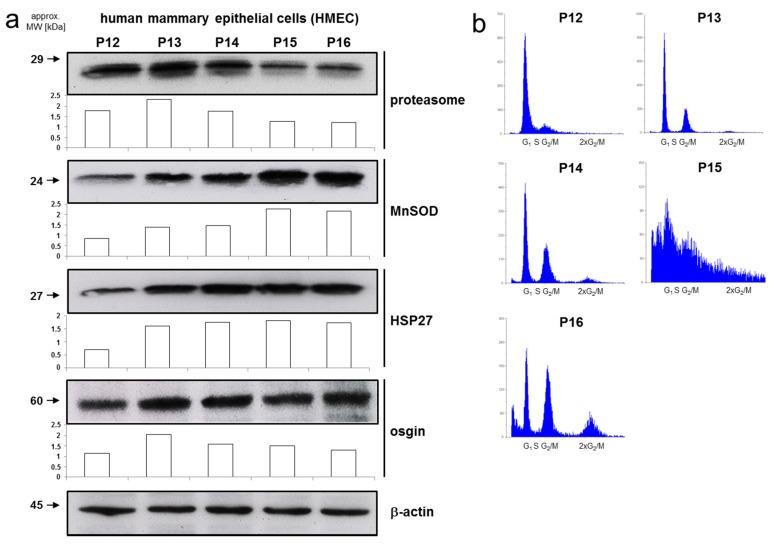
Despite improvements in diagnosis and treatment, breast cancer is still the most common cancer type among non-smoking females. TGF-β can inhibit breast cancer development by inducing cell cycle arrest in both, cancer cells and, as part of a senescence program in normal human mammary epithelial cells (HMEC). Moreover, TGF-β also drives cell migration and invasion, in part through the small GTPases Rac1 and Rac1b. Depletion of Rac1b or Rac1 and Rac1b in MDA-MB-231 or MDA-MB-435s breast cancer cells by RNA interference enhanced or suppressed, respectively, TGF-β1-induced migration/invasion. Rac1b depletion in MDA-MB-231 cells also increased TGF-β-induced p21 expression and ERK1/2 phosphorylation. Senescent HMEC (P15/P16), when compared to their non-senescent counterparts (P11/P12), presented with dramatically increased migratory activity. These effects were paralleled by elevated expression of genes associated with TGF-β signaling and metastasis, downregulated Rac1b, and upregulated Rac1. Our data suggest that acquisition of a motile phenotype in HMEC resulted from enhanced autocrine TGF-β signaling, invasion/metastasis-associated gene expression, and a shift in the ratio of antimigratory Rac1b to promigratory Rac1. We conclude that although enhanced TGF-β signaling is considered antioncogenic in HMEC by suppressing oncogene-induced transformation, this occurs at the expense of a higher migration and invasion potential.
尽管在诊断和治疗方面有所改善,但乳腺癌仍是非吸烟女性中最常见的癌症类型。转化生长因子-β(TGF-β)可通过诱导癌细胞的细胞周期停滞以及作为正常人乳腺上皮细胞(HMEC)衰老程序的一部分来抑制乳腺癌的发展。此外,TGF-β还部分通过小GTP酶Rac1和Rac1b驱动细胞迁移和侵袭。通过RNA干扰使MDA-MB-231或MDA-MB-435s乳腺癌细胞中的Rac1b或Rac1和Rac1b缺失,分别增强或抑制了TGF-β1诱导的迁移/侵袭。MDA-MB-231细胞中Rac1b的缺失还增加了TGF-β诱导的p21表达和ERK1/2磷酸化。与非衰老的HMEC(P11/P12)相比,衰老的HMEC(P15/P16)表现出显著增加的迁移活性。这些效应与TGF-β信号传导和转移相关基因的表达升高、Rac1b下调和Rac1上调平行。我们的数据表明,HMEC中运动表型的获得是由于自分泌TGF-β信号增强、侵袭/转移相关基因表达以及抗迁移的Rac1b与促迁移的Rac1比例的改变。我们得出结论,尽管增强的TGF-β信号传导通过抑制癌基因诱导的转化在HMEC中被认为具有抗癌作用,但这是以更高的迁移和侵袭潜能为代价的。


 Zotero 插件