
条件性敲除脉络膜视网膜炎基因导致小鼠视网膜色素上皮的年龄相关变化。
Conditional ablation of the choroideremia gene causes age-related changes in mouse retinal pigment epithelium.
机构信息
Molecular Medicine Section, National Heart and Lung Institute, Imperial College London, London, United Kingdom.
出版信息
PLoS One. 2013;8(2):e57769. doi: 10.1371/journal.pone.0057769. Epub 2013 Feb 27.
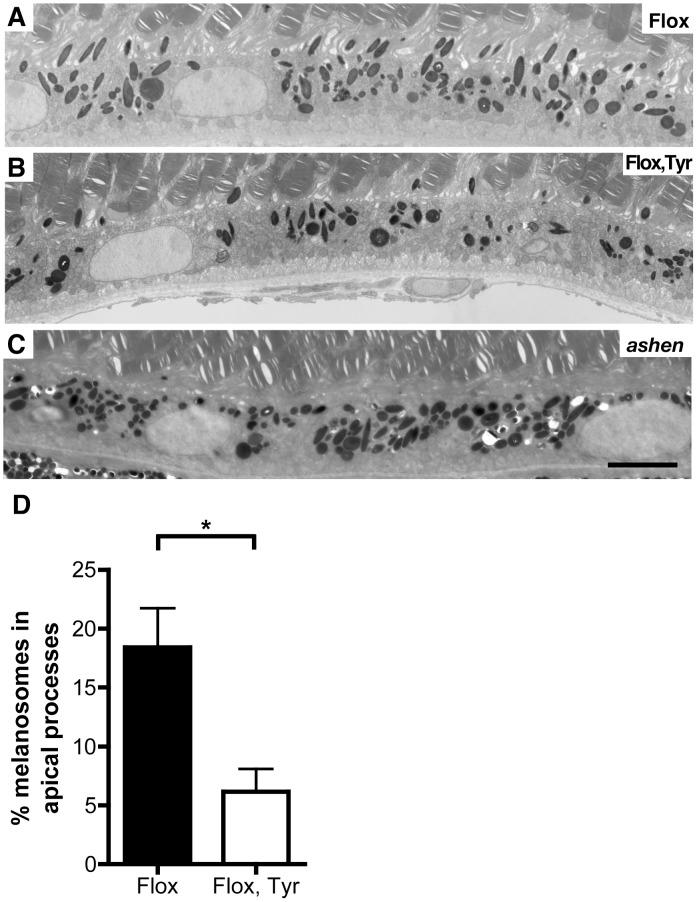
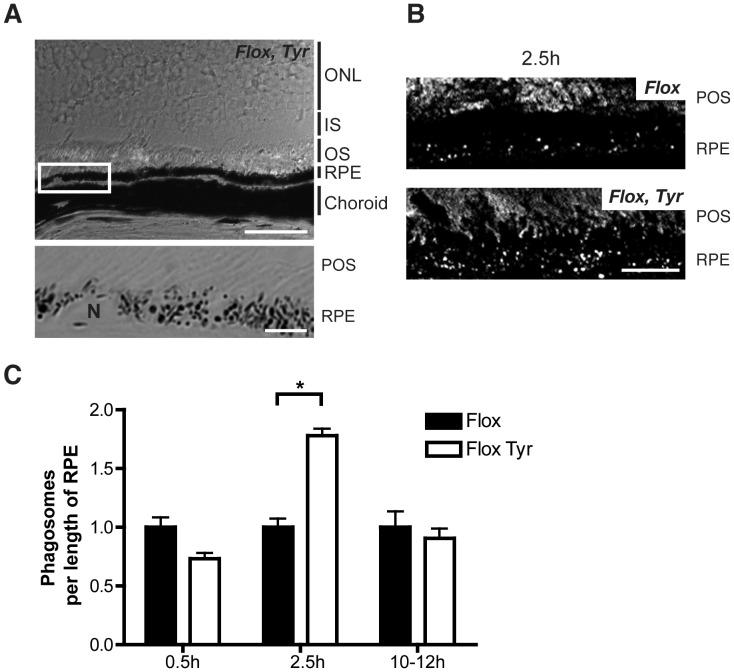
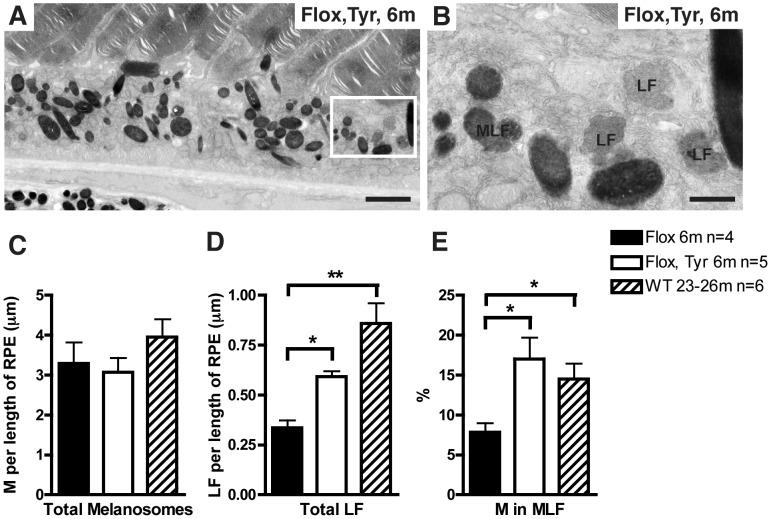
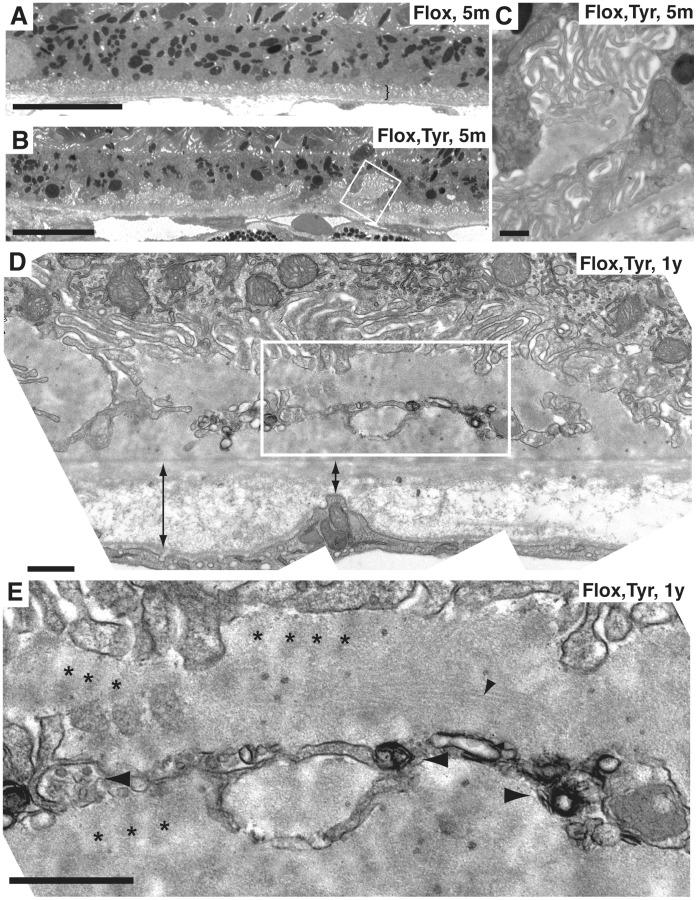
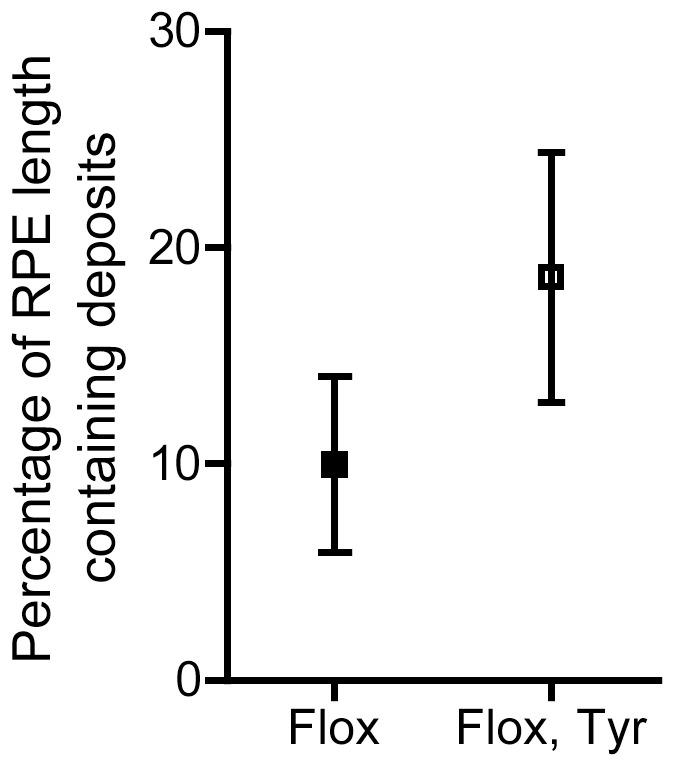
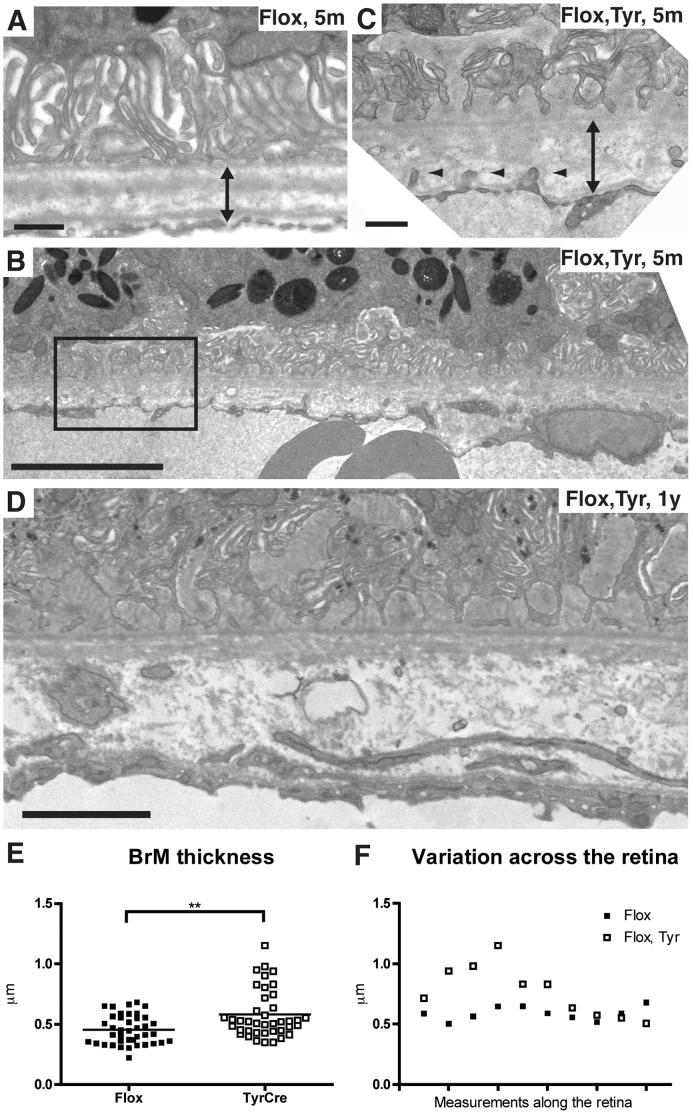
The retinal pigment epithelium (RPE) is a pigmented monolayer of cells lying between the photoreceptors and a layer of fenestrated capillaries, the choriocapillaris. Choroideremia (CHM) is an X-linked progressive degeneration of these three layers caused by the loss of function of Rab Escort protein-1 (REP1). REP1 is involved in the prenylation of Rab proteins, key regulators of membrane trafficking. To study the pathological consequences of chronic disruption of membrane traffic in the RPE we used a cell type-specific knock-out mouse model of the disease, where the Chm/Rep1 gene is deleted only in pigmented cells (Chm(Flox), Tyr-Cre+). Transmission electron microscopy (TEM) was used to quantitate the melanosome distribution in the RPE and immunofluorescent staining of rhodopsin was used to quantitate phagocytosed rod outer segments in retinal sections. The ultrastructure of the RPE and Bruch's membrane at different ages was characterised by TEM to analyse age-related changes occurring as a result of defects in membrane traffic pathways. Chm/Rep1 gene knockout in RPE cells resulted in reduced numbers of melanosomes in the apical processes and delayed phagosome degradation. In addition, the RPE accumulated pathological changes at 5-6 months of age similar to those observed in 2-year old controls. These included the intracellular accumulation of lipofuscin-containing deposits, disorganised basal infoldings and the extracellular accumulation of basal laminar and basal linear deposits. The phenotype of the Chm(Flox), Tyr-Cre+ mice suggests that loss of the Chm/Rep1 gene causes premature accumulation of features of aging in the RPE. Furthermore, the striking similarities between the present observations and some of the phenotypes reported in age-related macular degeneration (AMD) suggest that membrane traffic defects may contribute to the pathogenesis of AMD.
视网膜色素上皮(RPE)是位于光感受器和有孔毛细血管(脉络膜毛细血管)之间的单层色素细胞。X 连锁的视锥营养不良(CHM)是这三层结构的进行性退行性病变,由 Rab 护航蛋白 1(REP1)功能丧失引起。REP1 参与 Rab 蛋白的prenylation,Rab 蛋白是膜运输的关键调节因子。为了研究 RPE 中膜运输慢性中断的病理后果,我们使用了疾病的细胞类型特异性敲除小鼠模型,其中 Chm/Rep1 基因仅在色素细胞中缺失(Chm(Flox), Tyr-Cre+)。透射电子显微镜(TEM)用于定量 RPE 中黑素小体的分布,免疫荧光染色用于定量视网膜切片中吞噬的视杆细胞外节。通过 TEM 对不同年龄的 RPE 和 Bruch 膜的超微结构进行了特征描述,以分析由于膜运输途径缺陷而导致的与年龄相关的变化。RPE 细胞中的 Chm/Rep1 基因敲除导致顶突中黑素小体数量减少,吞噬体降解延迟。此外,RPE 在 5-6 月龄时积累了与 2 岁对照组相似的病理变化,包括细胞内脂褐素沉积的积累、基底内褶的紊乱以及基底层和基底线性沉积的细胞外积累。Chm(Flox), Tyr-Cre+ 小鼠的表型表明,Chm/Rep1 基因的缺失导致 RPE 中衰老特征的过早积累。此外,目前的观察结果与年龄相关性黄斑变性(AMD)中报道的一些表型之间的惊人相似性表明,膜运输缺陷可能导致 AMD 的发病机制。

 Zotero 插件