
美罗培南和哌拉西林/他唑巴坦在重症患者中的处方:当采用延长输注时,肾脏清除率增加是否会影响药代动力学/药效学目标的达成?
Meropenem and piperacillin/tazobactam prescribing in critically ill patients: does augmented renal clearance affect pharmacokinetic/pharmacodynamic target attainment when extended infusions are used?
作者信息
Carlier Mieke, Carrette Sofie, Roberts Jason A, Stove Veronique, Verstraete Alain, Hoste Eric, Depuydt Pieter, Decruyenaere Johan, Lipman Jeffrey, Wallis Steven C, De Waele Jan J
出版信息
Crit Care. 2013 May 3;17(3):R84. doi: 10.1186/cc12705.
BACKGROUND
Correct antibiotic dosing remains a challenge for the clinician. The aim of this study was to assess the influence of augmented renal clearance on pharmacokinetic/pharmacodynamic target attainment in critically ill patients receiving meropenem or piperacillin/tazobactam, administered as an extended infusion.
METHODS
This was a prospective, observational, pharmacokinetic study executed at the medical and surgical intensive care unit at a large academic medical center. Elegible patients were adult patients without renal dysfunction receiving meropenem or piperacillin/tazobactam as an extended infusion. Serial blood samples were collected to describe the antibiotic pharmacokinetics. Urine samples were taken from a 24-hour collection to measure creatinine clearance. Relevant data were drawn from the electronic patient file and the intensive care information system.
RESULTS
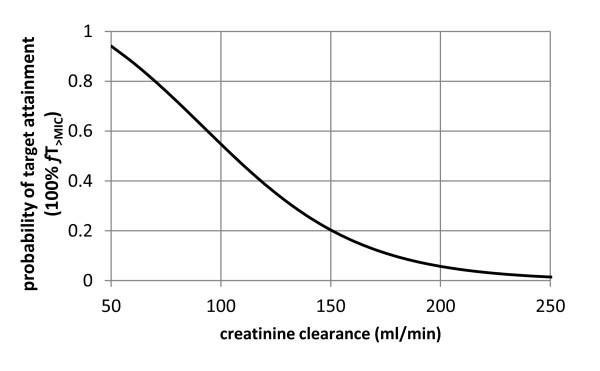
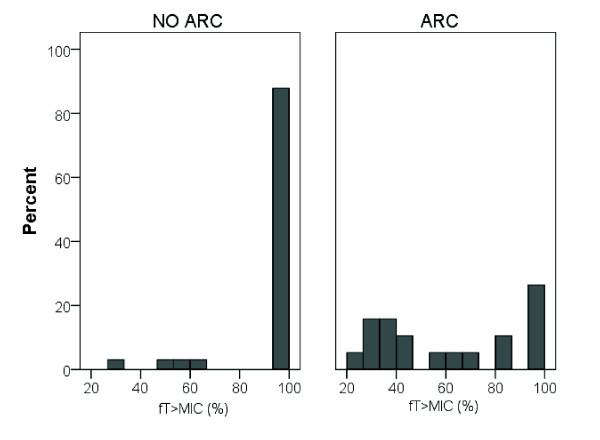
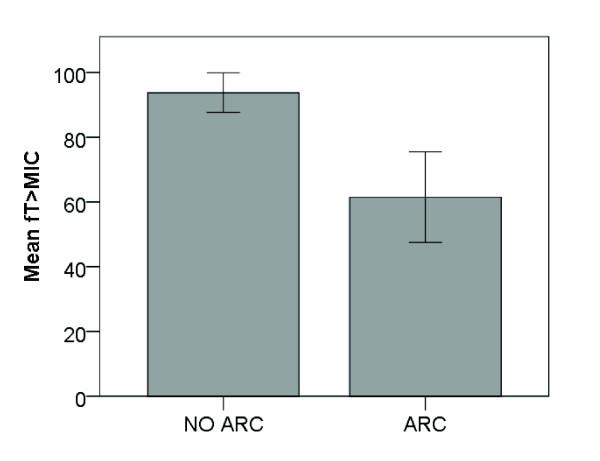
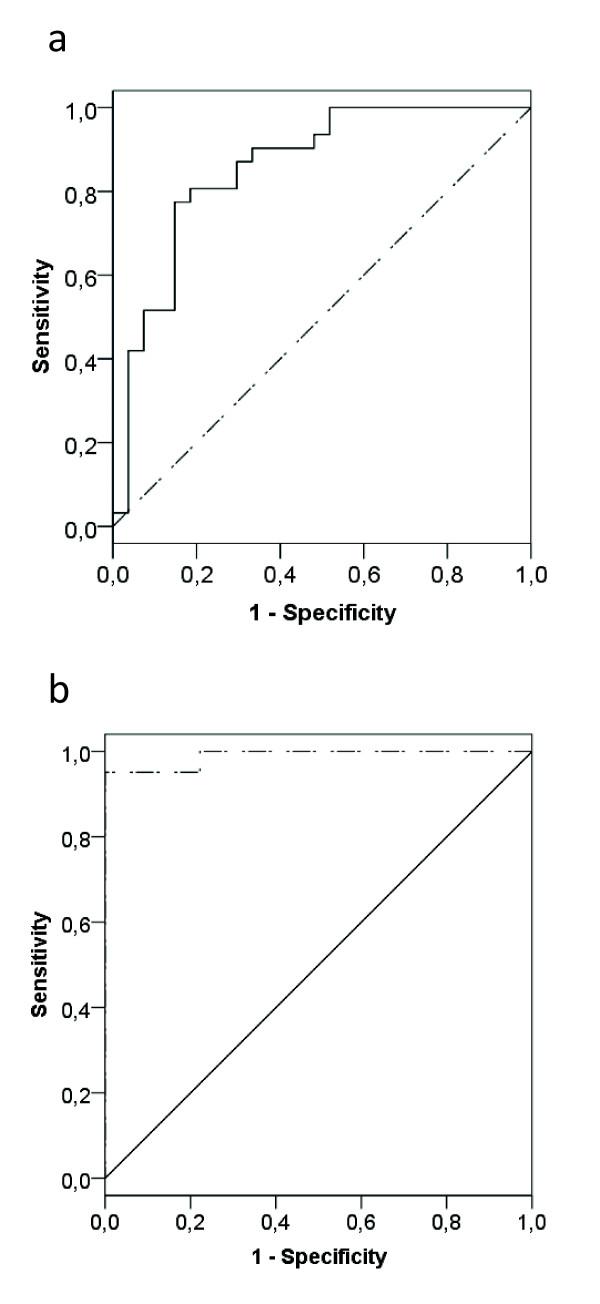
We obtained data from 61 patients and observed extensive pharmacokinetic variability. Forty-eight percent of the patients did not achieve the desired pharmacokinetic/pharmacodynamic target (100% fT>MIC), of which almost 80% had a measured creatinine clearance>130 mL/min. Multivariate logistic regression demonstrated that high creatinine clearance was an independent predictor of not achieving the pharmacokinetic/pharmacodynamic target. Seven out of nineteen patients (37%) displaying a creatinine clearance>130 mL/min did not achieve the minimum pharmacokinetic/pharmacodynamic target of 50% fT>MIC.
CONCLUSIONS
In this large patient cohort, we observed significant variability in pharmacokinetic/pharmacodynamic target attainment in critically ill patients. A large proportion of the patients without renal dysfunction, most of whom displayed a creatinine clearance>130 mL/min, did not achieve the desired pharmacokinetic/pharmacodynamic target, even with the use of alternative administration methods. Consequently, these patients may be at risk for treatment failure without dose up-titration.
背景
正确的抗生素给药剂量对临床医生来说仍是一项挑战。本研究的目的是评估在接受美罗培南或哌拉西林/他唑巴坦延长输注的重症患者中,肾脏清除率增加对药代动力学/药效学目标达成情况的影响。
方法
这是一项在大型学术医疗中心的内科和外科重症监护病房进行的前瞻性观察性药代动力学研究。符合条件的患者为无肾功能不全的成年患者,接受美罗培南或哌拉西林/他唑巴坦延长输注。采集系列血样以描述抗生素药代动力学。收集24小时尿液样本以测量肌酐清除率。相关数据来自电子病历和重症监护信息系统。
结果
我们获得了61例患者的数据,并观察到广泛的药代动力学变异性。48%的患者未达到理想的药代动力学/药效学目标(100% fT>MIC),其中近80%的患者测得肌酐清除率>130 mL/min。多因素逻辑回归表明,高肌酐清除率是未达到药代动力学/药效学目标的独立预测因素。19例肌酐清除率>130 mL/min的患者中有7例(37%)未达到50% fT>MIC的最低药代动力学/药效学目标。
结论
在这个大型患者队列中,我们观察到重症患者药代动力学/药效学目标达成情况存在显著变异性。很大一部分无肾功能不全的患者,其中大多数肌酐清除率>130 mL/min,即使使用替代给药方法也未达到理想的药代动力学/药效学目标。因此,这些患者在不增加剂量的情况下可能有治疗失败的风险。
 Zotero 插件