
吸气肌训练方案用于慢性阻塞性肺疾病患者(IMTCO 研究):一项多中心随机对照试验。
Inspiratory muscle training protocol for patients with chronic obstructive pulmonary disease (IMTCO study): a multicentre randomised controlled trial.
机构信息
Department of Rehabilitation Sciences, University of Leuven, Leuven, Belgium.
出版信息
BMJ Open. 2013 Aug 5;3(8):e003101. doi: 10.1136/bmjopen-2013-003101.
INTRODUCTION
Inspiratory muscle training (IMT) has been applied during pulmonary rehabilitation in patients with chronic obstructive pulmonary disease (COPD). However, it remains unclear if the addition of IMT to a general exercise training programme leads to additional clinically relevant improvements in patients with COPD. In this study, we will investigate whether the addition of IMT to a general exercise training programme improves 6 min walking distance, health-related quality of life, daily physical activity and inspiratory muscle function in patients with COPD with inspiratory muscle weakness.
METHODS AND ANALYSIS
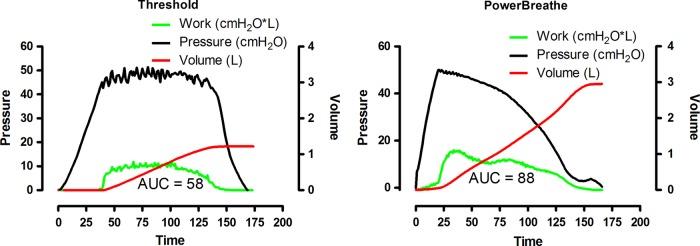
Patients with COPD (n=170) with inspiratory muscle weakness (Pi,max <60 cm H2O or <50%pred) will be recruited to a multicentre randomised placebo controlled trial of IMT and allocated into one of the two groups. Patients in both groups will follow a 3 month general exercise training programme, in combination with home-based IMT. IMT will be performed with a recently developed device (POWERbreathe KH1). This device applies an inspiratory load that is provided by an electronically controlled valve (variable flow resistive load). The intervention group (n=85) will undertake an IMT programme at a high intensity (≥50% of their Pi,max), whereas the placebo group (n=85) will undertake IMT at a low training intensity (≤10% of Pi,max). Total daily IMT time for both groups will be 21 min (6 cycles of 30 breaths). Improvement in the 6 min walking distance will be the primary outcome. Inspiratory muscle function, health-related quality of life and daily physical activity will be assessed as secondary outcomes.
ETHICS AND DISSEMINATION
Ethics approval has been obtained from relevant centre committees and the study has been registered in a publicly accessible clinical trial database. The results will be easily interpretable and should immediately be communicated to healthcare providers, patients and the general public.
RESULTS
This can be incorporated into evidence-based treatment recommendations for clinical practice.
CLINICALTRIALSGOV
NCT01397396.
简介
吸气肌训练(IMT)已应用于慢性阻塞性肺疾病(COPD)患者的肺康复中。然而,对于将 IMT 加入到一般运动训练方案中是否会导致 COPD 患者的临床相关改善仍不清楚。在这项研究中,我们将研究在存在吸气肌无力的 COPD 患者中,将 IMT 加入到一般运动训练方案中是否会改善 6 分钟步行距离、健康相关生活质量、日常体力活动和吸气肌功能。
方法和分析
将招募 170 名存在吸气肌无力(Pi,max <60cmH2O 或 <50%预测值)的 COPD 患者参加一项关于 IMT 的多中心随机安慰剂对照试验,并将他们分配到两组之一。两组患者都将接受 3 个月的一般运动训练方案,同时进行家庭 IMT。IMT 将使用最近开发的设备(POWERbreathe KH1)进行。该设备提供由电子控制阀(可变流量阻力负荷)提供的吸气负荷。干预组(n=85)将以高强度(≥50%的 Pi,max)进行 IMT 方案,而安慰剂组(n=85)将以低训练强度(≤10%的 Pi,max)进行 IMT。两组的总每日 IMT 时间为 21 分钟(6 个 30 次呼吸循环)。6 分钟步行距离的改善将是主要结局。吸气肌功能、健康相关生活质量和日常体力活动将作为次要结局进行评估。
伦理和传播
已从相关中心委员会获得伦理批准,该研究已在公开可访问的临床试验数据库中注册。结果将易于解释,应立即传达给医疗保健提供者、患者和公众。
结果
这可以纳入临床实践的循证治疗建议中。
临床试验.gov:NCT01397396。
 Zotero 插件