
传染性支气管炎病毒感染鸡的促炎细胞因子 mRNA 水平改变。
Altered pro-inflammatory cytokine mRNA levels in chickens infected with infectious bronchitis virus.
机构信息
Preventive Veterinary Medicine, College of Veterinary Medicine, Chungbuk National University 12, Gaeshin-dong, Heungduk-gu, Cheongju, Chungbuk, 361-763, Republic of Korea.
出版信息
Poult Sci. 2013 Sep;92(9):2290-8. doi: 10.3382/ps.2013-03116.
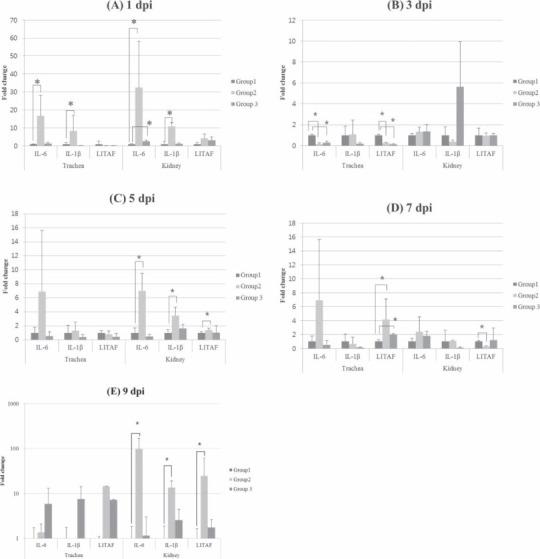
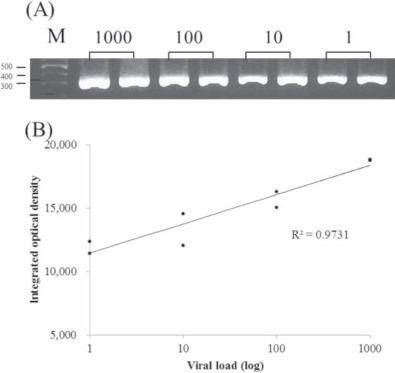
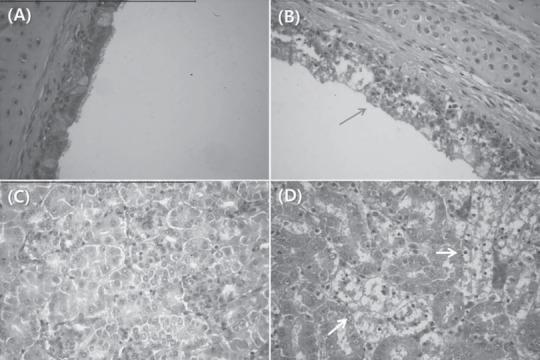
Infectious bronchitis virus (IBV) replicates primarily in the respiratory tract and grows in various organs in chickens, with or without pathological effects. The diversity of this virus has been verified by sequence analysis of the S1 glycoprotein gene, but this method must be supplemented with further analysis for characterization of the agent. To increase our understanding of the pathogenesis of the disease caused by this virus, we investigated the response of chickens to 2 IBV with different genotypes, KIIa and ChVI. The clinical signs induced by the viruses were observed. In addition, the mRNA levels of the pro-inflammatory cytokines, IL-6, IL-1β, and lipopolysaccharide-induced tumor necrosis factor-α factor and the serum levels of α1-acid glycoprotein, which is a major acute phase protein, were measured. The KIIa genotype (Kr/ADL110002/2011) induced clinical signs accompanied by the excessive production of pro-inflammatory cytokines and a higher viral load. In chickens infected with this isolate, simultaneous peaks in the viral copy number and cytokine production were observed at 7 dpi in the trachea and 9 d postinoculation in the kidney. On the other hand, the chickens infected with the ChVI genotype (Kr/ADL120003/2012) did not show a response other than a mild upregulation of cytokines at 1 d postinoculation, which appears to indicate the invasion of the virus. In summary, we confirmed a differential innate response following infection with distinct IBV. We hypothesize that an excessive innate response contributes to the scale of the pathophysiologic effect in chickens.
传染性支气管炎病毒(IBV)主要在呼吸道内复制,并在鸡的各种器官中生长,无论是否有病理影响。该病毒的多样性已通过 S1 糖蛋白基因的序列分析得到验证,但这种方法必须辅以进一步的分析,以表征该病原体。为了增加我们对这种病毒引起的疾病发病机制的理解,我们研究了两种具有不同基因型(KIIa 和 ChVI)的 IBV 对鸡的反应。观察了病毒引起的临床症状。此外,还测量了促炎细胞因子 IL-6、IL-1β 和脂多糖诱导的肿瘤坏死因子-α因子以及血清中主要急性相蛋白α1-酸性糖蛋白的 mRNA 水平。KIIa 基因型(Kr/ADL110002/2011)引起的临床症状伴有促炎细胞因子的过度产生和更高的病毒载量。在感染该分离株的鸡中,在气管中 7dpi 和肾脏中接种后 9 天观察到病毒拷贝数和细胞因子产生的同时峰值。另一方面,感染 ChVI 基因型(Kr/ADL120003/2012)的鸡除了在接种后 1 天细胞因子轻度上调外,没有表现出其他反应,这似乎表明病毒的入侵。总之,我们证实了感染不同 IBV 后会出现不同的先天反应。我们假设过度的先天反应有助于鸡的病理生理效应的规模。

 Zotero 插件