
AD 和 MCI 中定量表型的遗传分析:影像学、认知和生物标志物。
Genetic analysis of quantitative phenotypes in AD and MCI: imaging, cognition and biomarkers.
机构信息
Center for Neuroimaging and Indiana Alzheimer's Disease Center, Department of Radiology and Imaging Sciences, Indiana University School of Medicine, 355 W 16th Street, Suite 4100, Indianapolis, IN, 46202, USA,
出版信息
Brain Imaging Behav. 2014 Jun;8(2):183-207. doi: 10.1007/s11682-013-9262-z.
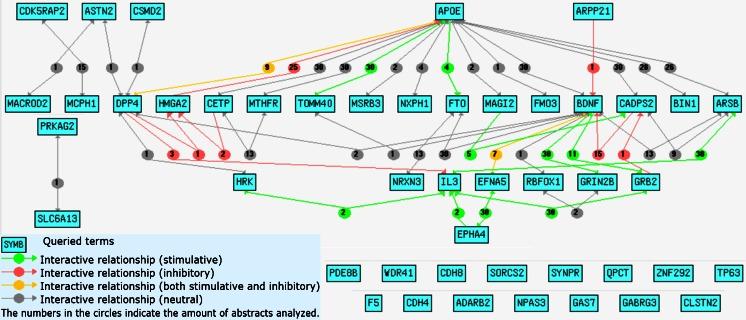
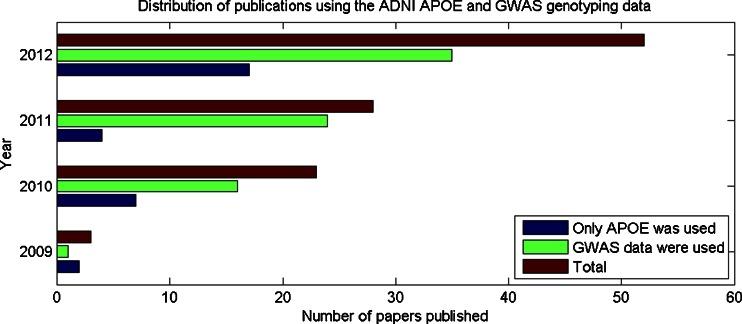
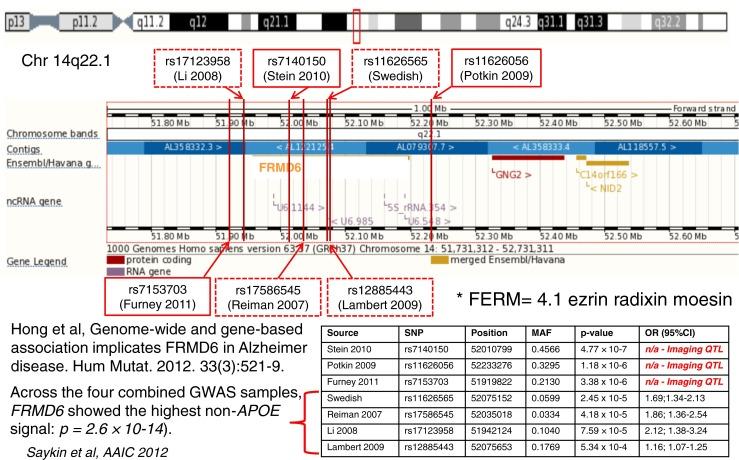
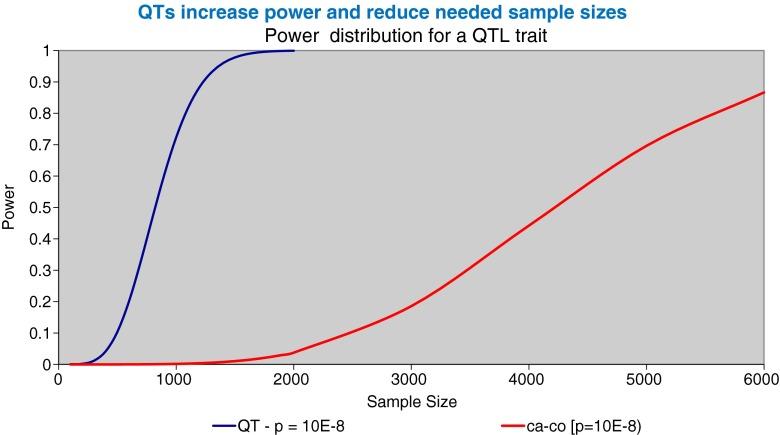
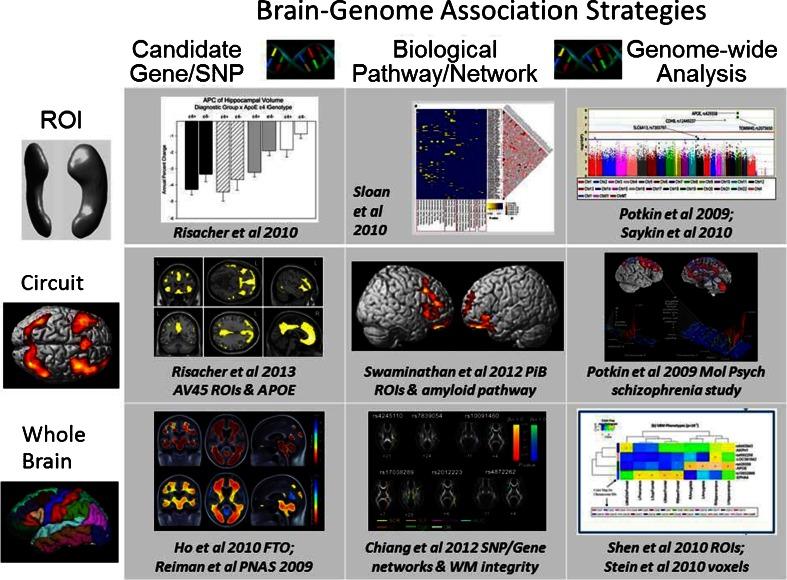
The Genetics Core of the Alzheimer's Disease Neuroimaging Initiative (ADNI), formally established in 2009, aims to provide resources and facilitate research related to genetic predictors of multidimensional Alzheimer's disease (AD)-related phenotypes. Here, we provide a systematic review of genetic studies published between 2009 and 2012 where either ADNI APOE genotype or genome-wide association study (GWAS) data were used. We review and synthesize ADNI genetic associations with disease status or quantitative disease endophenotypes including structural and functional neuroimaging, fluid biomarker assays, and cognitive performance. We also discuss the diverse analytical strategies used in these studies, including univariate and multivariate analysis, meta-analysis, pathway analysis, and interaction and network analysis. Finally, we perform pathway and network enrichment analyses of these ADNI genetic associations to highlight key mechanisms that may drive disease onset and trajectory. Major ADNI findings included all the top 10 AD genes and several of these (e.g., APOE, BIN1, CLU, CR1, and PICALM) were corroborated by ADNI imaging, fluid and cognitive phenotypes. ADNI imaging genetics studies discovered novel findings (e.g., FRMD6) that were later replicated on different data sets. Several other genes (e.g., APOC1, FTO, GRIN2B, MAGI2, and TOMM40) were associated with multiple ADNI phenotypes, warranting further investigation on other data sets. The broad availability and wide scope of ADNI genetic and phenotypic data has advanced our understanding of the genetic basis of AD and has nominated novel targets for future studies employing next-generation sequencing and convergent multi-omics approaches, and for clinical drug and biomarker development.
阿尔茨海默病神经影像学倡议(ADNI)的遗传学核心于 2009 年正式成立,旨在提供资源并促进与多维阿尔茨海默病(AD)相关表型的遗传预测因子相关的研究。在这里,我们对 2009 年至 2012 年期间发表的使用 ADNI APOE 基因型或全基因组关联研究(GWAS)数据的遗传研究进行了系统回顾。我们回顾并综合了 ADNI 遗传关联与疾病状态或定量疾病内表型(包括结构和功能神经影像学、液体生物标志物测定和认知表现)的关系。我们还讨论了这些研究中使用的各种分析策略,包括单变量和多变量分析、荟萃分析、途径分析以及相互作用和网络分析。最后,我们对这些 ADNI 遗传关联进行了途径和网络富集分析,以突出可能导致疾病发作和轨迹的关键机制。ADNI 的主要发现包括所有前 10 名 AD 基因中的大多数,其中一些(例如 APOE、BIN1、CLU、CR1 和 PICALM)得到了 ADNI 影像学、液体和认知表型的证实。ADNI 影像学遗传学研究发现了新的发现(例如 FRMD6),这些发现后来在不同的数据集上得到了复制。其他一些基因(例如 APOC1、FTO、GRIN2B、MAGI2 和 TOMM40)与 ADNI 的多种表型相关,这需要在其他数据集上进行进一步研究。ADNI 遗传和表型数据的广泛可用性和广泛范围促进了我们对 AD 遗传基础的理解,并提名了新的目标,用于采用下一代测序和收敛多组学方法以及用于临床药物和生物标志物开发的未来研究。
 Zotero 插件