
自噬和线粒体球状体的分区诱导限制了对乙酰氨基酚诱导的肝坏死。
Zonated induction of autophagy and mitochondrial spheroids limits acetaminophen-induced necrosis in the liver.
作者信息
Ni Hong-Min, Williams Jessica A, Jaeschke Hartmut, Ding Wen-Xing
机构信息
Department of Pharmacology, Toxicology and Therapeutics, University of Kansas Medical Center, Kansas City, Kansas 66160, United States.
出版信息
Redox Biol. 2013 Aug 26;1(1):427-32. doi: 10.1016/j.redox.2013.08.005.
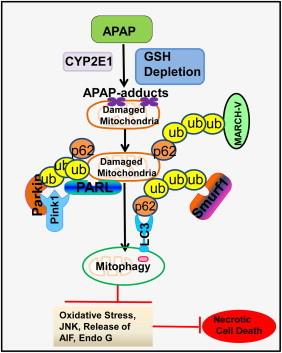
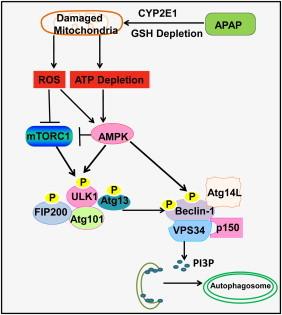
Acetaminophen (APAP) overdose is the most frequent cause of acute liver failure in the US and many western countries. It is well known that APAP induces mitochondrial damage to trigger centrilobular necrosis. Emerging evidence suggests that autophagic removal of damaged mitochondria may protect against APAP-induced liver injury. Electron and confocal microscopy analysis of liver tissues revealed that APAP overdose triggers unique biochemical and pathological zonated changes in the mouse liver, which includes necrosis (zone 1), mitochondrial spheroid formation (zone 2), autophagy (zone 3) and mitochondrial biogenesis (zone 4). In this graphic review, we discuss the role of autophagy/mitophagy in limiting the expansion of necrosis and promoting mitochondrial biogenesis and liver regeneration for the recovery of APAP-induced liver injury. We also discuss possible mechanisms that could be involved in regulating APAP-induced autophagy/mitophagy and the formation of mitochondrial spheroids.
对乙酰氨基酚(APAP)过量服用是美国和许多西方国家急性肝衰竭最常见的病因。众所周知,APAP会诱导线粒体损伤,引发小叶中心坏死。新出现的证据表明,自噬清除受损线粒体可能预防APAP诱导的肝损伤。对肝组织进行电子显微镜和共聚焦显微镜分析显示,APAP过量服用会引发小鼠肝脏独特的生化和病理分区变化,包括坏死(1区)、线粒体球状体形成(2区)、自噬(3区)和线粒体生物发生(4区)。在这篇图文综述中,我们讨论了自噬/线粒体自噬在限制坏死扩展、促进线粒体生物发生和肝脏再生以恢复APAP诱导的肝损伤方面的作用。我们还讨论了可能参与调节APAP诱导的自噬/线粒体自噬以及线粒体球状体形成的机制。


 Zotero 插件