
对两个毒力不同的褐飞虱种群唾液腺的比较转录组分析
Comparative transcriptome analysis of salivary glands of two populations of rice brown planthopper, Nilaparvata lugens, that differ in virulence.
作者信息
Ji Rui, Yu Haixin, Fu Qiang, Chen Hongdan, Ye Wenfeng, Li Shaohui, Lou Yonggen
机构信息
State Key Laboratory of Rice Biology, Institute of Insect Science, Zhejiang University, Hangzhou, China.
出版信息
PLoS One. 2013 Nov 14;8(11):e79612. doi: 10.1371/journal.pone.0079612. eCollection 2013.
BACKGROUND
The brown planthopper (BPH), Nilaparvata lugens (Stål), a destructive rice pest in Asia, can quickly overcome rice resistance by evolving new virulent populations. Herbivore saliva plays an important role in plant-herbivore interactions, including in plant defense and herbivore virulence. However, thus far little is known about BPH saliva at the molecular level, especially its role in virulence and BPH-rice interaction.
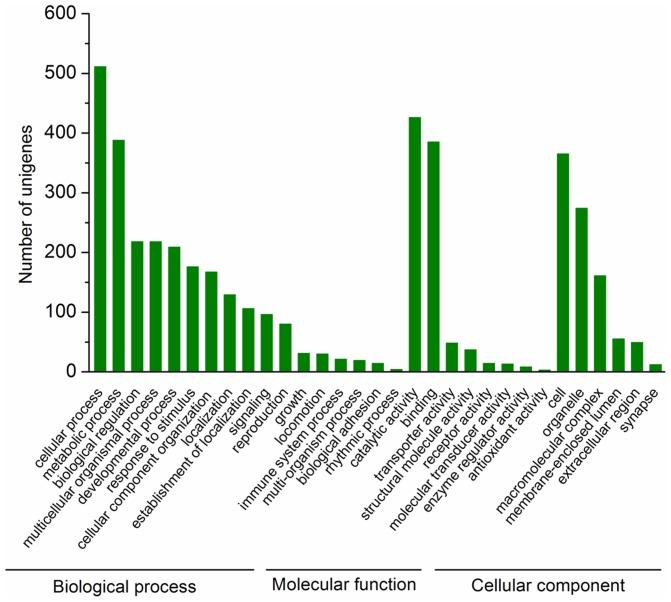
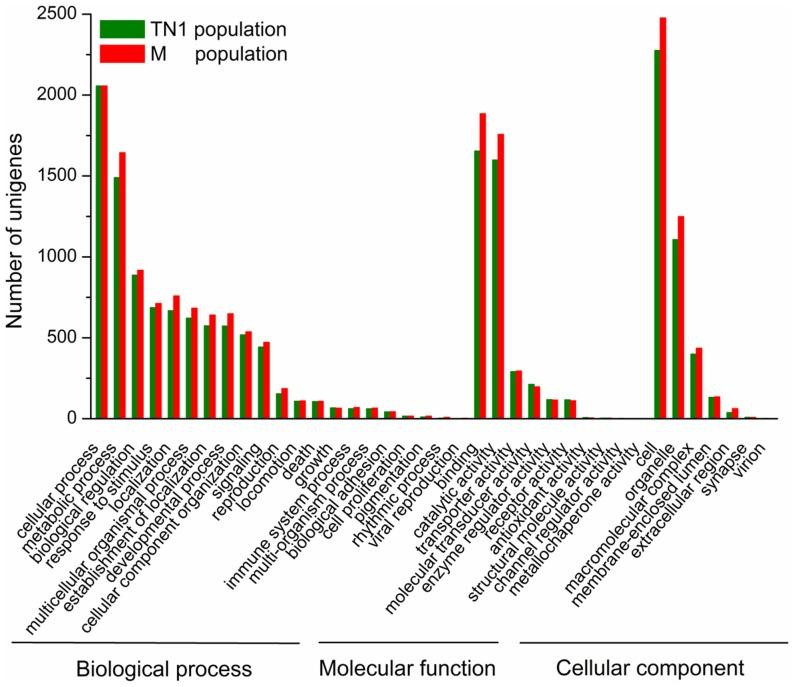
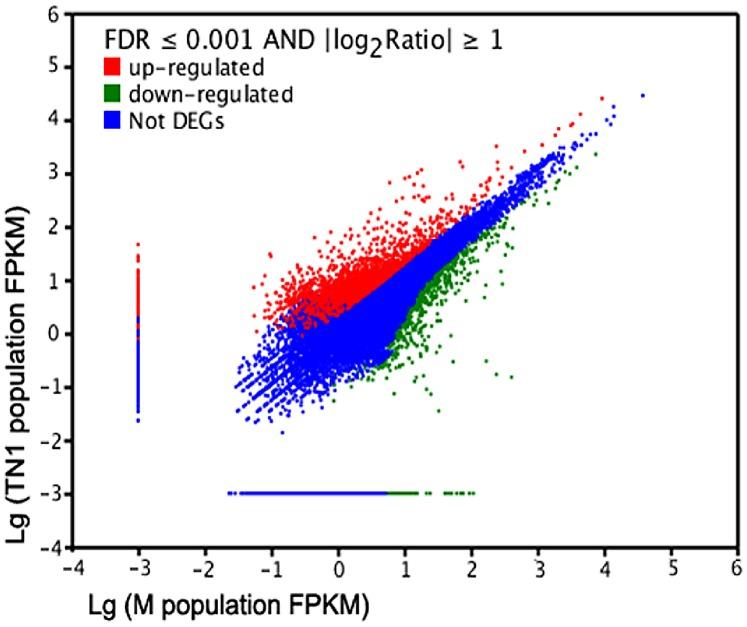
METHODOLOGY/PRINCIPAL FINDINGS: Using cDNA amplification in combination with Illumina short-read sequencing technology, we sequenced the salivary-gland transcriptomes of two BPH populations with different virulence; the populations were derived from rice variety TN1 (TN1 population) and Mudgo (M population). In total, 37,666 and 38,451 unigenes were generated from the salivary glands of these populations, respectively. When combined, a total of 43,312 unigenes were obtained, about 18 times more than the number of expressed sequence tags previously identified from these glands. Gene ontology annotations and KEGG orthology classifications indicated that genes related to metabolism, binding and transport were significantly active in the salivary glands. A total of 352 genes were predicted to encode secretory proteins, and some might play important roles in BPH feeding and BPH-rice interactions. Comparative analysis of the transcriptomes of the two populations revealed that the genes related to 'metabolism,' 'digestion and absorption,' and 'salivary secretion' might be associated with virulence. Moreover, 67 genes encoding putative secreted proteins were differentially expressed between the two populations, suggesting these genes may contribute to the change in virulence.
CONCLUSIONS/SIGNIFICANCE: This study was the first to compare the salivary-gland transcriptomes of two BPH populations having different virulence traits and to find genes that may be related to this difference. Our data provide a rich molecular resource for future functional studies on salivary glands and will be useful for elucidating the molecular mechanisms underlying BPH feeding and virulence differences.
背景
褐飞虱(Nilaparvata lugens (Stål))是亚洲一种具有破坏性的水稻害虫,它能够通过进化出新的毒性种群迅速克服水稻的抗性。植食性昆虫的唾液在植物与植食性昆虫的相互作用中起着重要作用,包括植物防御和昆虫毒性方面。然而,到目前为止,在分子水平上对褐飞虱唾液了解甚少,尤其是其在毒性和褐飞虱 - 水稻相互作用中的作用。
方法/主要发现:结合cDNA扩增与Illumina短读长测序技术,我们对两个具有不同毒性的褐飞虱种群的唾液腺转录组进行了测序;这两个种群分别来源于水稻品种TN1(TN1种群)和Mudgo(M种群)。分别从这些种群的唾液腺中总共获得了37,666个和38,451个单基因。合并后,总共获得了43,312个单基因,比之前从这些腺体中鉴定出的表达序列标签数量多约18倍。基因本体注释和KEGG直系同源分类表明,与代谢、结合和转运相关的基因在唾液腺中显著活跃。总共预测有352个基因编码分泌蛋白,其中一些可能在褐飞虱取食和褐飞虱 - 水稻相互作用中起重要作用。对两个种群转录组的比较分析表明,与“代谢”、“消化与吸收”和“唾液分泌”相关的基因可能与毒性有关。此外,两个种群之间有67个编码假定分泌蛋白的基因差异表达,表明这些基因可能导致了毒性的变化。
结论/意义:本研究首次比较了两个具有不同毒性特征的褐飞虱种群的唾液腺转录组,并发现了可能与此差异相关的基因。我们的数据为唾液腺未来的功能研究提供了丰富的分子资源,将有助于阐明褐飞虱取食和毒性差异的分子机制。



 Zotero 插件