
白化现象在 Astyanax 洞穴鱼中的潜在益处:oca2 基因下调会增加酪氨酸和儿茶酚胺水平,作为黑色素合成的替代途径。
A potential benefit of albinism in Astyanax cavefish: downregulation of the oca2 gene increases tyrosine and catecholamine levels as an alternative to melanin synthesis.
机构信息
Department of Molecular Biology, Ruđer Bošković Institute, Zagreb, Croatia ; Department of Biology, University of Maryland, Maryland, United States of America.
出版信息
PLoS One. 2013 Nov 25;8(11):e80823. doi: 10.1371/journal.pone.0080823. eCollection 2013.
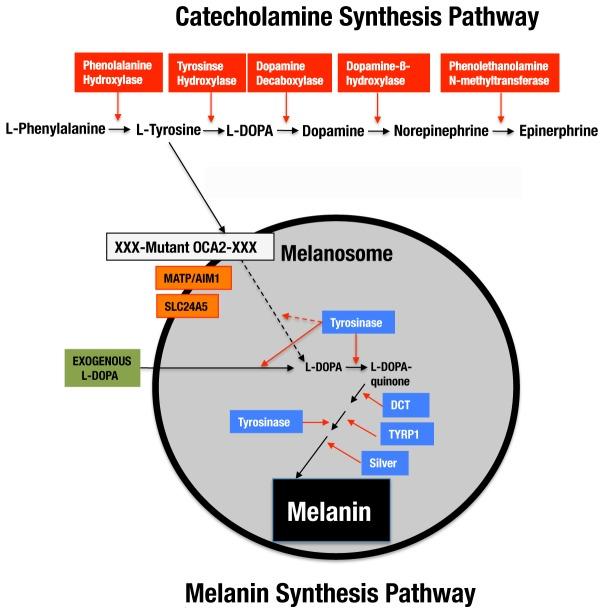
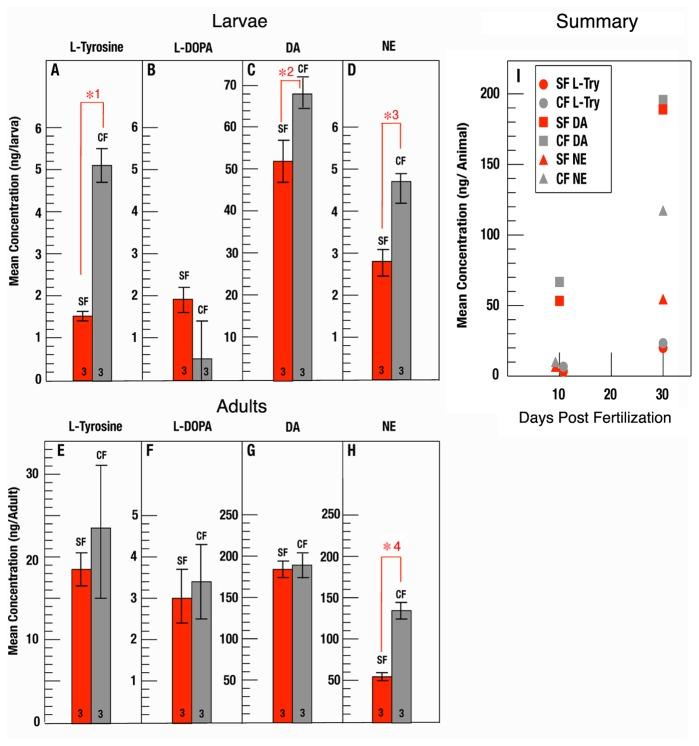
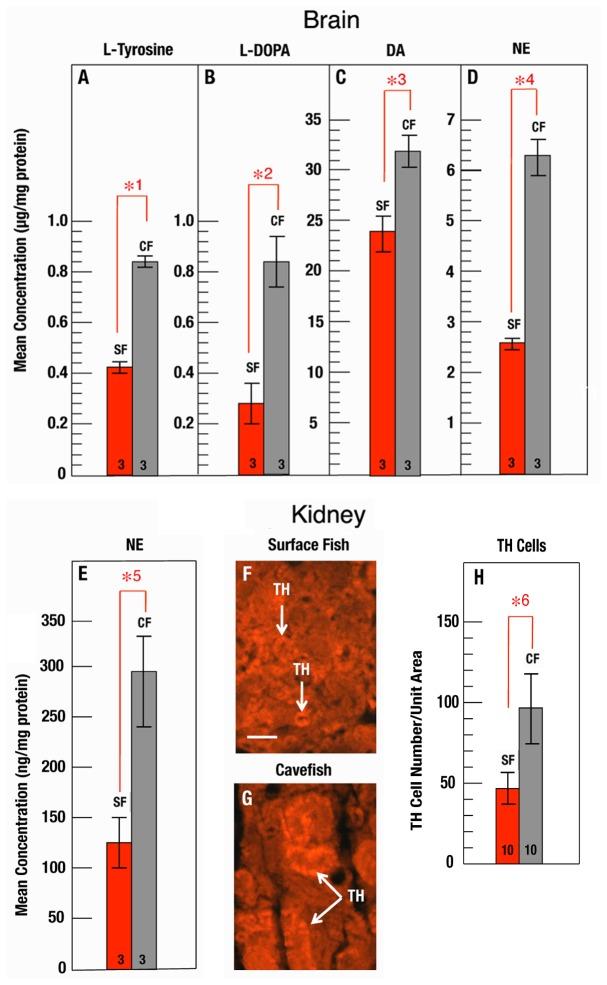
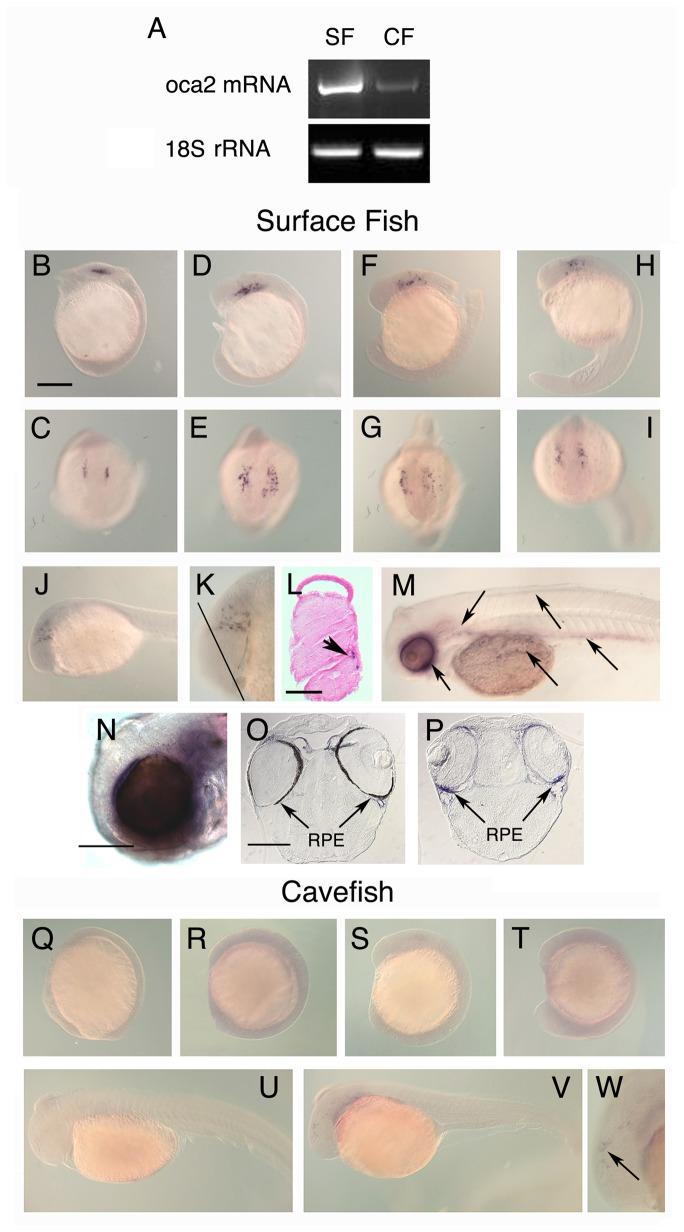
Albinism, the loss of melanin pigmentation, has evolved in a diverse variety of cave animals but the responsible evolutionary mechanisms are unknown. In Astyanax mexicanus, which has a pigmented surface dwelling form (surface fish) and several albino cave-dwelling forms (cavefish), albinism is caused by loss of function mutations in the oca2 gene, which operates during the first step of the melanin synthesis pathway. In addition to albinism, cavefish have evolved differences in behavior, including feeding and sleep, which are under the control of the catecholamine system. The catecholamine and melanin synthesis pathways diverge after beginning with the same substrate, L-tyrosine. Here we describe a novel relationship between the catecholamine and melanin synthesis pathways in Astyanax. Our results show significant increases in L-tyrosine, dopamine, and norepinephrine in pre-feeding larvae and adult brains of Pachón cavefish relative to surface fish. In addition, norepinephrine is elevated in cavefish adult kidneys, which contain the teleost homologs of catecholamine synthesizing adrenal cells. We further show that the oca2 gene is expressed during surface fish development but is downregulated in cavefish embryos. A key finding is that knockdown of oca2 expression in surface fish embryos delays the development of pigmented melanophores and simultaneously increases L-tyrosine and dopamine. We conclude that a potential evolutionary benefit of albinism in Astyanax cavefish may be to provide surplus L-tyrosine as a precursor for the elevated catecholamine synthesis pathway, which could be important for adaptation to the challenging cave environment.
白化病是黑色素沉着丧失的一种现象,已经在多种洞穴动物中进化出来,但负责这种进化的机制尚不清楚。在有色素的表栖形式(表栖鱼)和几种白化的洞穴栖形式(洞穴鱼)的墨西哥脂鲤(Astyanax mexicanus)中,白化病是由于 oca2 基因功能丧失突变引起的,该基因在黑色素合成途径的第一步中起作用。除了白化病之外,洞穴鱼还进化出了行为上的差异,包括摄食和睡眠,这些差异受儿茶酚胺系统的控制。儿茶酚胺和黑色素合成途径在开始时使用相同的底物 L-酪氨酸后就开始分道扬镳。在这里,我们描述了 Astyanax 中儿茶酚胺和黑色素合成途径之间的一种新关系。我们的研究结果表明,与表栖鱼相比,Pachón 洞穴鱼的预摄食幼虫和成年鱼的大脑中 L-酪氨酸、多巴胺和去甲肾上腺素显著增加。此外,洞穴鱼成年肾脏中的去甲肾上腺素升高,肾脏中含有与肾上腺细胞同源的儿茶酚胺合成的硬骨鱼同源物。我们进一步表明,oca2 基因在表栖鱼的发育过程中表达,但在洞穴鱼胚胎中下调。一个关键的发现是,在表栖鱼胚胎中敲低 oca2 基因的表达会延迟有色素的黑素细胞的发育,同时增加 L-酪氨酸和多巴胺的含量。我们得出结论,白化病在 Astyanax 洞穴鱼中的潜在进化优势可能是提供多余的 L-酪氨酸作为升高的儿茶酚胺合成途径的前体,这对于适应具有挑战性的洞穴环境可能很重要。

 Zotero 插件