
慢性HIV-1反式激活因子暴露于中枢神经系统的影响:男性与女性在细胞数量、突触完整性和行为变化方面的易感性增加。
Effects of chronic HIV-1 Tat exposure in the CNS: heightened vulnerability of males versus females to changes in cell numbers, synaptic integrity, and behavior.
作者信息
Hahn Yun Kyung, Podhaizer Elizabeth M, Farris Sean P, Miles Michael F, Hauser Kurt F, Knapp Pamela E
机构信息
Department of Anatomy and Neurobiology, Virginia Commonwealth University, Medical College of Virginia (MCV) Campus, PO Box 980709, Richmond, VA, 23298-0709, USA.
出版信息
Brain Struct Funct. 2015 Mar;220(2):605-23. doi: 10.1007/s00429-013-0676-6. Epub 2013 Dec 19.
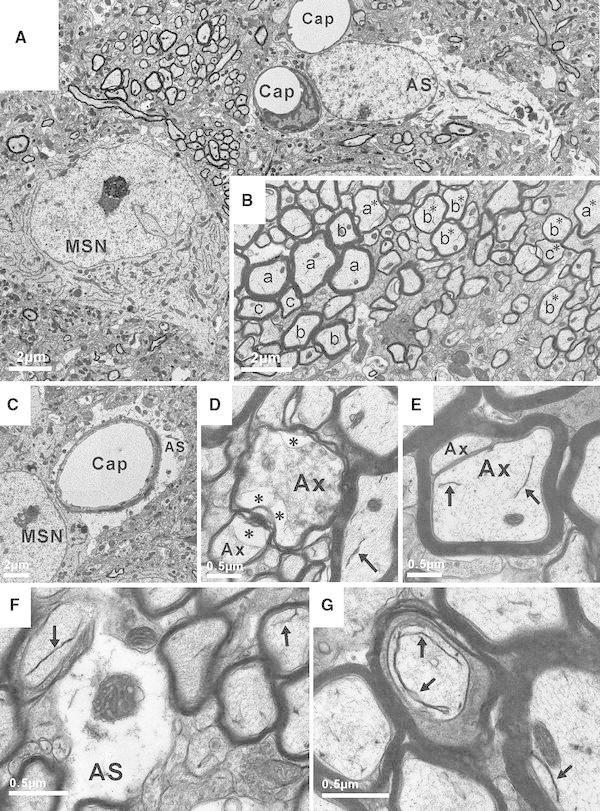
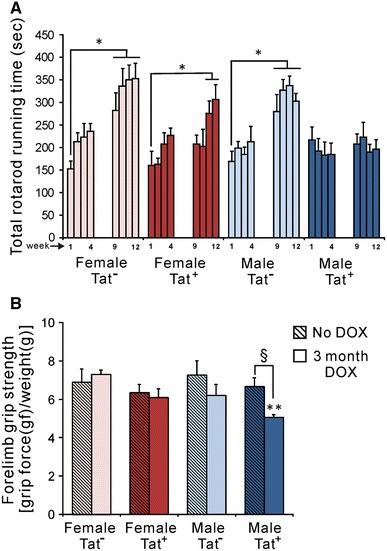
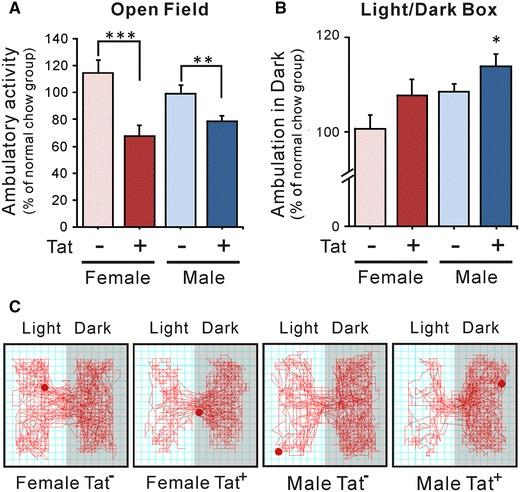
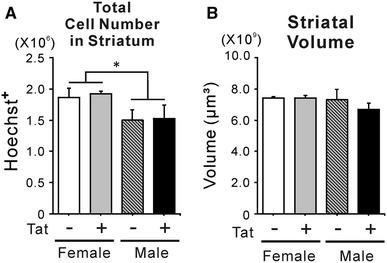
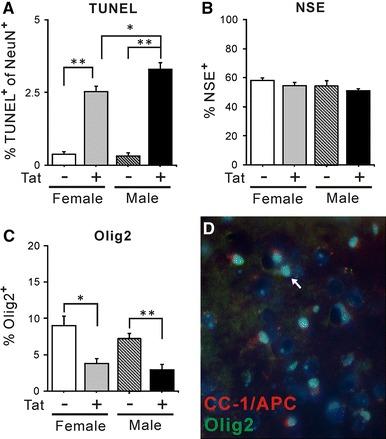
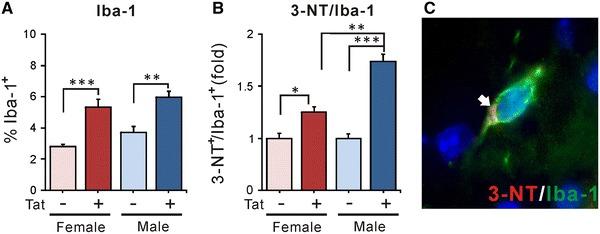
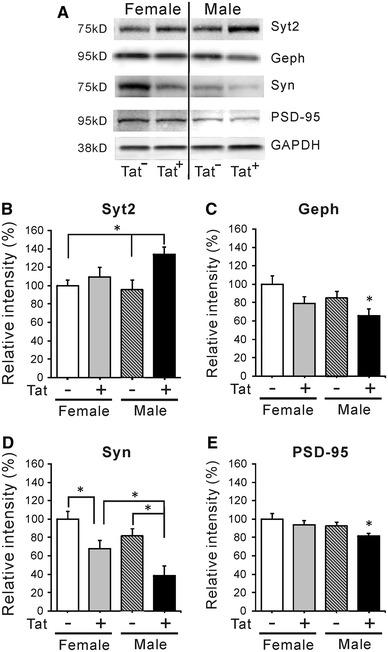
HIV-associated damage to the central nervous system results in cognitive and motor deficits. Anti-retroviral therapies reduce the severity of symptoms, yet the proportion of patients affected has remained the same or increased. Although approximately half of HIV-infected patients worldwide are women, the question of whether biological sex influences outcomes of HIV infection has received little attention. We explored this question for both behavioral and cellular/morphologic endpoints, using a transgenic mouse that inducibly expresses HIV-1 Tat in the brain. After 3 months of HIV-1 Tat exposure, both sexes showed similar reduced open field ambulation. Male Tat(+) mice also showed reduced forelimb grip strength and enhanced anxiety in a light-dark box assay. Tat(+) males did not improve over 12 weeks of repeated rotarod testing, indicating a motor memory deficit. Male mice also had more cellular deficits in the striatum. Neither sex showed a change in volume or total neuron numbers. Both had equally reduced oligodendroglial populations and equivalent microglial increases. However, astrogliosis and microglial nitrosative stress were higher in males. Dendrites on medium spiny neurons in male Tat(+) mice had fewer spines, and levels of excitatory and inhibitory pre- and post-synaptic proteins were disrupted. Our results predict sex as a determinant of HIV effects in brain. Increased behavioral deficits in males correlated with glial activation and synaptic damage, both of which are implicated in cognitive/motor impairments in patients. Tat produced by residually infected cells despite antiretroviral therapy may be an important determinant of the synaptodendritic instability and behavioral deficits accompanying chronic infection.
与HIV相关的中枢神经系统损伤会导致认知和运动功能缺陷。抗逆转录病毒疗法可减轻症状的严重程度,但受影响患者的比例却保持不变或有所增加。尽管全球约一半的HIV感染者为女性,但生物性别是否会影响HIV感染的结果这一问题却很少受到关注。我们使用一种可在大脑中诱导表达HIV-1 Tat的转基因小鼠,从行为和细胞/形态学终点两个方面探究了这个问题。在暴露于HIV-1 Tat 3个月后,两性的旷场行走能力均出现类似程度的下降。雄性Tat(+)小鼠在明暗箱试验中还表现出前肢握力下降和焦虑增强。在为期12周的重复转棒试验中,Tat(+)雄性小鼠的表现没有改善,表明存在运动记忆缺陷。雄性小鼠纹状体中的细胞缺陷也更多。两性的脑容量或神经元总数均未出现变化。两者的少突胶质细胞数量均同等减少,小胶质细胞数量均同等增加。然而,雄性小鼠的星形胶质细胞增生和小胶质细胞亚硝化应激更为严重。雄性Tat(+)小鼠中中等棘状神经元的树突棘较少,兴奋性和抑制性突触前和突触后蛋白的水平也受到破坏。我们的结果预测性别是HIV对大脑影响的一个决定因素。雄性小鼠行为缺陷的增加与胶质细胞激活和突触损伤相关,而这两者都与患者的认知/运动障碍有关。尽管进行了抗逆转录病毒治疗,但残留感染细胞产生的Tat可能是慢性感染伴随的突触树突不稳定和行为缺陷的一个重要决定因素。


 Zotero 插件