
唐氏综合征认知障碍与 21 三体的独特 DNA 甲基化模式。
Distinct DNA methylation patterns of cognitive impairment and trisomy 21 in Down syndrome.
机构信息
Centre for Molecular Medicine and Therapeutics, Child and Family Research Institute, and Department of Medical Genetics, University of British Columbia, Vancouver, British Columbia, Canada.
出版信息
BMC Med Genomics. 2013 Dec 27;6:58. doi: 10.1186/1755-8794-6-58.
BACKGROUND
The presence of an extra whole or part of chromosome 21 in people with Down syndrome (DS) is associated with multiple neurological changes, including pathological aging that often meets the criteria for Alzheimer's Disease (AD). In addition, trisomies have been shown to disrupt normal epigenetic marks across the genome, perhaps in response to changes in gene dosage. We hypothesized that trisomy 21 would result in global epigenetic changes across all participants, and that DS patients with cognitive impairment would show an additional epigenetic signature.
METHODS
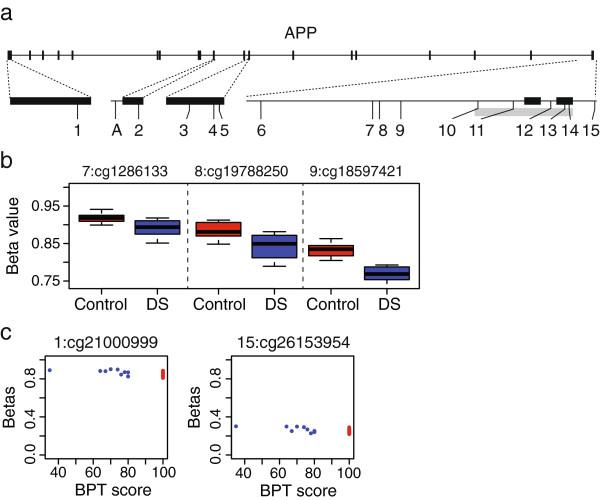
We therefore examined whole-genome DNA methylation in buccal epithelial cells of 10 adults with DS and 10 controls to determine whether patterns of DNA methylation were correlated with DS and/or cognitive impairment. In addition we examined DNA methylation at the APP gene itself, to see whether there were changes in DNA methylation in this population. Using the Illumina Infinium 450 K Human Methylation Array, we examined more than 485,000 CpG sites distributed across the genome in buccal epithelial cells.
RESULTS
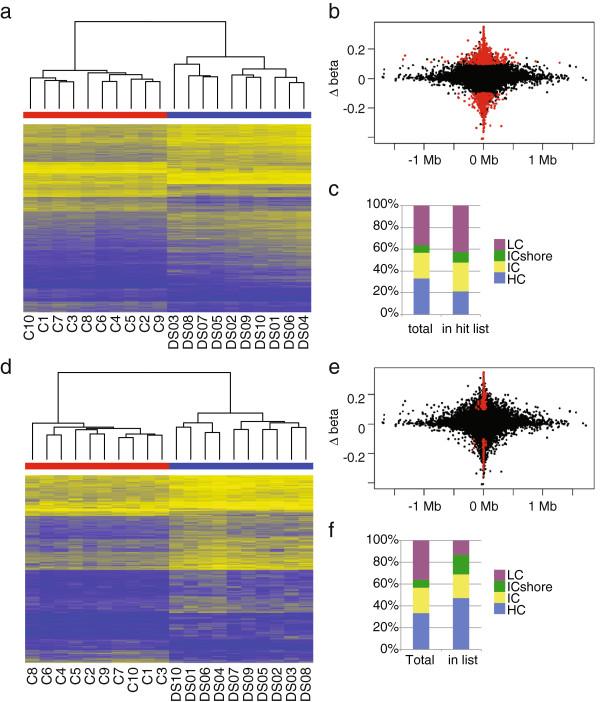
We found 3300 CpGs to be differentially methylated between the groups, including 495 CpGs that overlap with clusters of differentially methylated probes. In addition, we found 5 probes that were correlated with cognitive function including two probes in the TSC2 gene that has previously been associated with Alzheimer's disease pathology. We found no enrichment on chromosome 21 in either case, and targeted analysis of the APP gene revealed weak evidence for epigenetic impacts related to the AD phenotype.
CONCLUSIONS
Overall, our results indicated that both Trisomy 21 and cognitive impairment were associated with distinct patterns of DNA methylation.
背景
唐氏综合征(DS)患者存在额外的整条或部分 21 号染色体,与多种神经变化有关,包括常符合阿尔茨海默病(AD)标准的病理性衰老。此外,三体已被证明会破坏整个基因组的正常表观遗传标记,可能是对基因剂量变化的反应。我们假设 21 三体会导致所有参与者的全基因组表观遗传变化,并且认知障碍的 DS 患者会表现出额外的表观遗传特征。
方法
因此,我们检查了 10 名 DS 成人和 10 名对照者的口腔上皮细胞的全基因组 DNA 甲基化,以确定 DNA 甲基化模式是否与 DS 和/或认知障碍相关。此外,我们还检查了 APP 基因本身的 DNA 甲基化,以观察该人群中是否存在 DNA 甲基化的变化。我们使用 Illumina Infinium 450K 人类甲基化阵列,检查了口腔上皮细胞中分布在基因组上的超过 485000 个 CpG 位点。
结果
我们发现两组之间有 3300 个 CpG 发生差异甲基化,包括 495 个与差异甲基化探针簇重叠的 CpG。此外,我们发现了 5 个与认知功能相关的探针,包括两个与阿尔茨海默病病理相关的 TSC2 基因中的探针。在任何情况下,我们都没有在 21 号染色体上发现富集,并且对 APP 基因的靶向分析显示出与 AD 表型相关的弱的表观遗传影响的证据。
结论
总的来说,我们的结果表明,21 三体和认知障碍都与独特的 DNA 甲基化模式有关。


 Zotero 插件