
急性炎症和恢复期间,对小鼠微生物群活性及其与宿主相互作用的纵向研究。
Longitudinal study of murine microbiota activity and interactions with the host during acute inflammation and recovery.
机构信息
Division of Archaea Biology and Ecogenomics, Department of Ecogenomics and Systems Biology, Faculty of Life Sciences, University of Vienna, Wien, Austria.
Division of Microbial Ecology, Department of Microbiology and Ecosystem Science, Faculty of Life Sciences, University of Vienna, Wien, Austria.
出版信息
ISME J. 2014 May;8(5):1101-14. doi: 10.1038/ismej.2013.223. Epub 2014 Jan 9.
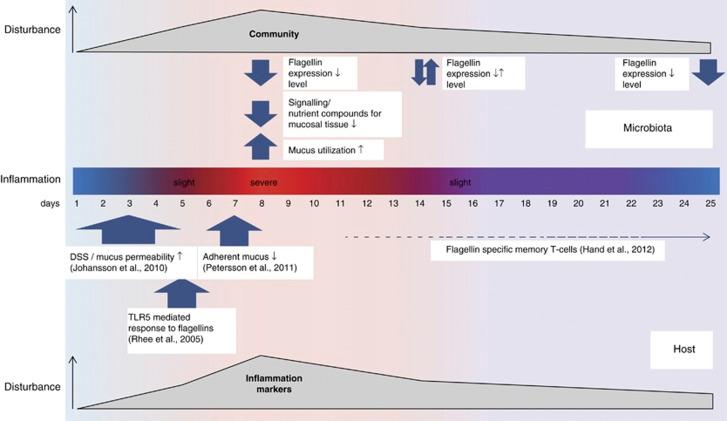
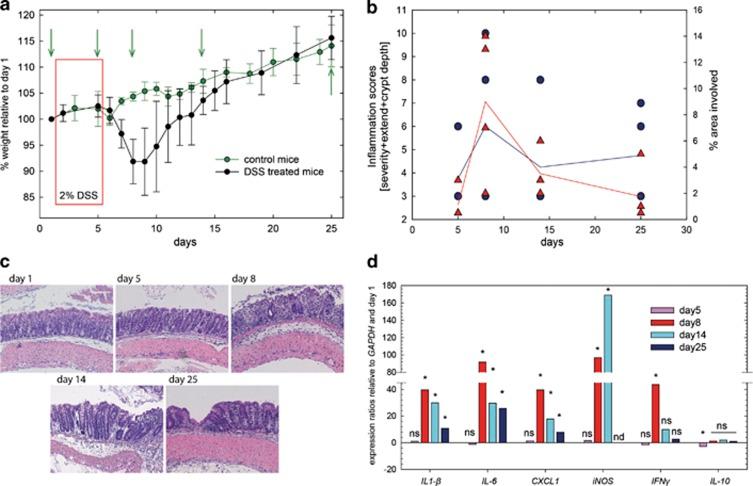
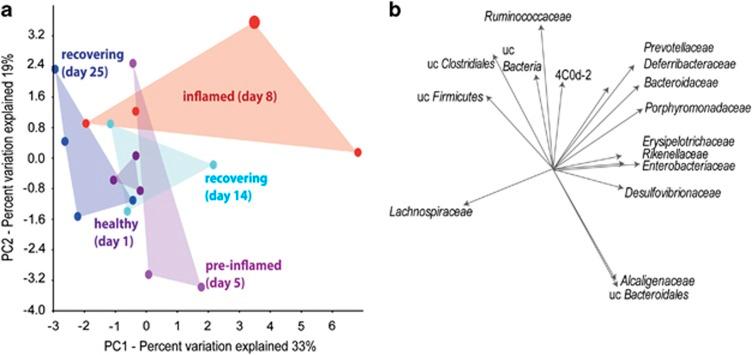
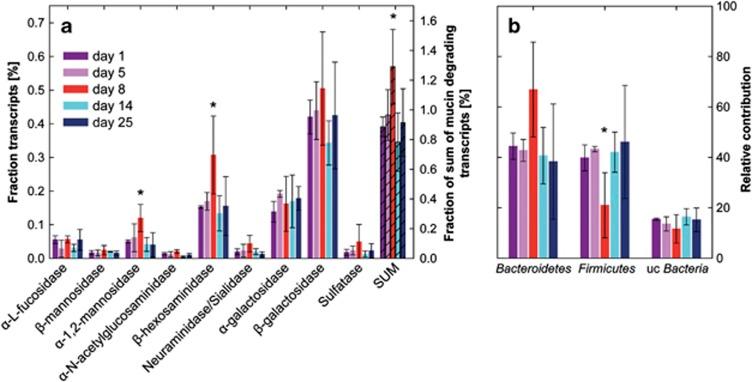
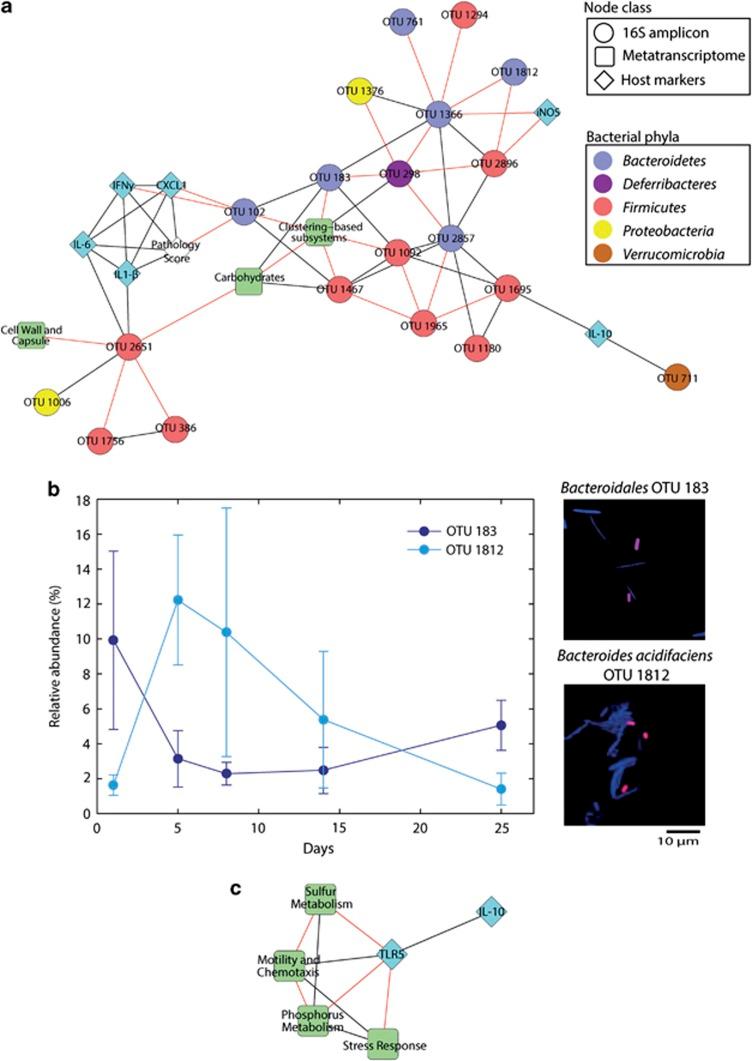
Although alterations in gut microbiota composition during acute colitis have been repeatedly observed, associated functional changes and the recovery from dysbiosis received little attention. In this study, we investigated structure and function of the gut microbiota during acute inflammation and recovery in a dextran sodium sulfate (DSS)-colitis mouse model using metatranscriptomics, bacterial 16S rRNA gene amplicon sequencing and monitoring of selected host markers. Parallel to an increase of host markers of inflammation during acute colitis, we observed relative abundance shifts and alterations in phylotype composition of the dominant bacterial orders Clostridiales and Bacteroidales, and an increase of the low abundant Enterobacteriales, Deferribacterales, Verrucomicrobiales and Erysipelotrichales. During recovery, the microbiota began to resume, but did not reach its original composition until the end of the experiment. Microbial gene expression was more resilient to disturbance, with pre-perturbation-type transcript profiles appearing quickly after acute colitis. The decrease of Clostridiales during inflammation correlated with a reduction of transcripts related to butyrate formation, suggesting a disturbance in host-microbe signalling and mucosal nutrient provision. The impact of acute inflammation on the Clostridiales was also characterized by a significant downregulation of their flagellin-encoding genes. In contrast, the abundance of members of the Bacteroidales increased along with an increase in transcripts related to mucin degradation. We propose that acute inflammation triggered a selective reaction of the immune system against flagella of commensals and temporarily altered murine microbiota composition and functions relevant for the host. Despite changes in specific interactions, the host-microbiota homeostasis revealed a remarkable ability for recovery.
虽然在急性结肠炎期间肠道微生物群落组成的改变已被反复观察到,但相关的功能变化和从功能失调中恢复的问题却很少受到关注。在这项研究中,我们使用宏转录组学、细菌 16S rRNA 基因扩增子测序和监测选定的宿主标志物,研究了葡聚糖硫酸钠 (DSS)-结肠炎小鼠模型中急性炎症和恢复期间肠道微生物群落的结构和功能。与急性结肠炎期间宿主炎症标志物的增加平行的是,我们观察到了优势细菌目 Clostridiales 和 Bacteroidales 的相对丰度变化和组成改变,以及低丰度的 Enterobacteriales、Deferribacterales、Verrucomicrobiales 和 Erysipelotrichales 的增加。在恢复期间,微生物群开始恢复,但直到实验结束才恢复到原来的组成。微生物基因表达对干扰更具弹性,急性结肠炎后很快出现了预先扰动的转录谱。炎症期间 Clostridiales 的减少与与丁酸形成相关的转录本减少相关,这表明宿主-微生物信号和粘膜营养供应受到干扰。急性炎症对 Clostridiales 的影响还表现为其鞭毛编码基因的显著下调。相比之下,Bacteroidales 成员的丰度随着与粘蛋白降解相关的转录本的增加而增加。我们提出,急性炎症引发了免疫系统对共生菌鞭毛的选择性反应,暂时改变了小鼠微生物群落的组成和与宿主相关的功能。尽管特定相互作用发生了变化,但宿主-微生物群的动态平衡显示出了惊人的恢复能力。


 Zotero 插件