
尽管复合体III逐渐缺乏,但肝脏线粒体中的复合体I功能和超复合体形成仍得以保留。
Complex I function and supercomplex formation are preserved in liver mitochondria despite progressive complex III deficiency.
作者信息
Davoudi Mina, Kotarsky Heike, Hansson Eva, Fellman Vineta
机构信息
Department of Pediatrics, Clinical Sciences, Lund University, Lund, Sweden.
Department of Pediatrics, Clinical Sciences, Lund University, Lund, Sweden ; Folkhälsan Research Center, Helsinki, Finland ; Children's Hospital, Helsinki University Hospital, University of Helsinki, Helsinki, Finland.
出版信息
PLoS One. 2014 Jan 22;9(1):e86767. doi: 10.1371/journal.pone.0086767. eCollection 2014.
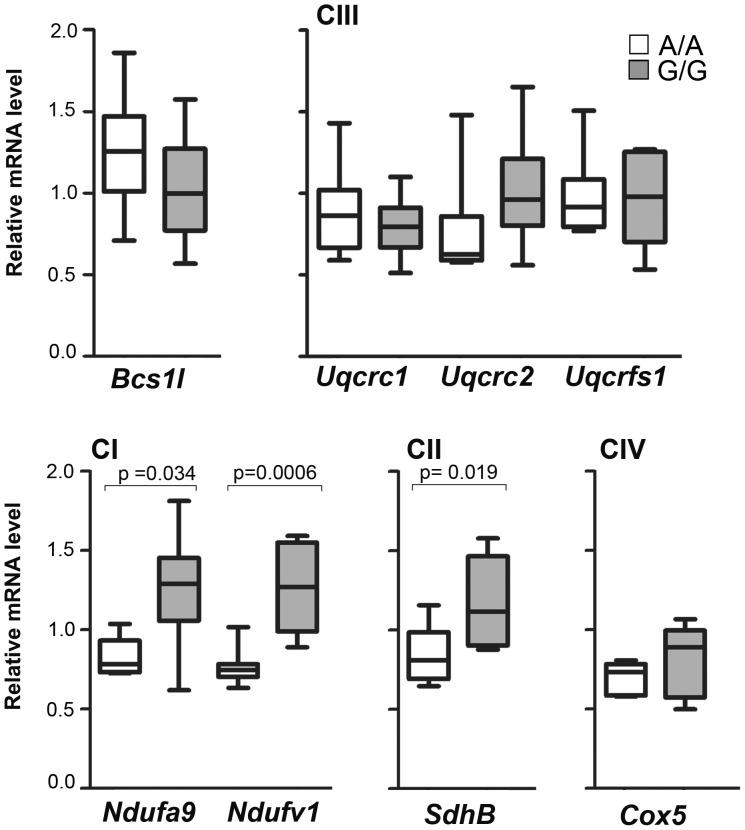
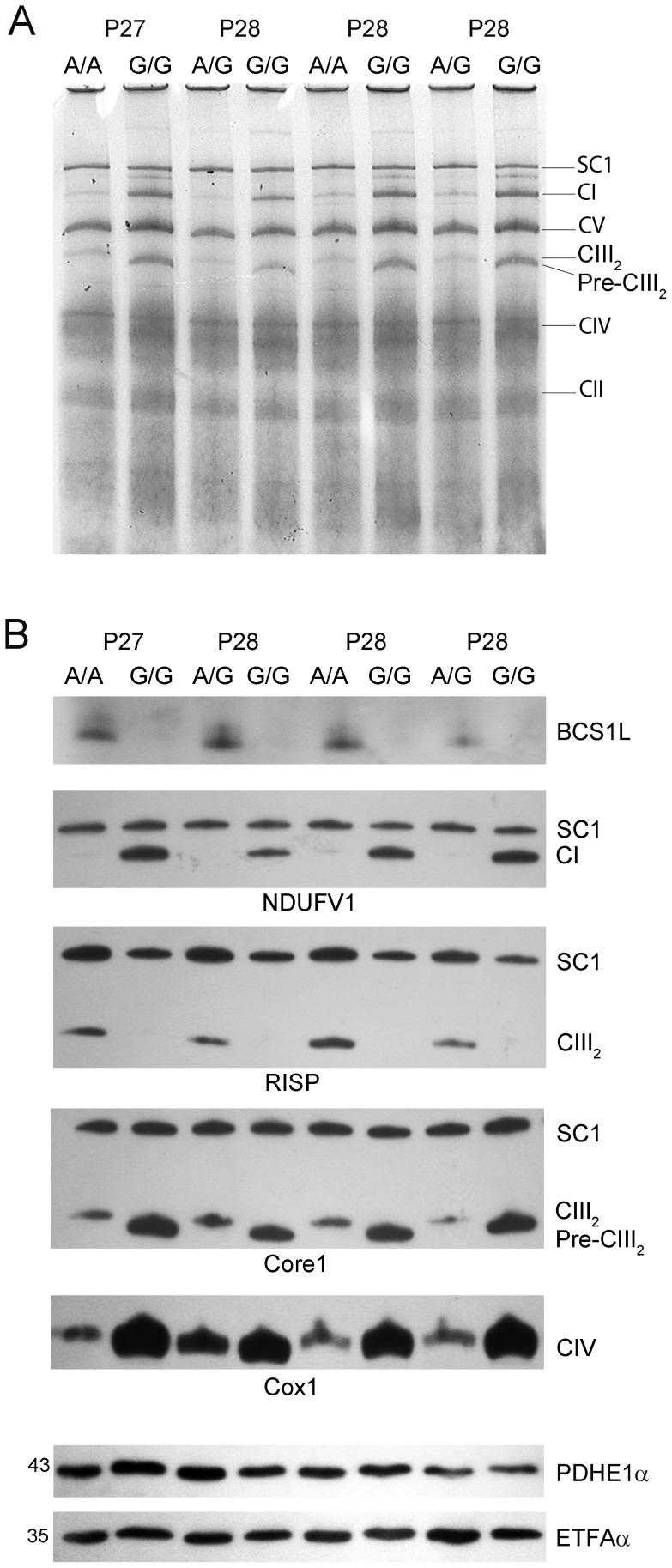
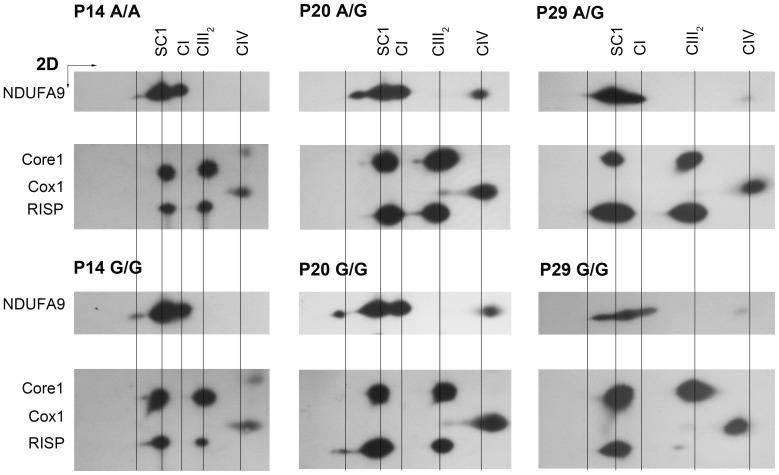
Functional oxidative phosphorylation requires appropriately assembled mitochondrial respiratory complexes and their supercomplexes formed mainly of complexes I, III and IV. BCS1L is the chaperone needed to incorporate the catalytic subunit, Rieske iron-sulfur protein, into complex III at the final stage of its assembly. In cell culture studies, this subunit has been considered necessary for supercomplex formation and for maintaining the stability of complex I. Our aim was to assess the importance of fully assembled complex III for supercomplex formation in intact liver tissue. We used our transgenic mouse model with a homozygous c.232A>G mutation in Bcs1l leading to decreased expression of BCS1L and progressive decrease of Rieske iron-sulfur protein in complex III, resulting in hepatopathy. We studied supercomplex formation at different ages using blue native gel electrophoresis and complex activity using high-resolution respirometry. In isolated liver mitochondria of young and healthy homozygous mutant mice, we found similar supercomplexes as in wild type. In homozygotes aged 27-29 days with liver disorder, complex III was predominantly a pre-complex lacking Rieske iron-sulfur protein. However, the main supercomplex was clearly detected and contained complex III mainly in the pre-complex form. Oxygen consumption of complex IV was similar and that of complex I was twofold compared with controls. These complexes in free form were more abundant in homozygotes than in controls, and the mRNA of complex I subunits were upregulated. In conclusion, when complex III assembly is deficient, the pre-complex without Rieske iron-sulfur protein can participate with available fully assembled complex III in supercomplex formation, complex I function is preserved, and respiratory chain stability is maintained.
功能性氧化磷酸化需要适当组装的线粒体呼吸复合物及其主要由复合物I、III和IV形成的超复合物。BCS1L是在复合物III组装的最后阶段将催化亚基里斯克铁硫蛋白整合到复合物III中所需的伴侣蛋白。在细胞培养研究中,该亚基被认为是超复合物形成和维持复合物I稳定性所必需的。我们的目的是评估完整肝组织中完全组装的复合物III对超复合物形成的重要性。我们使用了我们的转基因小鼠模型,该模型在Bcs1l基因中存在纯合的c.232A>G突变,导致BCS1L表达降低,复合物III中里斯克铁硫蛋白逐渐减少,从而导致肝病。我们使用蓝色非变性凝胶电泳研究了不同年龄的超复合物形成,并使用高分辨率呼吸测定法研究了复合物活性。在年轻健康的纯合突变小鼠的分离肝线粒体中,我们发现了与野生型相似的超复合物。在27-29天龄患有肝脏疾病的纯合子中,复合物III主要是缺乏里斯克铁硫蛋白的前体复合物。然而,主要的超复合物被清晰地检测到,并且主要包含前体复合物形式的复合物III。复合物IV的氧消耗与对照组相似,而复合物I的氧消耗是对照组的两倍。这些游离形式的复合物在纯合子中比在对照组中更丰富,并且复合物I亚基的mRNA上调。总之,当复合物III组装不足时,没有里斯克铁硫蛋白的前体复合物可以与可用的完全组装的复合物III一起参与超复合物形成,复合物I的功能得以保留,呼吸链稳定性得以维持。


 Zotero 插件