
不同保护状况的蛾类在园林和景观尺度上的相关因素:城市化和栖息地多样性的显著影响。
Garden and landscape-scale correlates of moths of differing conservation status: significant effects of urbanization and habitat diversity.
作者信息
Bates Adam J, Sadler Jon P, Grundy Dave, Lowe Norman, Davis George, Baker David, Bridge Malcolm, Freestone Roger, Gardner David, Gibson Chris, Hemming Robin, Howarth Stephen, Orridge Steve, Shaw Mark, Tams Tom, Young Heather
机构信息
The University of Birmingham, Birmingham, United Kingdom.
The Garden Moth Scheme, Birmingham, United Kingdom.
出版信息
PLoS One. 2014 Jan 27;9(1):e86925. doi: 10.1371/journal.pone.0086925. eCollection 2014.
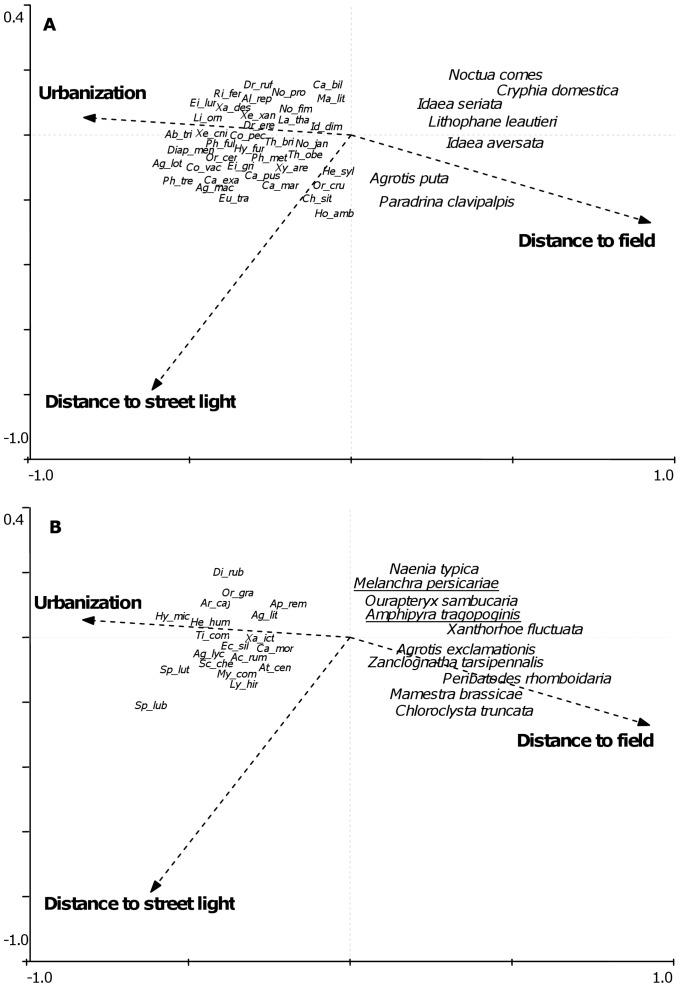
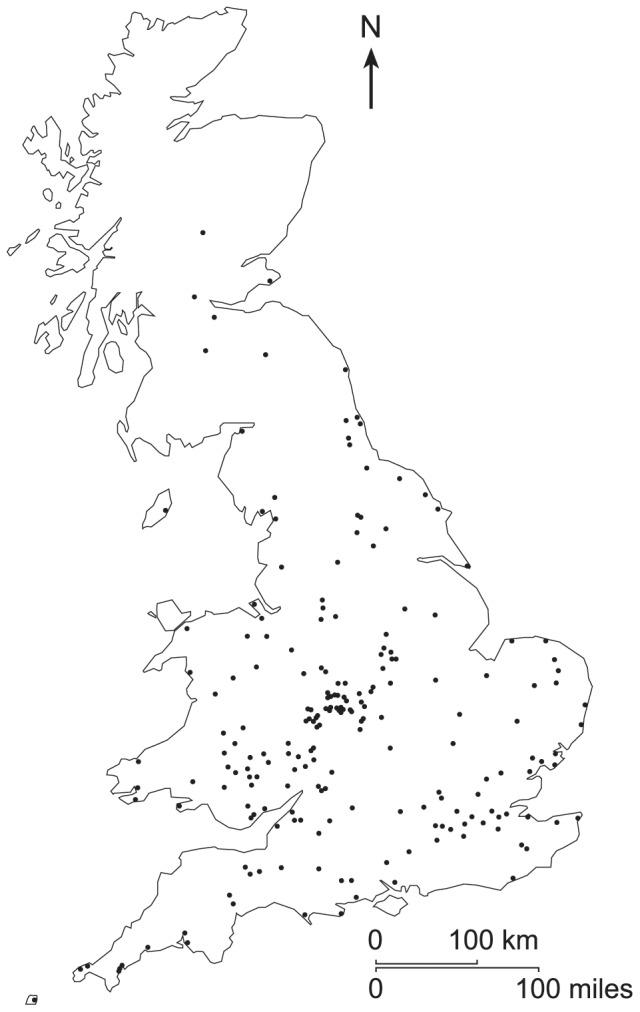
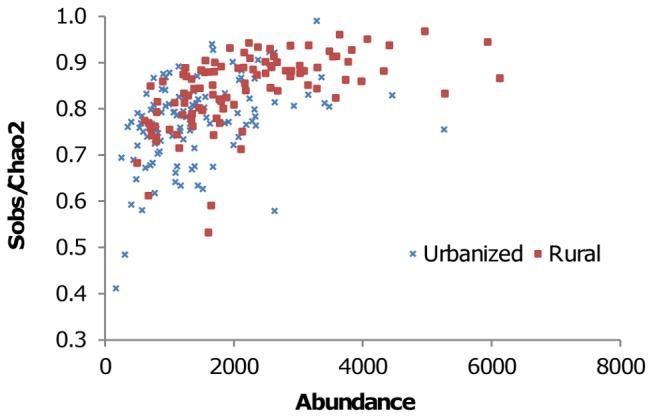
Moths are abundant and ubiquitous in vegetated terrestrial environments and are pollinators, important herbivores of wild plants, and food for birds, bats and rodents. In recent years, many once abundant and widespread species have shown sharp declines that have been cited by some as indicative of a widespread insect biodiversity crisis. Likely causes of these declines include agricultural intensification, light pollution, climate change, and urbanization; however, the real underlying cause(s) is still open to conjecture. We used data collected from the citizen science Garden Moth Scheme (GMS) to explore the spatial association between the abundance of 195 widespread British species of moth, and garden habitat and landscape features, to see if spatial habitat and landscape associations varied for species of differing conservation status. We found that associations with habitat and landscape composition were species-specific, but that there were consistent trends in species richness and total moth abundance. Gardens with more diverse and extensive microhabitats were associated with higher species richness and moth abundance; gardens near to the coast were associated with higher richness and moth abundance; and gardens in more urbanized locations were associated with lower species richness and moth abundance. The same trends were also found for species classified as increasing, declining and vulnerable under IUCN (World Conservation Union) criteria. However, vulnerable species were more strongly negatively affected by urbanization than increasing species. Two hypotheses are proposed to explain this observation: (1) that the underlying factors causing declines in vulnerable species (e.g., possibilities include fragmentation, habitat deterioration, agrochemical pollution) across Britain are the same in urban areas, but that these deleterious effects are more intense in urban areas; and/or (2) that urban areas can act as ecological traps for some vulnerable species of moth, the light drawing them in from the surrounding landscape into sub-optimal urban habitats.
蛾类在植被丰富的陆地环境中数量众多且分布广泛,它们是传粉者,是野生植物重要的食草动物,也是鸟类、蝙蝠和啮齿动物的食物。近年来,许多曾经数量众多且分布广泛的蛾类物种数量急剧下降,一些人认为这表明昆虫生物多样性正面临广泛危机。这些下降的可能原因包括农业集约化、光污染、气候变化和城市化;然而,真正的根本原因仍有待推测。我们利用从公民科学项目“花园蛾类计划”(GMS)收集的数据,来探究195种分布广泛的英国蛾类物种的数量与花园栖息地及景观特征之间的空间关联,以了解不同保护状况的物种其空间栖息地和景观关联是否存在差异。我们发现,与栖息地和景观组成的关联具有物种特异性,但物种丰富度和蛾类总数量存在一致的趋势。具有更多样化和广泛微生境的花园与更高的物种丰富度和蛾类数量相关联;靠近海岸的花园与更高的丰富度和蛾类数量相关联;而位于城市化程度更高地区的花园与更低的物种丰富度和蛾类数量相关联。在国际自然保护联盟(IUCN)标准下被分类为数量增加、减少和易危的物种也呈现出相同的趋势。然而,易危物种比数量增加的物种受到城市化的负面影响更强。我们提出了两个假说来解释这一现象:(1)在英国导致易危物种数量下降的潜在因素(例如可能包括栖息地破碎化、栖息地退化、农用化学品污染)在城市地区是相同的,但这些有害影响在城市地区更为强烈;和/或(2)城市地区可能对某些易危蛾类物种起到生态陷阱的作用,灯光将它们从周围景观吸引到次优的城市栖息地。



 Zotero 插件