
设计和合成高亲和力的恶性疟原虫和间日疟原虫 N-豆蔻酰转移酶抑制剂,指导原则是配体效率依赖性脂溶性(LELP)。
Design and synthesis of high affinity inhibitors of Plasmodium falciparum and Plasmodium vivax N-myristoyltransferases directed by ligand efficiency dependent lipophilicity (LELP).
机构信息
Department of Chemistry, Imperial College London , London SW7 2AZ, U.K.
出版信息
J Med Chem. 2014 Mar 27;57(6):2773-88. doi: 10.1021/jm500066b. Epub 2014 Mar 18.
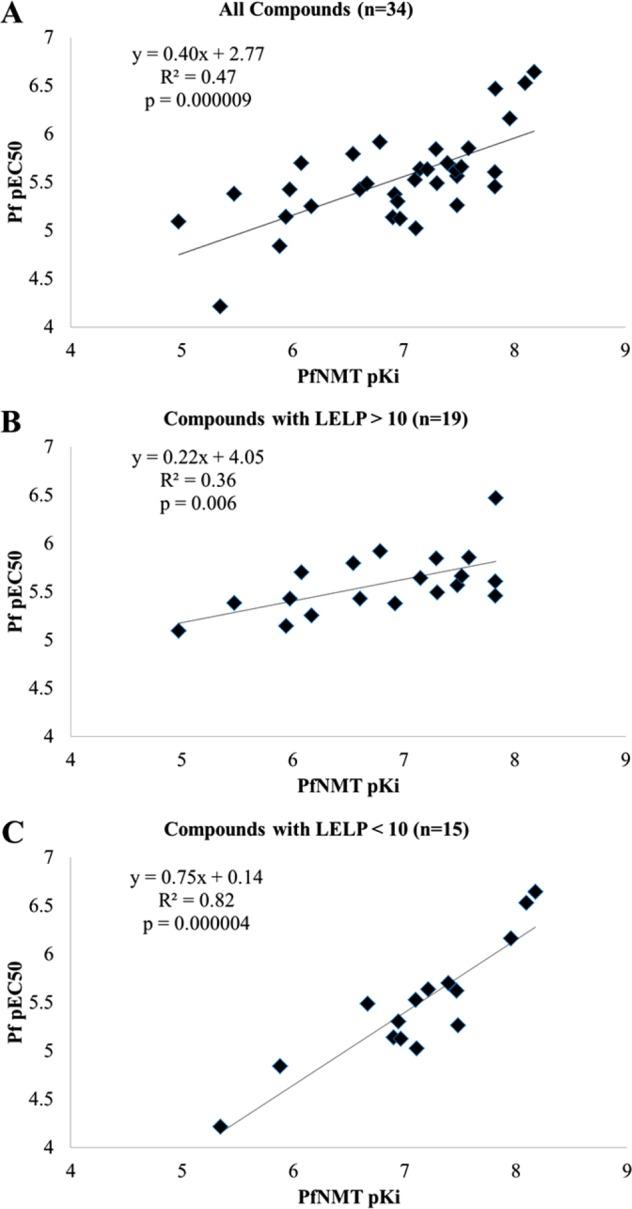
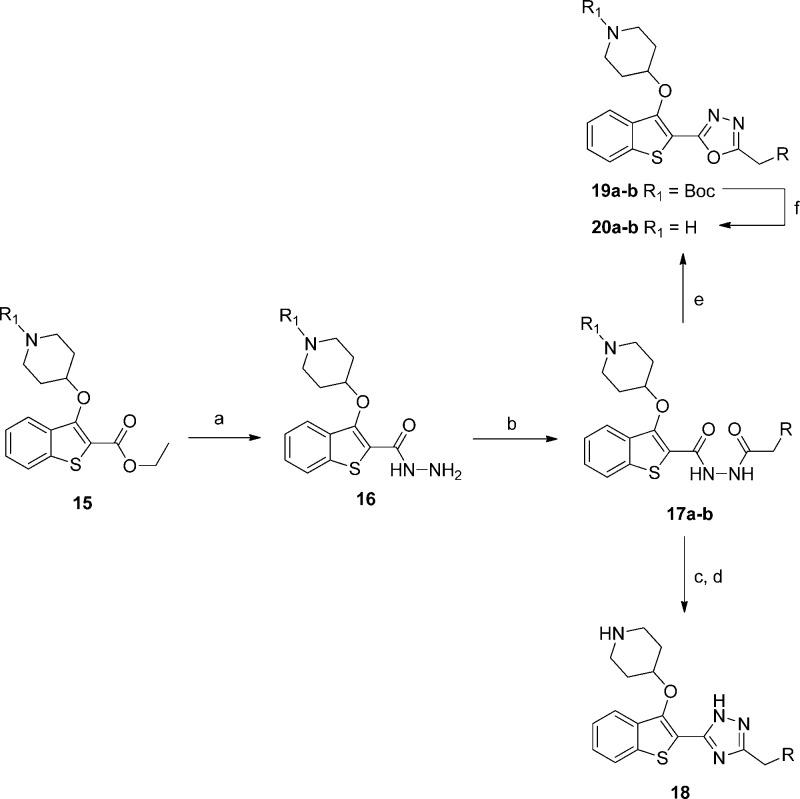
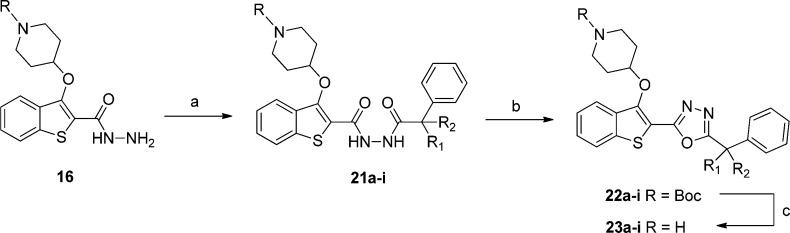
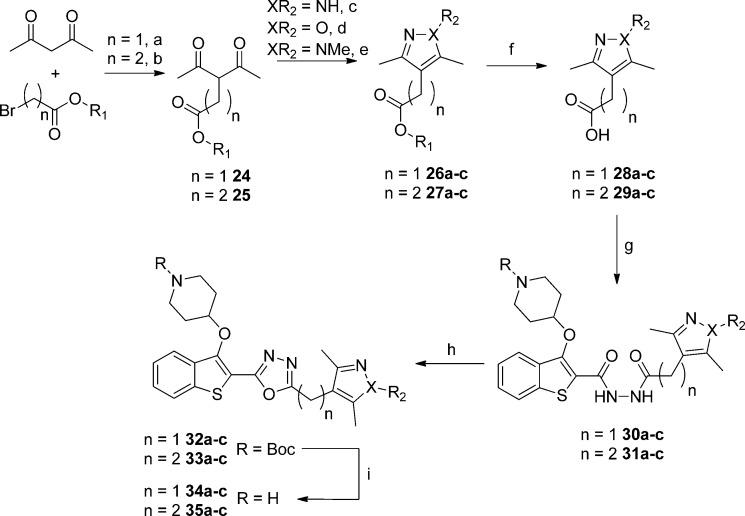
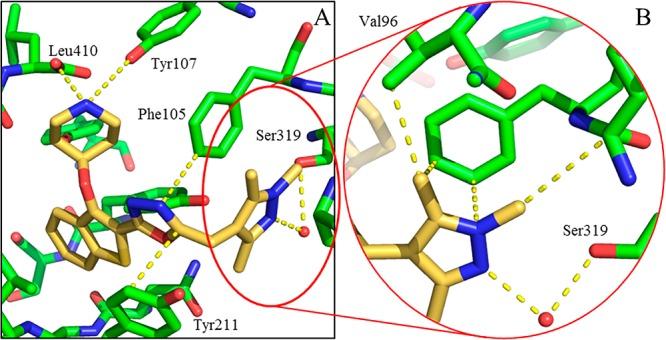
N-Myristoyltransferase (NMT) is an essential eukaryotic enzyme and an attractive drug target in parasitic infections such as malaria. We have previously reported that 2-(3-(piperidin-4-yloxy)benzo[b]thiophen-2-yl)-5-((1,3,5-trimethyl-1H-pyrazol-4-yl)methyl)-1,3,4-oxadiazole (34c) is a high affinity inhibitor of both Plasmodium falciparum and P. vivax NMT and displays activity in vivo against a rodent malaria model. Here we describe the discovery of 34c through optimization of a previously described series. Development, guided by targeting a ligand efficiency dependent lipophilicity (LELP) score of less than 10, yielded a 100-fold increase in enzyme affinity and a 100-fold drop in lipophilicity with the addition of only two heavy atoms. 34c was found to be equipotent on chloroquine-sensitive and -resistant cell lines and on both blood and liver stage forms of the parasite. These data further validate NMT as an exciting drug target in malaria and support 34c as an attractive tool for further optimization.
N-豆蔻酰转移酶(NMT)是一种必需的真核酶,也是疟疾等寄生虫感染的一个有吸引力的药物靶点。我们之前曾报道过,2-(3-(哌啶-4-基氧基)苯并[b]噻吩-2-基)-5-((1,3,5-三甲基-1H-吡唑-4-基)甲基)-1,3,4-恶二唑(34c)是恶性疟原虫和间日疟原虫 NMT 的高亲和力抑制剂,在体内对啮齿动物疟疾模型具有活性。在这里,我们描述了通过优化以前描述的一系列化合物发现 34c 的过程。在以配体效率依赖性脂溶性(LELP)评分低于 10 为指导的开发过程中,仅增加两个重原子,就使酶亲和力提高了 100 倍,脂溶性降低了 100 倍。34c 对氯喹敏感和耐药细胞系以及寄生虫的血液和肝脏阶段均具有相同的效力。这些数据进一步证实 NMT 是疟疾中一个令人兴奋的药物靶点,并支持 34c 作为进一步优化的有吸引力的工具。




 Zotero 插件