
微小RNA-34:从实验室到临床应用
miR-34: from bench to bedside.
作者信息
Agostini Massimiliano, Knight Richard A
机构信息
Medical Research Council, Toxicology Unit, Leicester University, Leicester, UK.
出版信息
Oncotarget. 2014 Feb 28;5(4):872-81. doi: 10.18632/oncotarget.1825.
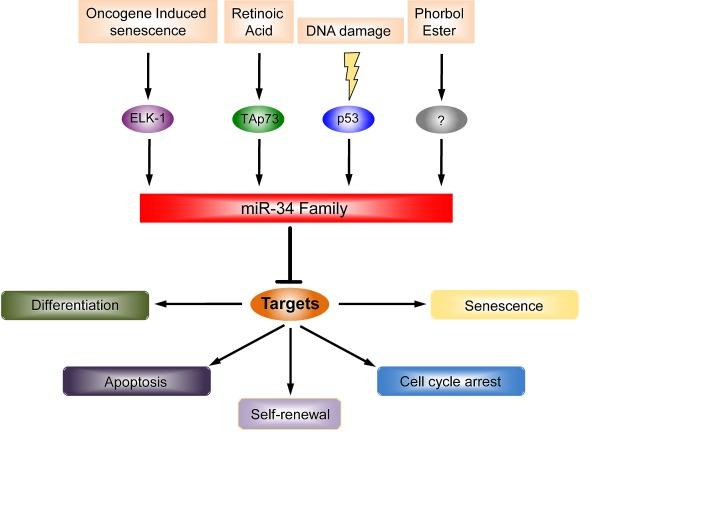
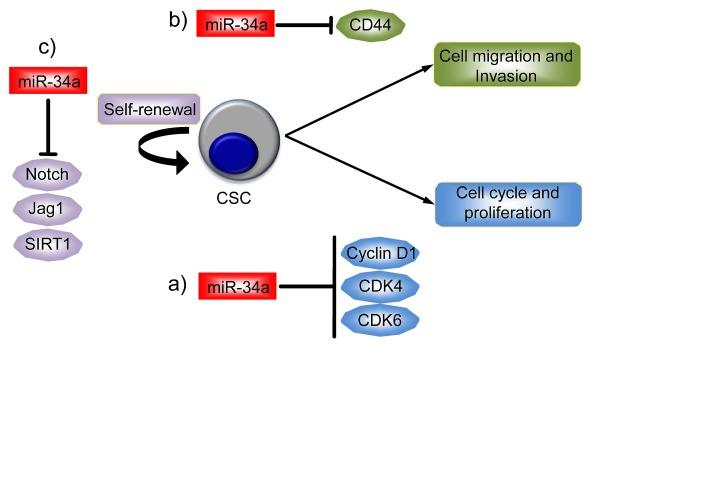
The mir-34 family was originally cloned and characterized in 2007 as a p53 target gene. Almost immediately it became clear that its major role is as a master regulator of tumor suppression. Indeed, when overexpressed, it directly and indirectly represses several oncogenes, resulting in an increase of cancer cell death (including cancer stem cells), and in an inhibition of metastasis. Moreover, its expression is deregulated in several human cancers. In 2013, a miR-34 mimic has become the first microRNA to reach phase 1 clinical trials. Here we review the miR-34 family and their role in tumor biology, and discuss the potential therapeutic applications of miR-34a mimic.
mir-34家族最初于2007年作为p53靶基因被克隆和鉴定。几乎立刻就清楚了,其主要作用是作为肿瘤抑制的主要调节因子。事实上,当它过表达时,会直接或间接抑制多种癌基因,导致癌细胞死亡(包括癌症干细胞)增加,并抑制转移。此外,它的表达在几种人类癌症中失调。2013年,一种miR-34模拟物成为首个进入1期临床试验的微小RNA。在此,我们综述miR-34家族及其在肿瘤生物学中的作用,并讨论miR-34a模拟物的潜在治疗应用。

 Zotero 插件