
由接触依赖性生长抑制系统介导的种间歧视和竞争排斥塑造了生物膜群落结构。
Kind discrimination and competitive exclusion mediated by contact-dependent growth inhibition systems shape biofilm community structure.
作者信息
Anderson Melissa S, Garcia Erin C, Cotter Peggy A
机构信息
Department of Microbiology & Immunology, School of Medicine, University of North Carolina at Chapel Hill, Chapel Hill, North Carolina, United States of America.
出版信息
PLoS Pathog. 2014 Apr 17;10(4):e1004076. doi: 10.1371/journal.ppat.1004076. eCollection 2014 Apr.
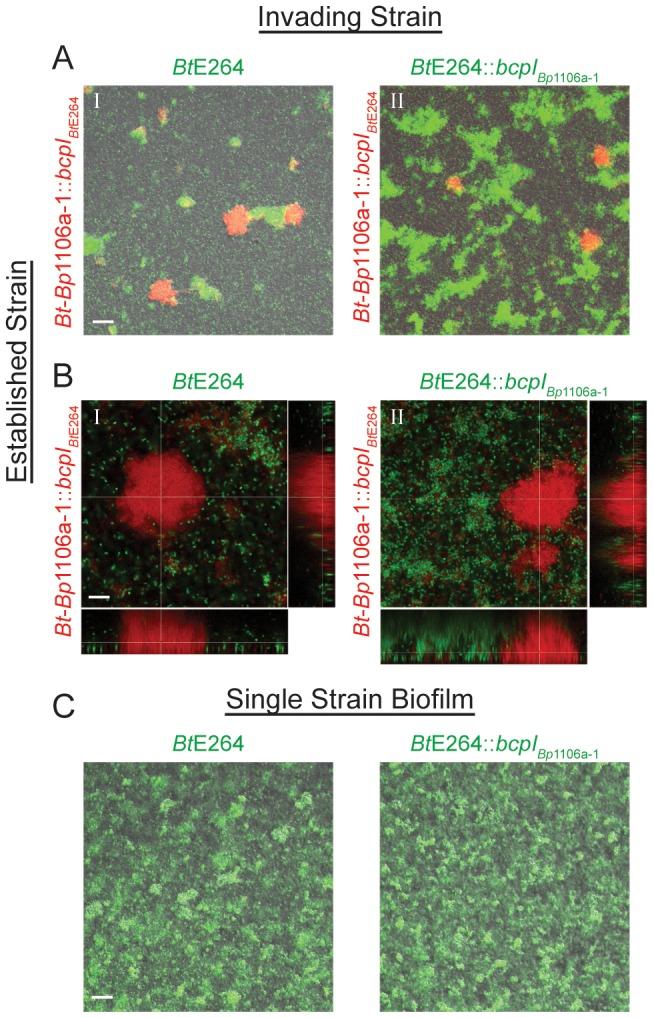
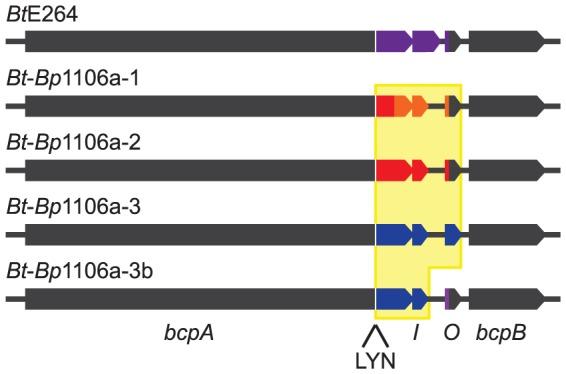
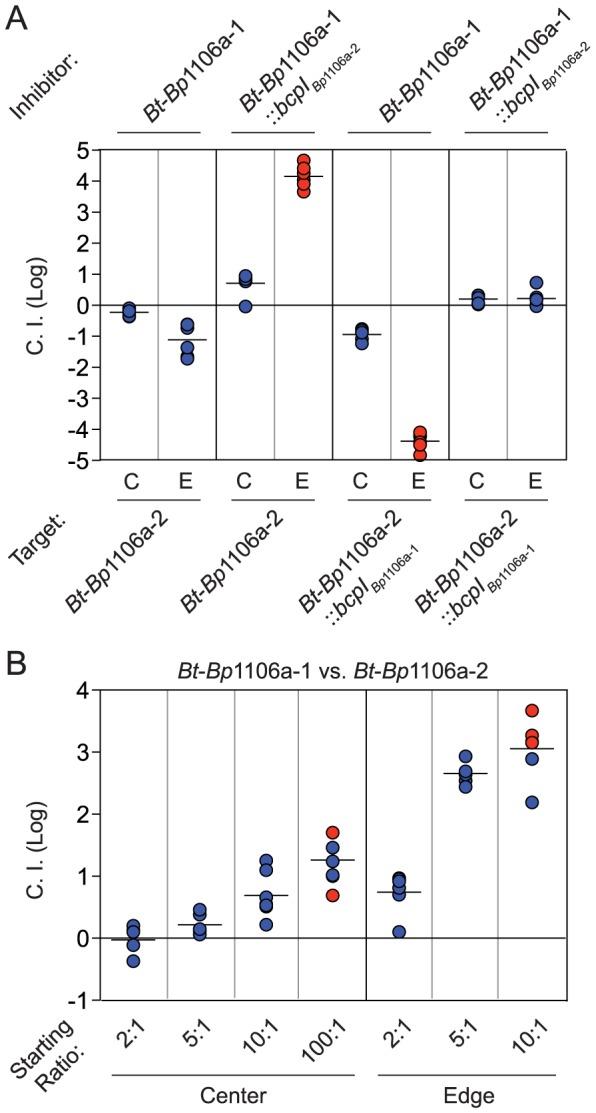
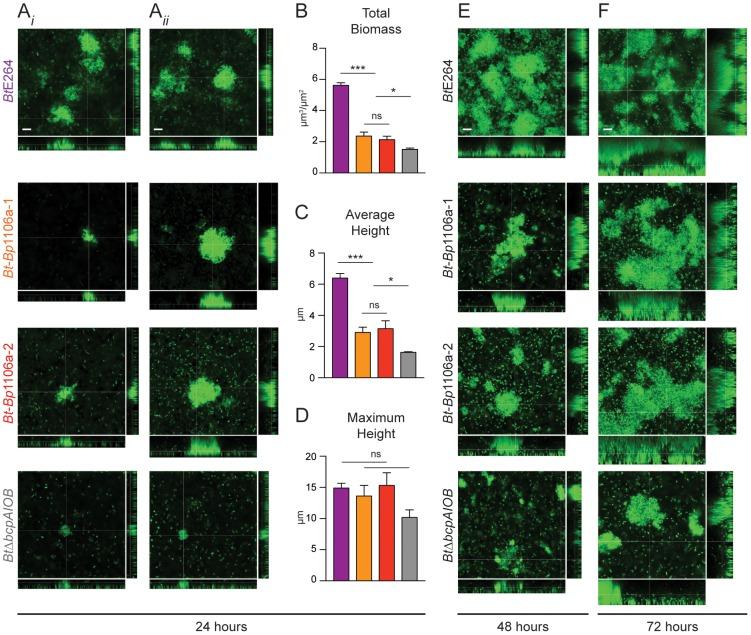
Contact-Dependent Growth Inhibition (CDI) is a phenomenon in which bacteria use the toxic C-terminus of a large exoprotein (called BcpA in Burkholderia species) to inhibit the growth of neighboring bacteria upon cell-cell contact. CDI systems are present in a wide range of Gram-negative proteobacteria and a hallmark feature is polymorphism amongst the exoprotein C-termini (BcpA-CT in Burkholderia) and amongst the small immunity proteins (BcpI) that protect against CDI in an allele-specific manner. In addition to CDI, the BcpAIOB proteins of Burkholderia thailandensis mediate biofilm formation, and they do so independent of BcpA-mediated interbacterial competition, suggesting a cooperative role for CDI system proteins in this process. CDI has previously only been demonstrated between CDI+ and CDI- bacteria, leaving the roles of CDI system-mediated interbacterial competition and of CDI system diversity in nature unknown. We constructed B. thailandensis strains that differed only in the BcpA-CT and BcpI proteins they produced. When co-cultured on agar, these strains each participated in CDI and the outcome of the competition depended on both CDI system efficiency and relative bacterial numbers initially. Strains also participated in CDI during biofilm development, resulting in pillar structures that were composed of only a single BcpA-CT/BcpI type. Moreover, a strain producing BcpA-CT/BcpI proteins of one type was prevented from joining a pre-established biofilm community composed of bacteria producing BcpA-CT/BcpI proteins of a different type, unless it also produced the BcpI protein of the established strain. Bacteria can therefore use CDI systems for kind recognition and competitive exclusion of 'non-self' bacteria from a pre-established biofilm. Our data indicate that CDI systems function in both cooperative and competitive behaviors to build microbial communities that are composed of only bacteria that are related via their CDI system alleles.
接触依赖性生长抑制(CDI)是一种细菌利用大型胞外蛋白(在伯克霍尔德菌属中称为BcpA)的有毒C末端在细胞间接触时抑制邻近细菌生长的现象。CDI系统存在于广泛的革兰氏阴性变形菌中,其一个标志性特征是胞外蛋白C末端(伯克霍尔德菌属中的BcpA-CT)和以等位基因特异性方式抵御CDI的小免疫蛋白(BcpI)之间存在多态性。除了CDI,泰国伯克霍尔德菌的BcpAIOB蛋白介导生物膜形成,且它们独立于BcpA介导的细菌间竞争发挥作用,这表明CDI系统蛋白在此过程中具有协同作用。此前CDI仅在CDI+和CDI-细菌之间得到证实,而CDI系统介导的细菌间竞争作用以及CDI系统多样性在自然界中的作用尚不清楚。我们构建了仅在产生的BcpA-CT和BcpI蛋白上存在差异的泰国伯克霍尔德菌菌株。当在琼脂上共培养时,这些菌株均参与CDI,竞争结果最初取决于CDI系统效率和相对细菌数量。菌株在生物膜形成过程中也参与CDI,形成仅由单一BcpA-CT/BcpI类型组成的柱状结构。此外,除非产生既定菌株的BcpI蛋白,否则产生一种类型BcpA-CT/BcpI蛋白的菌株会被阻止加入由产生不同类型BcpA-CT/BcpI蛋白的细菌组成的预先形成的生物膜群落。因此,细菌可利用CDI系统进行种类识别,并将“非自身”细菌从预先形成的生物膜中竞争性排除。我们的数据表明,CDI系统在构建仅由通过其CDI系统等位基因相关的细菌组成的微生物群落的合作和竞争行为中均发挥作用。





 Zotero 插件