
鉴定来自裂殖酵母的谷胱甘肽(GSH)非依赖性醛酮还原酶 III。
Identification of glutathione (GSH)-independent glyoxalase III from Schizosaccharomyces pombe.
机构信息
Jiangsu Key Laboratory for Microbes and Genomics, School of Life Sciences, Nanjing Normal University, 1 Wenyuan Road, Nanjing 210023, China.
出版信息
BMC Evol Biol. 2014 Apr 23;14:86. doi: 10.1186/1471-2148-14-86.
BACKGROUND
Reactive carbonyl species (RCS), such as methylglyoxal (MG) and glyoxal (GO), are synthesized as toxic metabolites in living systems. Mechanisms of RCS detoxification include the glutathione (GSH)-dependent system consisting of glyoxalase I (GLO1) and glyoxalase II (GLO2), and GSH-independent system involving glyoxalase III (GLO3). Hsp31 and DJ-1 proteins are weakly homologous to each other and belong to two different subfamilies of the DJ-1/Hsp31/PfpI superfamily. Recently, the Escherichia coli Hsp31 protein and the DJ-1 proteins from Arabidopsis thaliana and metazoans have been demonstrated to have GLO3 activity.
RESULTS
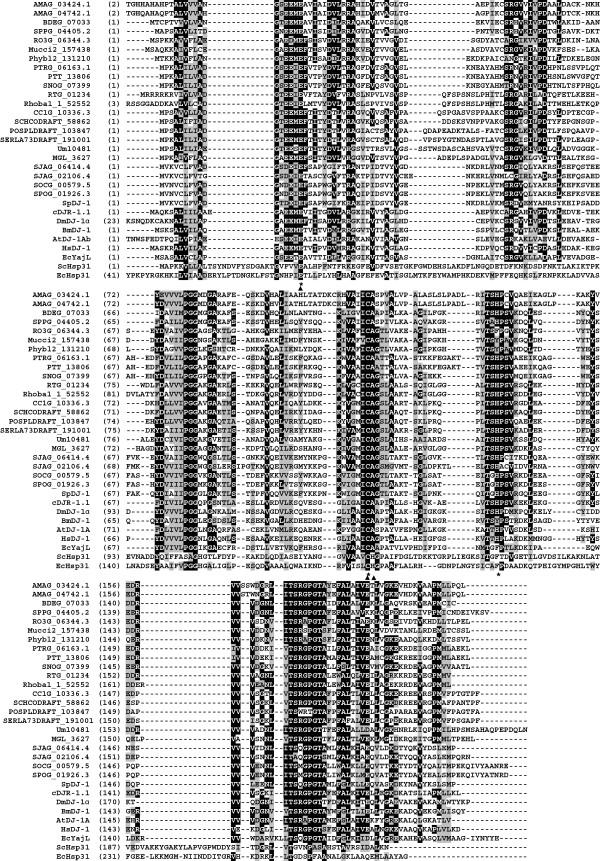
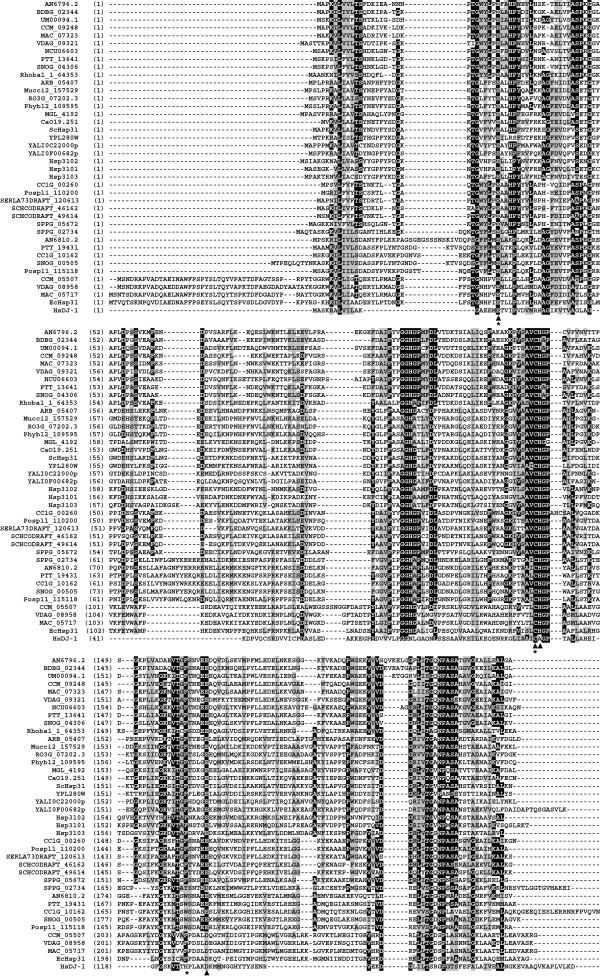
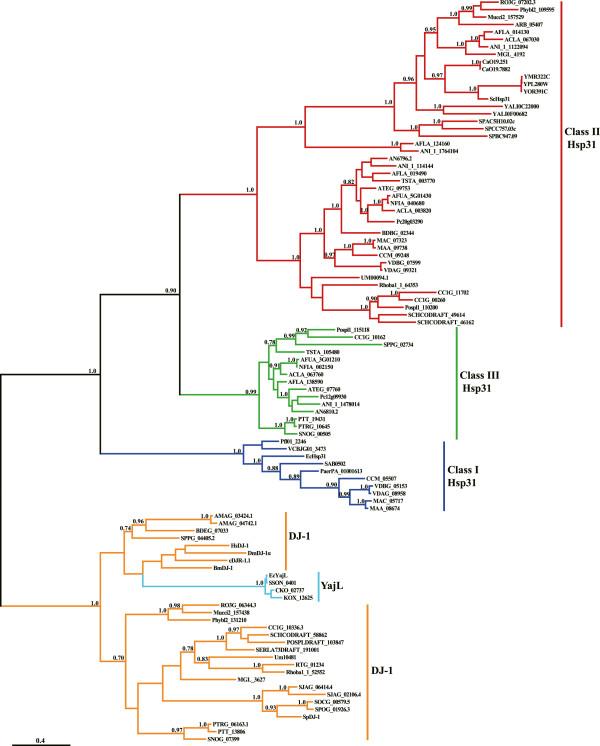
We performed a systematic survey of homologs of DJ-1 and Hsp31 in fungi. We found that DJ-1 proteins have a very limited distribution in fungi, whereas Hsp31 proteins are widely distributed among different fungal groups. Phylogenetic analysis revealed that fungal and metazoan DJ-1 proteins and bacterial YajL proteins are most closely related and together form a sister clade to bacterial and fungal Hsp31 proteins. We showed that two Schizosaccharomyces pombe Hsp31 proteins (Hsp3101 and Hsp3102) and one Saccharomyces cerevisiae Hsp31 protein (ScHsp31) displayed significantly higher in vitro GLO3 activity than S. pombe DJ-1 (SpDJ-1). Overexpression of hsp3101, hsp3102 and ScHSP31 could confer MG and GO resistance on either wild-type S. pombe cells or GLO1 deletion of S. pombe. S. pombe DJ-1 and Hsp31 proteins exhibit different patterns of subcellular localization.
CONCLUSIONS
Our results suggest that fungal Hsp31 proteins are the major GLO3 that may have some role in protecting cells from RCS toxicity in fungi. Our results also support the view that the GLO3 activity of Hsp31 proteins may have evolved independently from that of DJ-1 proteins.
背景
活性羰基化合物(RCS),如甲基乙二醛(MG)和乙二醛(GO),作为有毒代谢物在生命系统中合成。RCS 解毒的机制包括依赖谷胱甘肽(GSH)的系统,由甘油醛酶 I(GLO1)和甘油醛酶 II(GLO2)组成,以及涉及甘油醛酶 III(GLO3)的 GSH 非依赖性系统。热休克蛋白 31(Hsp31)和 DJ-1 蛋白在彼此之间具有弱同源性,并且属于 DJ-1/Hsp31/PfpI 超家族的两个不同亚家族。最近,已经证明大肠杆菌 Hsp31 蛋白和拟南芥和后生动物的 DJ-1 蛋白具有 GLO3 活性。
结果
我们对真菌中的 DJ-1 和 Hsp31 同源物进行了系统调查。我们发现 DJ-1 蛋白在真菌中的分布非常有限,而 Hsp31 蛋白在不同的真菌群体中广泛分布。系统发育分析表明,真菌和后生动物的 DJ-1 蛋白与细菌 YajL 蛋白最为密切相关,并且与细菌和真菌的 Hsp31 蛋白一起形成一个姐妹分支。我们表明,两个酿酒酵母 Hsp31 蛋白(Hsp3101 和 Hsp3102)和一个酿酒酵母 Hsp31 蛋白(ScHsp31)在体外显示出比酿酒酵母 DJ-1(SpDJ-1)更高的 GLO3 活性。过表达 hsp3101、hsp3102 和 ScHSP31 可以赋予野生型酿酒酵母细胞或酿酒酵母 GLO1 缺失的 MG 和 GO 抗性。酿酒酵母 DJ-1 和 Hsp31 蛋白表现出不同的亚细胞定位模式。
结论
我们的结果表明,真菌 Hsp31 蛋白是主要的 GLO3,可能在真菌中对细胞免受 RCS 毒性有一定作用。我们的结果还支持 Hsp31 蛋白的 GLO3 活性可能独立于 DJ-1 蛋白进化的观点。



 Zotero 插件