
原核细胞和真核细胞培养中氨基酸的消耗:单克隆抗体的生产者。
Amino acid consumption in naïve and recombinant CHO cell cultures: producers of a monoclonal antibody.
机构信息
Centro de Biotecnología-FEMSA, Tecnológico de Monterrey at Monterrey, Av. Eugenio Garza Sada 2501 sur. Col. Tecnológico. Edificio CB, 5to Piso, 64849, Monterrey, NL, Mexico.
出版信息
Cytotechnology. 2015 Oct;67(5):809-20. doi: 10.1007/s10616-014-9720-5. Epub 2014 May 6.
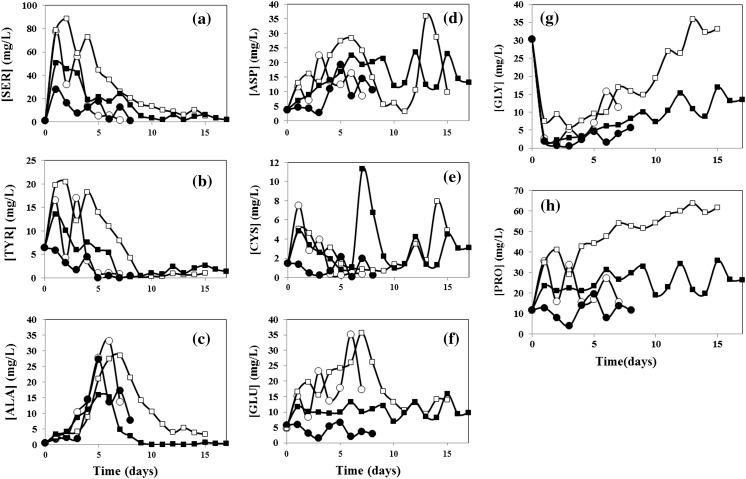
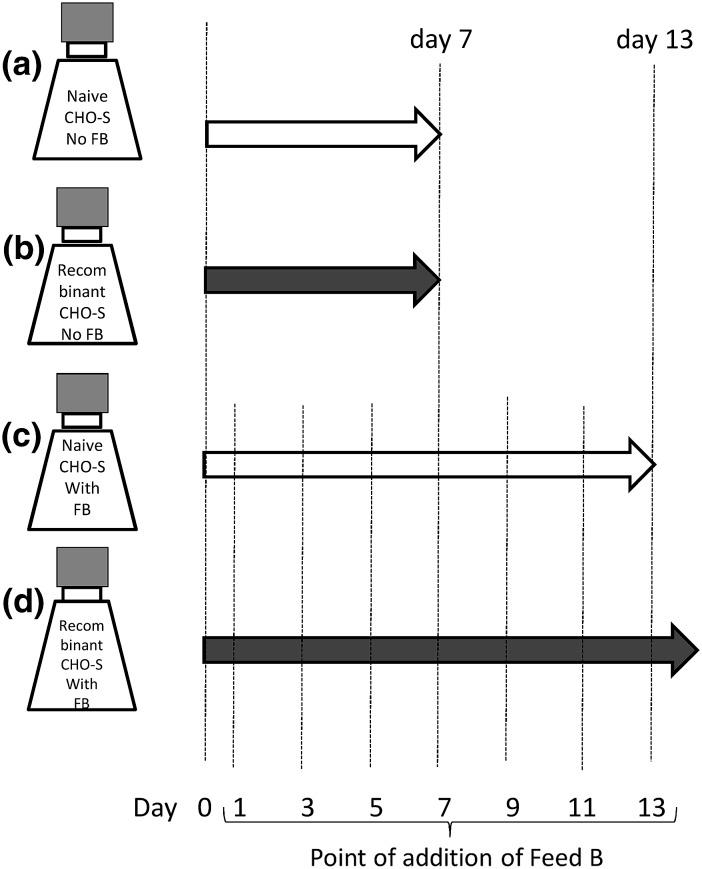
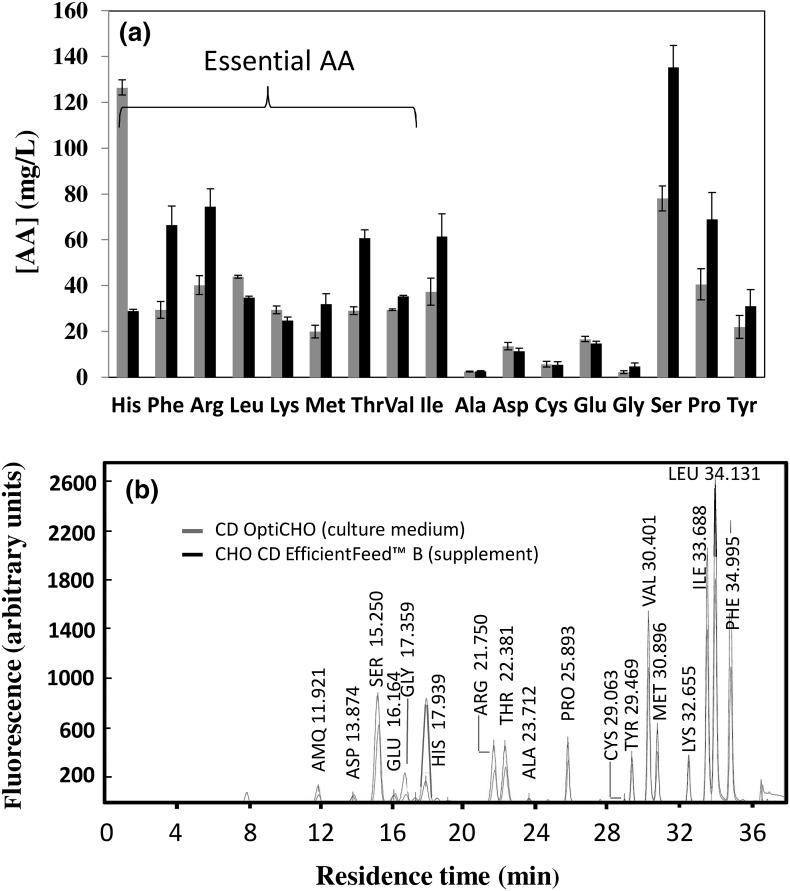
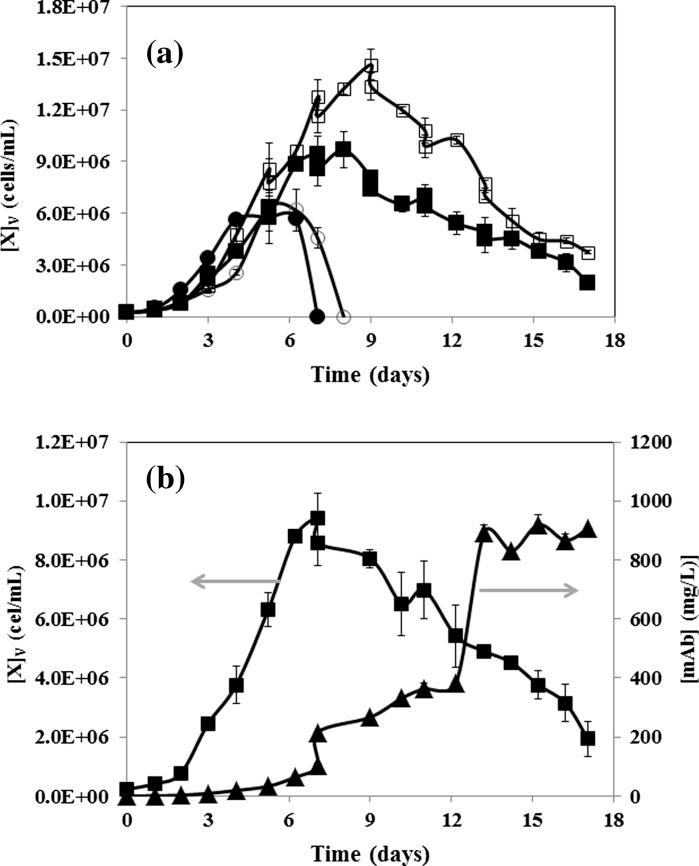
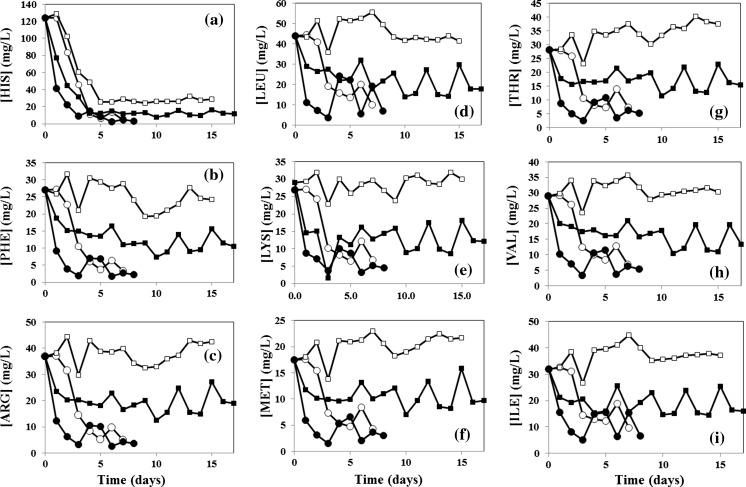
Most commercial media for mammalian cell culture are designed to satisfy the amino acid requirements for cell growth, but not necessarily those for recombinant protein production. In this study, we analyze the amino acid consumption pattern in naïve and recombinant Chinese hamster ovary (CHO) cell cultures. The recombinant model we chose was a CHO-S cell line engineered to produce a monoclonal antibody. We report the cell concentration, product concentration, and amino acid concentration profiles in naïve and recombinant cell cultures growing in CD OptiCHO™ medium with or without amino acid supplementation with a commercial supplement (CHO CD EfficientFeed™ B). We quantify and discuss the amino acid demands due to cell growth and recombinant protein production during long term fed batch cultivation protocols. We confirmed that a group of five amino acids, constituting the highest mass fraction of the product, shows the highest depletion rates and could become limiting for product expression. In our experiments, alanine, a non-important mass constituent of the product, is in high demand during recombinant protein production. Evaluation of specific amino acid demands could be of great help in the design of feeding/supplementation strategies for recombinant mammalian cell cultures.
大多数用于哺乳动物细胞培养的商业培养基都是为了满足细胞生长的氨基酸需求而设计的,但不一定能满足重组蛋白生产的需求。在这项研究中,我们分析了初始和重组中国仓鼠卵巢(CHO)细胞培养中的氨基酸消耗模式。我们选择的重组模型是经过工程改造以生产单克隆抗体的 CHO-S 细胞系。我们报告了在 CD OptiCHO™ 培养基中培养的初始和重组细胞的细胞浓度、产物浓度和氨基酸浓度曲线,其中培养基中添加或不添加商业补充剂(CHO CD EfficientFeed™ B)。我们在长期分批补料培养方案中定量并讨论了由于细胞生长和重组蛋白生产而导致的氨基酸需求。我们证实,构成产物最高质量分数的一组 5 种氨基酸具有最高的消耗速率,可能会成为产物表达的限制因素。在我们的实验中,丙氨酸是产物的一个非重要质量组成部分,但在重组蛋白生产过程中需求量很大。评估特定氨基酸的需求对于设计用于重组哺乳动物细胞培养的补料/补充策略可能非常有帮助。
 Zotero 插件