
化疗药物对乳腺癌细胞系中端粒长度维持的影响。
The effect of chemotherapeutic agents on telomere length maintenance in breast cancer cell lines.
作者信息
Motevalli Azadeh, Yasaei Hemad, Virmouni Sara Anjomani, Slijepcevic Predrag, Roberts Terry
机构信息
Biosciences, School of Health Sciences & Social Care, Brunel University, Uxbridge, UB8 3PH, UK.
出版信息
Breast Cancer Res Treat. 2014 Jun;145(3):581-91. doi: 10.1007/s10549-014-2975-x. Epub 2014 May 8.
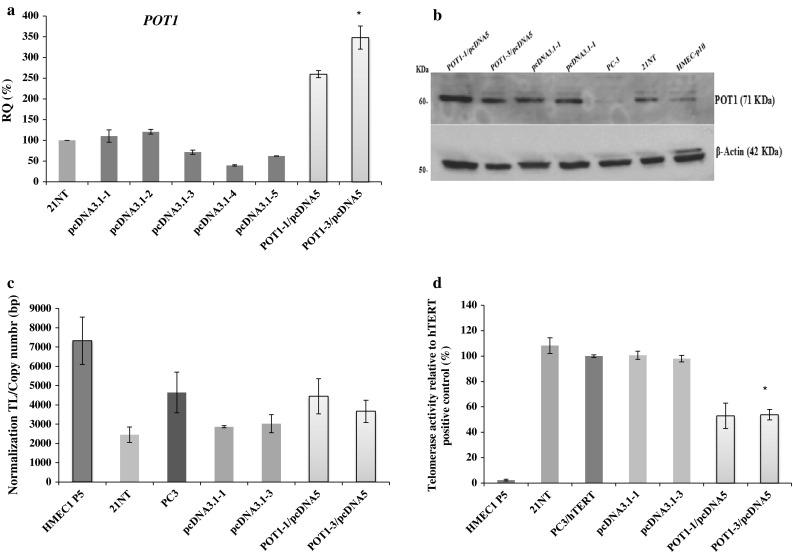
Mammalian telomeric DNA consists of tandem repeats of the sequence TTAGGG associated with a specialized set of proteins, known collectively as Shelterin. These telosomal proteins protect the ends of chromosomes against end-to-end fusion and degradation. Short telomeres in breast cancer cells confer telomere dysfunction and this can be related to Shelterin proteins and their level of expression in breast cancer cell lines. This study investigates whether expression of Shelterin and Shelterin-associated proteins are altered, and influence the protection and maintenance of telomeres, in breast cancer cells. 5-aza-2'-deoxycytidine (5-aza-CdR) and trichostatin A (TSA) were used in an attempt to reactivate the expression of silenced genes. Our studies have shown that Shelterin and Shelterin-associated genes were down-regulated in breast cancer cell lines; this may be due to epigenetic modification of DNA as the promoter region of POT1 was found to be partially methylated. Shelterin genes expression was up-regulated upon treatment of 21NT breast cancer cells with 5-aza-CdR and TSA. The telomere length of treated 21NT cells was measured by q-PCR showed an increase in telomere length at different time points. Our studies have shown that down-regulation of Shelterin genes is partially due to methylation in some epithelial breast cancer cell lines. Removal of epigenetic silencing results in up-regulation of Shelterin and Shelterin-associated genes which can then lead to telomere length elongation and stability.
哺乳动物的端粒DNA由序列TTAGGG的串联重复序列组成,与一组特殊的蛋白质相关联,这些蛋白质统称为端粒保护蛋白复合体(Shelterin)。这些端粒蛋白保护染色体末端免受端对端融合和降解。乳腺癌细胞中的短端粒会导致端粒功能障碍,这可能与端粒保护蛋白复合体及其在乳腺癌细胞系中的表达水平有关。本研究调查了在乳腺癌细胞中,端粒保护蛋白复合体及其相关蛋白的表达是否发生改变,以及是否会影响端粒的保护和维持。使用5-氮杂-2'-脱氧胞苷(5-aza-CdR)和曲古抑菌素A(TSA)试图重新激活沉默基因的表达。我们的研究表明,端粒保护蛋白复合体及其相关基因在乳腺癌细胞系中表达下调;这可能是由于DNA的表观遗传修饰,因为发现POT1的启动子区域部分甲基化。用5-aza-CdR和TSA处理21NT乳腺癌细胞后,端粒保护蛋白复合体基因的表达上调。通过定量聚合酶链反应(q-PCR)测量处理后的21NT细胞的端粒长度,结果显示在不同时间点端粒长度增加。我们的研究表明,在一些上皮性乳腺癌细胞系中,端粒保护蛋白复合体基因的下调部分是由于甲基化。去除表观遗传沉默会导致端粒保护蛋白复合体及其相关基因的上调,进而导致端粒长度延长和稳定。


 Zotero 插件