
EXPRSS:一种基于Illumina的高通量表达谱分析方法,用于揭示转录动态。
EXPRSS: an Illumina based high-throughput expression-profiling method to reveal transcriptional dynamics.
作者信息
Rallapalli Ghanasyam, Kemen Eric M, Robert-Seilaniantz Alexandre, Segonzac Cécile, Etherington Graham J, Sohn Kee Hoon, MacLean Daniel, Jones Jonathan D G
机构信息
The Sainsbury Laboratory, Norwich Research Park, Colney, Norwich, UK NR4 7UH.
出版信息
BMC Genomics. 2014 May 6;15(1):341. doi: 10.1186/1471-2164-15-341.
BACKGROUND
Next Generation Sequencing technologies have facilitated differential gene expression analysis through RNA-seq and Tag-seq methods. RNA-seq has biases associated with transcript lengths, lacks uniform coverage of regions in mRNA and requires 10-20 times more reads than a typical Tag-seq. Most existing Tag-seq methods either have biases or not high throughput due to use of restriction enzymes or enzymatic manipulation of 5' ends of mRNA or use of RNA ligations.
RESULTS
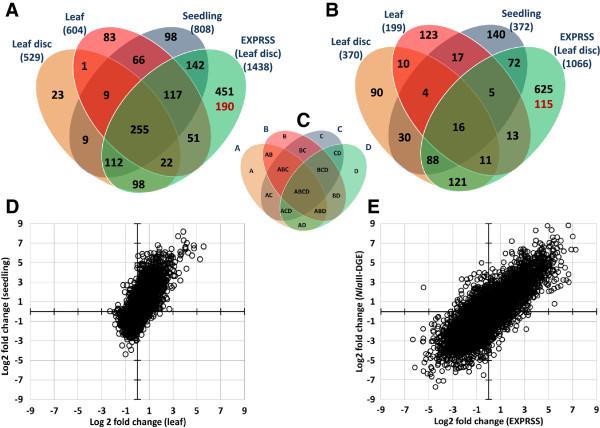
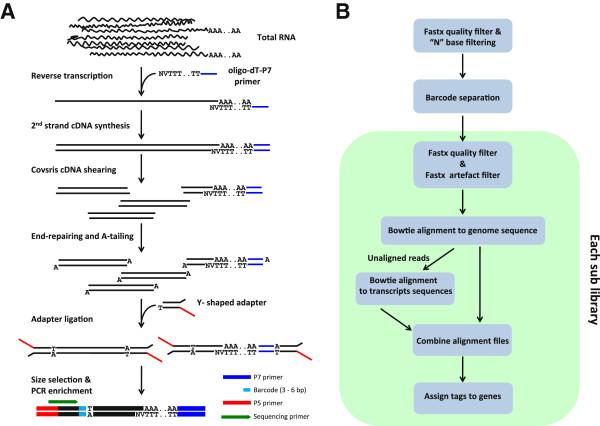
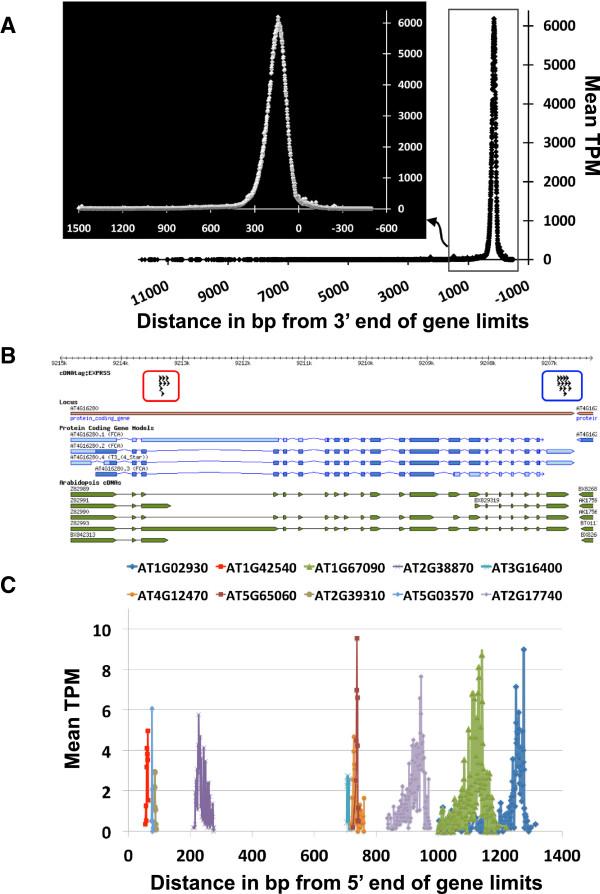
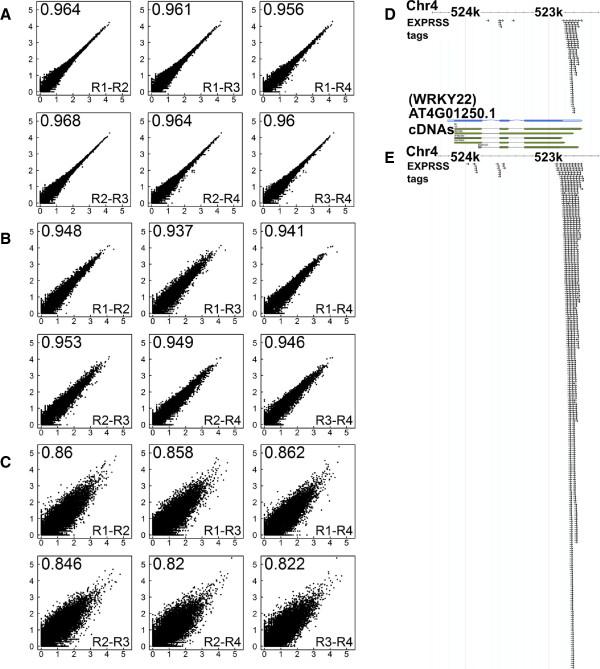
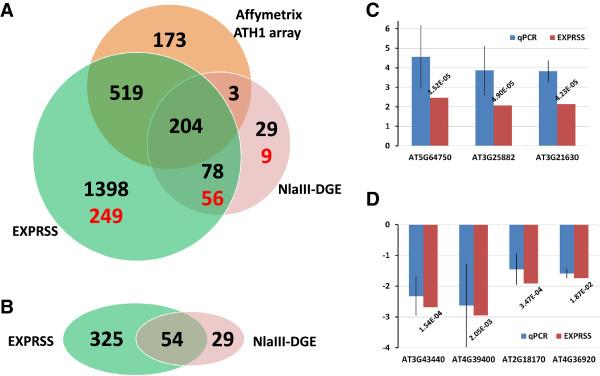
We have developed EXpression Profiling through Randomly Sheared cDNA tag Sequencing (EXPRSS) that employs acoustic waves to randomly shear cDNA and generate sequence tags at a relatively defined position (~150-200 bp) from the 3' end of each mRNA. Implementation of the method was verified through comparative analysis of expression data generated from EXPRSS, NlaIII-DGE and Affymetrix microarray and through qPCR quantification of selected genes. EXPRSS is a strand specific and restriction enzyme independent tag sequencing method that does not require cDNA length-based data transformations. EXPRSS is highly reproducible, is high-throughput and it also reveals alternative polyadenylation and polyadenylated antisense transcripts. It is cost-effective using barcoded multiplexing, avoids the biases of existing SAGE and derivative methods and can reveal polyadenylation position from paired-end sequencing.
CONCLUSIONS
EXPRSS Tag-seq provides sensitive and reliable gene expression data and enables high-throughput expression profiling with relatively simple downstream analysis.
背景
新一代测序技术通过RNA测序和标签测序方法促进了差异基因表达分析。RNA测序存在与转录本长度相关的偏差,缺乏对mRNA区域的均匀覆盖,并且所需的读数比典型的标签测序多10至20倍。大多数现有的标签测序方法由于使用限制酶或对mRNA的5'末端进行酶促操作或使用RNA连接而存在偏差或通量不高。
结果
我们开发了通过随机剪切cDNA标签测序进行表达谱分析(EXPRSS),该方法利用声波随机剪切cDNA,并在每个mRNA的3'末端相对确定的位置(约150 - 200 bp)生成序列标签。通过对EXPRSS、NlaIII - DGE和Affymetrix微阵列产生的表达数据进行比较分析以及对选定基因进行qPCR定量,验证了该方法的实施。EXPRSS是一种链特异性且不依赖限制酶的标签测序方法,不需要基于cDNA长度的数据转换。EXPRSS具有高度可重复性、高通量,还能揭示可变聚腺苷酸化和聚腺苷酸化反义转录本。使用条形码多路复用具有成本效益,避免了现有SAGE及其衍生方法的偏差,并且可以从双末端测序中揭示聚腺苷酸化位置。
结论
EXPRSS标签测序提供了灵敏可靠的基因表达数据,并能够通过相对简单的下游分析实现高通量表达谱分析。
 Zotero 插件