
采用全宏基因组测序分析生防芽孢杆菌 FZB42 对田间条件下生菜根际微生物群落的影响。
Effect of the strain Bacillus amyloliquefaciens FZB42 on the microbial community in the rhizosphere of lettuce under field conditions analyzed by whole metagenome sequencing.
机构信息
Center for Biotechnology, Institute for Genome Research and Systems Biology, Bielefeld University Bielefeld, Germany.
Leibniz-Institute of Vegetable and Ornamental Crops Großbeeren, Germany.
出版信息
Front Microbiol. 2014 May 27;5:252. doi: 10.3389/fmicb.2014.00252. eCollection 2014.
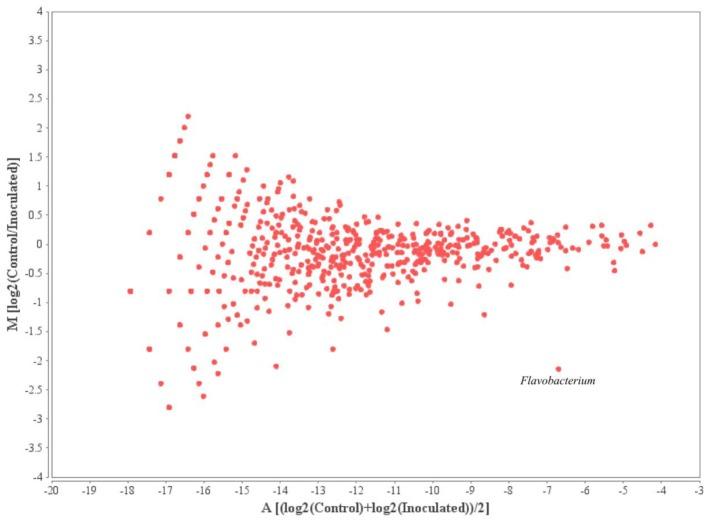
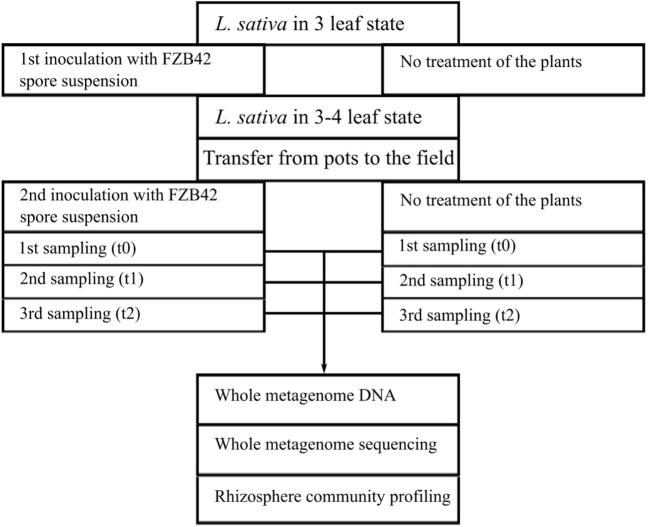
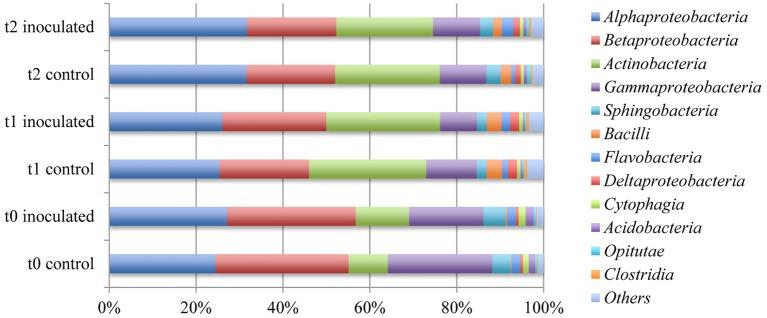
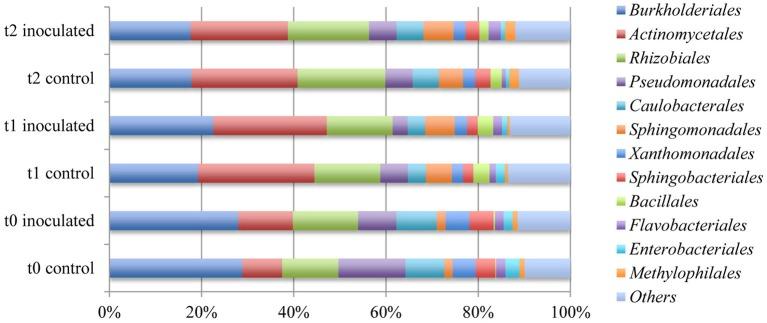
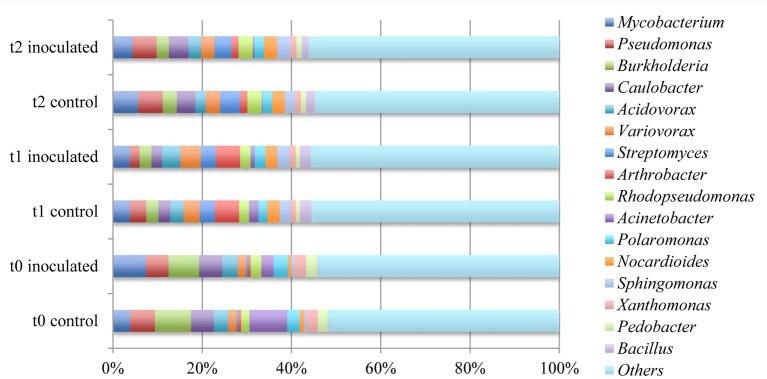
Application of the plant associated bacterium Bacillus amyloliquefaciens FZB42 on lettuce (Lactuca sativa) confirmed its capability to promote plant growth and health by reducing disease severity (DS) caused by the phytopathogenic fungus Rhizoctonia solani. Therefore this strain is commercially applied as an eco-friendly plant protective agent. It is able to produce cyclic lipopeptides (CLP) and polyketides featuring antifungal and antibacterial properties. Production of these secondary metabolites led to the question of a possible impact of strain FZB42 on the composition of microbial rhizosphere communities after its application. Rating of DS and lettuce growth during a field trial confirmed the positive impact of strain FZB42 on the health of the host plant. To verify B. amyloliquefaciens as an environmentally compatible plant protective agent, its effect on the indigenous rhizosphere community was analyzed by metagenome sequencing. Rhizosphere microbial communities of lettuce treated with B. amyloliquefaciens FZB42 and non-treated plants were profiled by high-throughput metagenome sequencing of whole community DNA. Fragment recruitments of metagenome sequence reads on the genome sequence of B. amyloliquefaciens FZB42 proved the presence of the strain in the rhizosphere over 5 weeks of the field trial. Comparison of taxonomic community profiles only revealed marginal changes after application of strain FZB42. The orders Burkholderiales, Actinomycetales and Rhizobiales were most abundant in all samples. Depending on plant age a general shift within the composition of the microbial communities that was independent of the application of strain FZB42 was observed. In addition to the taxonomic profiling, functional analysis of annotated sequences revealed no major differences between samples regarding application of the inoculant strain.
植物相关细菌解淀粉芽孢杆菌 FZB42 在生菜(Lactuca sativa)上的应用证实了其通过降低植物病原菌立枯丝核菌引起的病害严重程度(DS)来促进植物生长和健康的能力。因此,该菌株被商业应用为一种环保型植物保护剂。它能够产生具有抗真菌和抗菌特性的环状脂肽(CLP)和聚酮。这些次生代谢产物的产生导致了菌株 FZB42 在应用后对微生物根际群落组成可能产生影响的问题。田间试验中 DS 评分和生菜生长的情况证实了菌株 FZB42 对宿主植物健康的积极影响。为了验证解淀粉芽孢杆菌作为一种环境兼容的植物保护剂,通过宏基因组测序分析了其对土著根际群落的影响。通过高通量宏基因组测序对用解淀粉芽孢杆菌 FZB42 处理和未处理的生菜根际微生物群落进行了全社区 DNA 分析。宏基因组序列读取的片段招募证明了菌株在田间试验的 5 周内存在于根际中。应用菌株 FZB42 后,对分类社区图谱的比较仅显示出微小的变化。在所有样本中,伯克霍尔德氏菌目、放线菌目和根瘤菌目是最丰富的。根据植物的年龄,在不依赖于菌株 FZB42 应用的情况下,观察到微生物群落组成的一般变化。除了分类学分析外,对注释序列的功能分析表明,在应用接种菌株方面,样本之间没有明显差异。




 Zotero 插件