
白细胞介素-1β的异常表达与人类恶性胶质瘤中的炎性小体激活
Aberrant expression of interleukin-1β and inflammasome activation in human malignant gliomas.
作者信息
Tarassishin Leonid, Casper Diana, Lee Sunhee C
机构信息
Department of Pathology (Neuropathology), Albert Einstein College of Medicine and Montefiore Medical Center, Bronx, New York, United States of America.
Department of Neurosurgery, Albert Einstein College of Medicine and Montefiore Medical Center, Bronx, New York, United States of America.
出版信息
PLoS One. 2014 Jul 23;9(7):e103432. doi: 10.1371/journal.pone.0103432. eCollection 2014.
OBJECTIVE
Glioblastoma is the most frequent and malignant form of primary brain tumor with grave prognosis. Mounting evidence supports that chronic inflammation (such as chronic overactivation of IL-1 system) is a crucial event in carcinogenesis and tumor progression. IL-1 also is an important cytokine with species-dependent regulations and roles in CNS cell activation. While much attention is paid to specific anti-tumor immunity, little is known about the role of chronic inflammation/innate immunity in glioma pathogenesis. In this study, we examined whether human astrocytic cells (including malignant gliomas) can produce IL-1 and its role in glioma progression.
METHODS
We used a combination of cell culture, real-time PCR, ELISA, western blot, immunocytochemistry, siRNA and plasmid transfection, micro-RNA analysis, angiogenesis (tube formation) assay, and neurotoxicity assay.
RESULTS
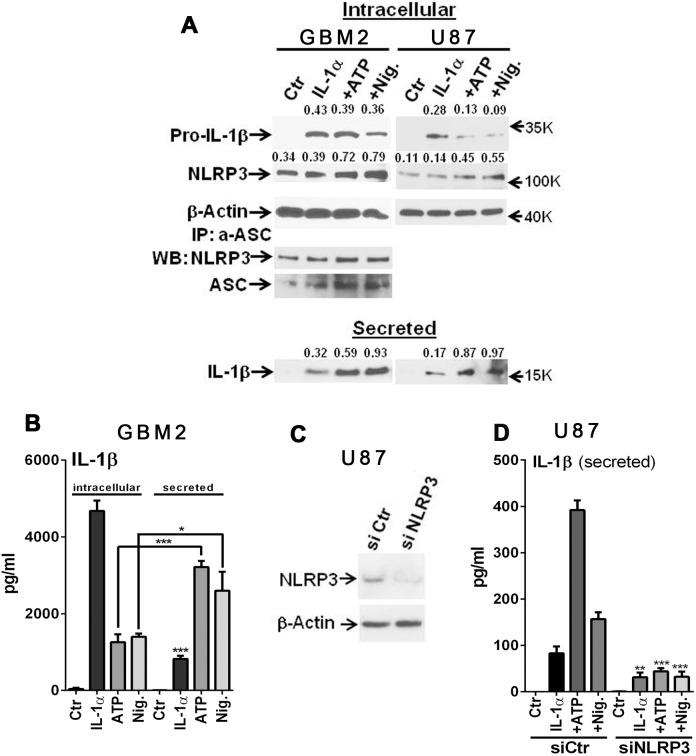
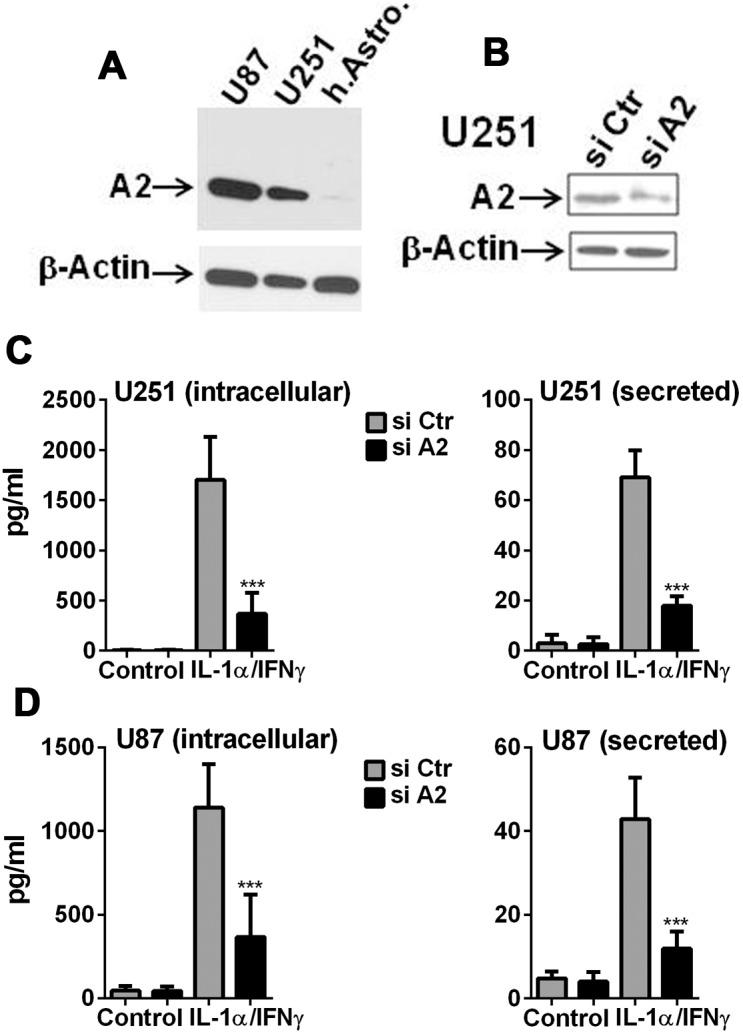
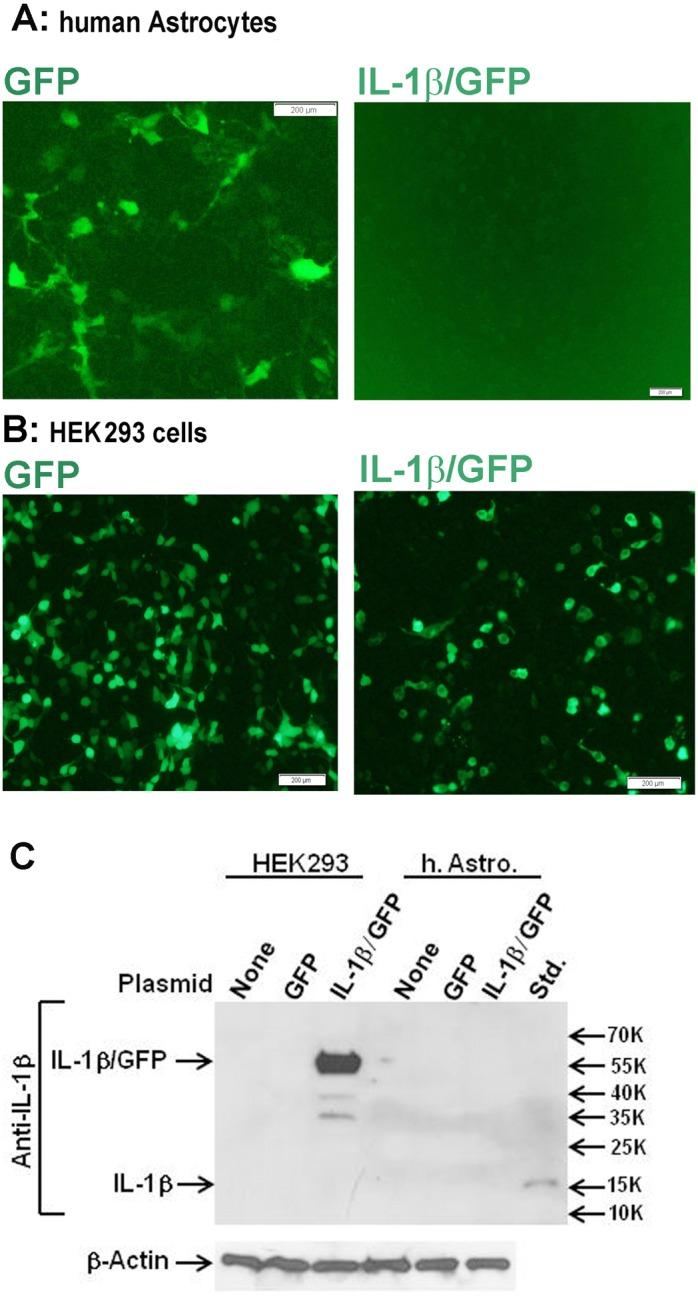
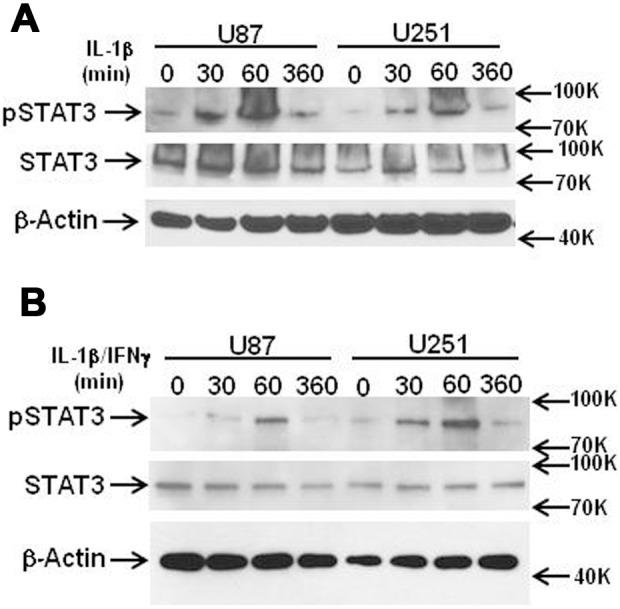
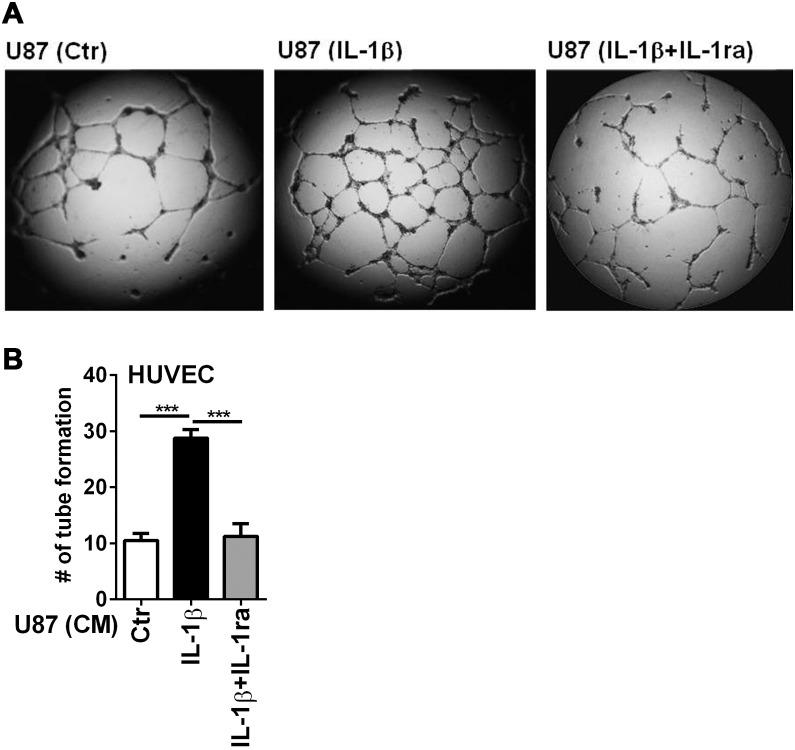
Glioblastoma cells produced large quantities of IL-1 when activated, resembling macrophages/microglia. The activation signal was provided by IL-1 but not the pathogenic components LPS or poly IC. Glioblastoma cells were highly sensitive to IL-1 stimulation, suggesting its relevance in vivo. In human astrocytes, IL-1β mRNA was not translated to protein. Plasmid transfection also failed to produce IL-1 protein, suggesting active repression. Suppression of microRNAs that can target IL-1α/β did not induce IL-1 protein. Glioblastoma IL-1β processing occurred by the NLRP3 inflammasome, and ATP and nigericin increased IL-1β processing by upregulating NLRP3 expression, similar to macrophages. RNAi of annexin A2, a protein strongly implicated in glioma progression, prevented IL-1 induction, demonstrating its new role in innate immune activation. IL-1 also activated Stat3, a transcription factor crucial in glioma progression. IL-1 activated glioblastoma-conditioned media enhanced angiogenesis and neurotoxicity.
CONCLUSIONS
Our results demonstrate unique, species-dependent immune activation mechanisms involving human astrocytes and astrogliomas. Specifically, the ability to produce IL-1 by glioblastoma cells may confer them a mesenchymal phenotype including increased migratory capacity, unique gene signature and proinflammatory signaling.
目的
胶质母细胞瘤是最常见且恶性程度最高的原发性脑肿瘤,预后严重。越来越多的证据支持慢性炎症(如白细胞介素 -1 系统的慢性过度激活)是致癌和肿瘤进展中的关键事件。白细胞介素 -1 也是一种重要的细胞因子,在中枢神经系统细胞激活中具有物种依赖性调节和作用。虽然人们对特异性抗肿瘤免疫给予了很多关注,但关于慢性炎症 / 固有免疫在胶质瘤发病机制中的作用却知之甚少。在本研究中,我们检测了人星形胶质细胞(包括恶性胶质瘤)是否能产生白细胞介素 -1 及其在胶质瘤进展中的作用。
方法
我们综合运用了细胞培养、实时定量聚合酶链反应、酶联免疫吸附测定、蛋白质免疫印迹、免疫细胞化学、小干扰 RNA 和质粒转染、微小 RNA 分析、血管生成(管腔形成)测定以及神经毒性测定等方法。
结果
胶质母细胞瘤细胞在激活时会产生大量白细胞介素 -1,类似于巨噬细胞 / 小胶质细胞。激活信号由白细胞介素 -1 提供,而非致病成分脂多糖或聚肌苷酸胞苷酸。胶质母细胞瘤细胞对白细胞介素 -1 刺激高度敏感,表明其在体内具有相关性。在人星形胶质细胞中,白细胞介素 -1β 信使核糖核酸未被翻译成蛋白质。质粒转染也未能产生白细胞介素 -1 蛋白,提示存在活性抑制。抑制可靶向白细胞介素 -1α/β 的微小 RNA 并未诱导白细胞介素 -1 蛋白产生。胶质母细胞瘤白细胞介素 -1β 的加工过程由 NOD 样受体蛋白 3 炎性小体介导,三磷酸腺苷和尼日利亚菌素通过上调 NOD 样受体蛋白 3 的表达增加白细胞介素 -1β 的加工,这与巨噬细胞类似。膜联蛋白 A2(一种与胶质瘤进展密切相关的蛋白质)的 RNA 干扰可阻止白细胞介素 -1 的诱导,证明其在固有免疫激活中的新作用。白细胞介素 -1 还激活了信号转导和转录激活因子 3(一种在胶质瘤进展中起关键作用的转录因子)。白细胞介素 -1 激活的胶质母细胞瘤条件培养基增强了血管生成和神经毒性。
结论
我们的结果表明,涉及人星形胶质细胞和星形胶质瘤的独特的、物种依赖性免疫激活机制。具体而言,胶质母细胞瘤细胞产生白细胞介素 -1 的能力可能赋予它们一种间充质表型,包括增加迁移能力、独特的基因特征和促炎信号传导。



 Zotero 插件